Destination Unknown
A political forum was held last night at "Baheth" Center for Studies in Beirut on a research by Dr. Riad Tabbara, former Lebanese ambassador to Washington entitled "THE ZIONIST LOBBY IN THE UNITED STATES, WHERE TO??
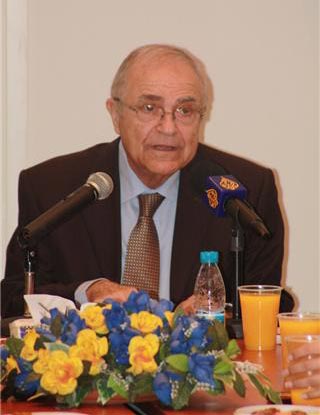
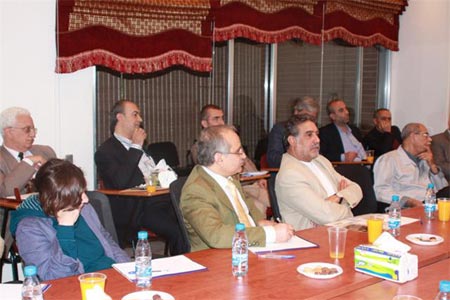
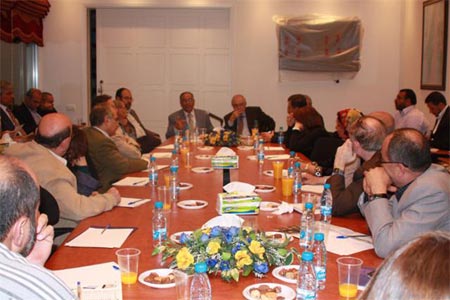
The seminar was attended by a number of Lebanese, Palestinian and Iraqi researchers and analysts from different political parties, such as Retired General Amine Hteit, Dr. Mohsen Saleh, and Dr. Soheil Al Natour.
After the General Director of Baheth Center, Dr. Walid Mohamad Ali introduced the lecturer and the subject of the forum, Dr. Tabbara started his lecture by defining the so- called "Israeli" lobby in the US.
He said the "Israeli" lobby is a collection of institutions and public gatherings that is responsible of delivering the "Israeli" point of view to decision- makers, especially to the Congress at the White House, and convince them to adopt it.
He then moved on to the basic components of the lobby, The "AIPAC", American- "Israeli" Public Affairs, the World Meteorological Organization and the American Zionist Alliance Foundation against racism. "These institutions are the basic of funders of the lobby", he said.
Dr. Tabbara continued that the power of this lobby's multi-fronts in influencing the US policy in the Middle East and in delineating its basic features is not to be questioned by the political observers in relation to some who care about the defense of this lobby. ""AIPAC" and the "Israeli" right-wing lobby believe that the US policy in the Middle East is pro-"Israel" because of the common interests and values", he added.
Moving on to the confrontations with the previous administrations he said: "Perhaps the best proof on the strength of the "Israeli" lobby is the confrontations that took place between the lobby and the various US administrations since the end of World War two, since the rise of this lobby until now". He said.
He continued that the first confrontation took place between President Dwight D. Eisenhower and "Israeli" Prime Minister David Ben-Gurion after the triangular aggression on Egypt during the time of Nasser 1956.
Dr. Tabbara went on to the second confrontation, which was between Richard Nixon, the heir to Eisenhower, and the "Israeli" lobby. The great confrontation was rated under the time of Bush the father who asked the "Israeli" Prime Minister Yitzhak Shamir of the Likud Party, to stop settlement activities and start negotiations with its Arab neighbors and threatened to halt U.S. government support in the construction of "Israeli" settlements, and other assistance. As a result of these pressures, the Labour Party threatened to resign, prompting Shamir to dispense him in the interests of extremist religious parties.
Then came the Gulf War, to ease the confrontation, when Shamir failed in the elections and Yitzhak Rabin won, and that provided a pretext for Bush to agree to debt guarantees.
"Clinton learned the lesson, and so he came with members of the "Israeli lobby", and delivered the peace process led by Dennis Ross and Martin Indyk, and Rahm Emanuel, and other enthusiasts of the Jews to "Israel"", he said.
Dr. Tabbara moved on to the latest confrontation with the Obama administration and the "Israeli government, which began when Obama asked "Israel" to halt settlements in the West Bank and Al Quds (Jerusalem), as a condition for the resumption of negotiations between Palestinians and "Israelis". Yet Obama relented ahead of the "Israeli" intransigence.
"I think that this confrontation is different from its predecessors to a large extent, which makes the success of the U.S. administration, although not certain, more fortunate than the past", he said.
He continued that the "Israeli" lobby is using the force of the Congress to pressure Obama to change his stance on "Israel" in this confrontation.
Dr. Tabbara said that there are many things helping Obama in response to these fierce campaigns, such the unprecedented split within the Jewish public opinion in the US, for the majority think that the "Israeli" military isn't enough to secure the permanency of "Israel".
In addition to the noticeable shift in the view of the non-Jew Americans to "Israel" and not to mention Obama's new strategy which is a huge threat to the "Israeli" lobby, of where the US objectives and the "Israelis" attitude towards the peace process don't match.
"No president has dared to go through that knowing that the "Israelis" peace process stances are of huge danger to America's interests and security", he added.
"Does this mean that America will soon be freed from the control of the "Israeli" lobby and will soon be at a similar distance with the Arabs and "Israel" in dealing with the Arab-"Israeli" conflict?" he asked.
Ending the Seminar with an answer he said:" I do not think that this day has come yet, nor will we see it in the foreseeable future. But in return, I think today we are witnessing the beginning of a shift in the US opinion of "Israel", and then to the Arab-"Israeli" conflict, and perhaps the beginning of the end of the extremist "Israeli" right-wing lobby domination of the American policy towards the Palestinian cause in favor of a new "Israeli" lobby that seeks peace between the Arabs and "Israel".