Biography of Grand Ayatollah Fadlallah
Local Editor
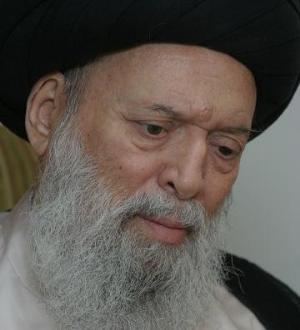 Sayyed Mohammad Hussein Fadlallah, A Candle in The Darkness of Our Era
Sayyed Mohammad Hussein Fadlallah was born in the year 1935 in Holy Al Najaf Iraqi city, where his father lived in order to study theology (religion studies).
Sayyed Fadlallah was greatly influenced by his father as he was raised and educated.
His first step in education was in a traditional school, where they taught Quran and basics of reading and writing. After that, Sayyed enrolled in a more modern school established by Jamiat Muntada Al Nasher, and stayed for two of his elementary classes.
Step by step, he started studying religious studies at a very young age, realizing that someday he would become a traditional religious scholar. To help him in his path was his first teacher, his father, Abdulraouf Fadlallah.
Sayyed Mohammad Hussein was affected by many Lebanese, Egyptian and Iraqi newspapers, and one was published by Taha Hussein, which had a great influence on him, and thus he himself started writing poetry at the age of ten.
Sayyed Hussein studied the Arabic language, logic and Jurisprudence, all under the tutoring of his father, and by the time he reached the second level of his studies, he started with another teacher, an Iranian Sheikh, Mujtaba Al Linkarani.
As rare as it is, Sayyed Mohammad Hussein was taught by the greatest religious authorities like Sayyed Abu Al Kassem Al Khoui, Sayyed Muhsin Al Hakim, and many other religious figures in Holy Najaf.
Sayyed Mohammad Hussein also studied philosophy with Major Philosophy teachers, like Mulla Sadra Al Badikoubi, where Martyr Sayyed Mohammad Baqir Al Sader attended studies with the same teacher for five years, as Sayyed Al Khoui advised. Sayyed Mohammad Hussein Fadlallah and Sayyed Mohammad Bakir Al Sader share an extended maternal family relation.
After 21 years from his studies in Najaf, Sayyed Mohammad Hussein Fadlallah returned home in the year 1956. He had already visited Lebanon once in 1952, where he recited a poem mourning the death of Sayyed Muhsin Al Amin.
After settling in Lebanon, in the year 1966, Sayyed Mohammad Hussein Fadlallah received an invitation from a society called "The Family of Fraternity", (Usrat Al Taakhi), so that he would go and live with them in Naba'a Eastern Beirut.
After settling there, Sayyed started his work through organizing cultural seminars, religious speeches, in addition to social issues. He didn't stop his personal activities, where he wrote and published many important books, which now are adopted as sources.
Sayyed Mohammad Hussein was concerned with developing his academic work, so he intended to establish a religious school under the name "The Islamic Shari'a Institute", where many students enrolled and later graduated to be prominent religious scholars, including Martyr Sheikh Ragheb Harb. He continued his attempt in progress and founded a public library, a women's cultural center, and a medical hospital.
After the Lebanese Civil War took place brutally, he was forced to leave the Naba'a area to the Beirut Southern Suburb, where he started holding daily prayers at mosques, along with speeches and lessons in the interpretation of Quran, especially in occasions like Ramadan and Ashoura. As he did not like to stop working, he resumed his academic work, where he started giving daily lessons in Islamic principles, jurisprudence and morals.
He constantly stood ready in any attack, which would be planned against Islam. Sayyed Mohammad also spread his knowledge and established a religious school in the Sayyeda Zeinab neighborhood in Damascus, Syria, where he regularly taught religious lessons.
Not only did he care for religious and academic activities, he also believed in applying social helping activities.
He believed in helping the weakened and finding solutions for their various problems, especially for their repercussions of the Lebanese civil war, and the Zionist attacks on Lebanon.
So His Eminence started the path of good deeds and giving, and established orphanages, and other aid institutions and firms in different areas and regions of Lebanon. These included centers for the disabled, such as Nour center for the blind and deaf.
As for schools, Sayyed Mohammad Husein established Al Mabarat Organization that includes schools in different regions in Lebanon. The Mabarrat has now nine orphanages, two medical centers nine schools, one Vocational School, eight Islamic centers and other Media and Information centers.
Of course caring for the children and people's wellbeing came in the priorities of Sayyed Mohammad Hussein, as he represented a spiritual and guiding figure. He took part in finding Bahman Hospital in Haret Hreik, Beirut, and set the construction base of Al Sayyeda Al Zahraa Hospital in South Lebanon.
Sayyed Mohammad Hussein's path was always filled with enthusiasm to what he wanted to teach the people of his country. He also became famous for not only intellect of fighting fanaticism and sectarianism, but also fighting ignorance, and warning people of the western effect on them, especially with the spread of the US and "Israeli" enemy intelligence.
For his "right" path and intellect in fighting for freedom against imperialism, and constantly calling for resistance against the Zionist enemy, His Eminence witnessed many plots of assassination. The most brutal one, was plotted by the US CIA, which was illustrated by a car packed with explosives, set to explode as Sayyed Mohammad was leaving Imam Rida Mosque in Bir Al Abed, Beirut Suburb, where he usually held daily prayers. The explosion resulted in the martyrdom of 80 innocent civilians, and wounded 200 others.
This attempt made people worry a lot about His Eminence, leading them to provide more security for him and his surroundings.
A couple of years later, Al Hasanein Mosque was founded, where HE started performing the daily prayers there, along with daily religious and Quranic lessons, helping old and illiterate people.
As Martyr Sayyed Baqir Al Sadr was quoted, he said: "All those who left Najaf lost something on leaving except Sayyed Muhammad Hussein Fadlallah and in his case, it was the Najaf University that lost. It is worth mentioning in this respect that his father the late Sayyed Abdulra`ouf Fadallah used to refer those who asked his opinion about things that they practice out of obligatory precaution to his son, which in itself is a great testimony".
A great testimony it is that one of the most important scholars in the history of our era considers Sayyed Mohammad Hussein Fadlallah as a jewel glowing and shining in the middle of the darkness, trying to make way for some hope and good to pass through people. Many people were touched by his pathway in life, many didn't know him well, but with all his achievements and work in hoping for a better future, will harvest for ever after.
Sayyed Mohammad Hussein Fadlallah, A Candle in The Darkness of Our EraSayyed Mohammad Hussein Fadlallah was born in the year 1935 in Holy Al Najaf Iraqi city, where his father lived in order to study theology (religion studies).
Sayyed Fadlallah was greatly influenced by his father as he was raised and educated.
His first step in education was in a traditional school, where they taught Quran and basics of reading and writing. After that, Sayyed enrolled in a more modern school established by Jamiat Muntada Al Nasher, and stayed for two of his elementary classes.
Step by step, he started studying religious studies at a very young age, realizing that someday he would become a traditional religious scholar. To help him in his path was his first teacher, his father, Abdulraouf Fadlallah.
Sayyed Mohammad Hussein was affected by many Lebanese, Egyptian and Iraqi newspapers, and one was published by Taha Hussein, which had a great influence on him, and thus he himself started writing poetry at the age of ten.
Sayyed Hussein studied the Arabic language, logic and Jurisprudence, all under the tutoring of his father, and by the time he reached the second level of his studies, he started with another teacher, an Iranian Sheikh, Mujtaba Al Linkarani.
As rare as it is, Sayyed Mohammad Hussein was taught by the greatest religious authorities like Sayyed Abu Al Kassem Al Khoui, Sayyed Muhsin Al Hakim, and many other religious figures in Holy Najaf.
Sayyed Mohammad Hussein also studied philosophy with Major Philosophy teachers, like Mulla Sadra Al Badikoubi, where Martyr Sayyed Mohammad Baqir Al Sader attended studies with the same teacher for five years, as Sayyed Al Khoui advised. Sayyed Mohammad Hussein Fadlallah and Sayyed Mohammad Bakir Al Sader share an extended maternal family relation.
After 21 years from his studies in Najaf, Sayyed Mohammad Hussein Fadlallah returned home in the year 1956. He had already visited Lebanon once in 1952, where he recited a poem mourning the death of Sayyed Muhsin Al Amin.
After settling in Lebanon, in the year 1966, Sayyed Mohammad Hussein Fadlallah received an invitation from a society called "The Family of Fraternity", (Usrat Al Taakhi), so that he would go and live with them in Naba'a Eastern Beirut.
After settling there, Sayyed started his work through organizing cultural seminars, religious speeches, in addition to social issues. He didn't stop his personal activities, where he wrote and published many important books, which now are adopted as sources.
Sayyed Mohammad Hussein was concerned with developing his academic work, so he intended to establish a religious school under the name "The Islamic Shari'a Institute", where many students enrolled and later graduated to be prominent religious scholars, including Martyr Sheikh Ragheb Harb. He continued his attempt in progress and founded a public library, a women's cultural center, and a medical hospital.
After the Lebanese Civil War took place brutally, he was forced to leave the Naba'a area to the Beirut Southern Suburb, where he started holding daily prayers at mosques, along with speeches and lessons in the interpretation of Quran, especially in occasions like Ramadan and Ashoura. As he did not like to stop working, he resumed his academic work, where he started giving daily lessons in Islamic principles, jurisprudence and morals.
He constantly stood ready in any attack, which would be planned against Islam. Sayyed Mohammad also spread his knowledge and established a religious school in the Sayyeda Zeinab neighborhood in Damascus, Syria, where he regularly taught religious lessons.
Not only did he care for religious and academic activities, he also believed in applying social helping activities.
He believed in helping the weakened and finding solutions for their various problems, especially for their repercussions of the Lebanese civil war, and the Zionist attacks on Lebanon.
So His Eminence started the path of good deeds and giving, and established orphanages, and other aid institutions and firms in different areas and regions of Lebanon. These included centers for the disabled, such as Nour center for the blind and deaf.
As for schools, Sayyed Mohammad Husein established Al Mabarat Organization that includes schools in different regions in Lebanon. The Mabarrat has now nine orphanages, two medical centers nine schools, one Vocational School, eight Islamic centers and other Media and Information centers.
Of course caring for the children and people's wellbeing came in the priorities of Sayyed Mohammad Hussein, as he represented a spiritual and guiding figure. He took part in finding Bahman Hospital in Haret Hreik, Beirut, and set the construction base of Al Sayyeda Al Zahraa Hospital in South Lebanon.
Sayyed Mohammad Hussein's path was always filled with enthusiasm to what he wanted to teach the people of his country. He also became famous for not only intellect of fighting fanaticism and sectarianism, but also fighting ignorance, and warning people of the western effect on them, especially with the spread of the US and "Israeli" enemy intelligence.
For his "right" path and intellect in fighting for freedom against imperialism, and constantly calling for resistance against the Zionist enemy, His Eminence witnessed many plots of assassination. The most brutal one, was plotted by the US CIA, which was illustrated by a car packed with explosives, set to explode as Sayyed Mohammad was leaving Imam Rida Mosque in Bir Al Abed, Beirut Suburb, where he usually held daily prayers. The explosion resulted in the martyrdom of 80 innocent civilians, and wounded 200 others.
This attempt made people worry a lot about His Eminence, leading them to provide more security for him and his surroundings.
A couple of years later, Al Hasanein Mosque was founded, where HE started performing the daily prayers there, along with daily religious and Quranic lessons, helping old and illiterate people.
As Martyr Sayyed Baqir Al Sadr was quoted, he said: "All those who left Najaf lost something on leaving except Sayyed Muhammad Hussein Fadlallah and in his case, it was the Najaf University that lost. It is worth mentioning in this respect that his father the late Sayyed Abdulra`ouf Fadallah used to refer those who asked his opinion about things that they practice out of obligatory precaution to his son, which in itself is a great testimony".
A great testimony it is that one of the most important scholars in the history of our era considers Sayyed Mohammad Hussein Fadlallah as a jewel glowing and shining in the middle of the darkness, trying to make way for some hope and good to pass through people. Many people were touched by his pathway in life, many didn't know him well, but with all his achievements and work in hoping for a better future, will harvest for ever after.