
Severe Electricity Cut to Top Concern, Nahhas Won’t Quit

They met, as they have never done before. United they were in an unprecedented scene. They raised their swords and the tone of the speech.
They didn't condemn, denounce, or remain silent as usual for the imminent danger doesn't come from Tel Aviv, the war on Gaza, body remains in Qana, or the war on Iraq or Judaization of al-Quds.
"Beware," clearly said the Arabs in their summit. "We are ready to face and will not have mercy in our battle with the head of the resistance and steadfastness, Damascus."
They decided to drag internationalization. And Syria decided to remain united.
And between this and that, kingdoms of oil proposes daily its free loyalties to their master residing in the White House.
Arabs Cover Al-Dabi's Report, Drag UN Interference
In a copy to the Yemeni sample, the Arab League foreign ministers recommended "continuing the observer mission in Syria and cooperation with the UN Secretary General to reinforce their task."
In a statement read by the Qatari Prime Minister Sheikh Hamad Bin Jassem al-Thani, the Arab foreign ministers presented an initiative of six points in which the most important was that dragging internationalization to the Syrian field.
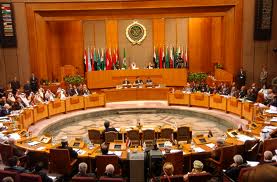
Calling on Syrian President Bashar al-Assad to "delegate his powers to the first vice president (Farouq al-Sharaa), who would have every prerogative to cooperate with a national unity government that would include the opposition, the Arab countries viewed that "such a government would be formed within two months, and be presided over by a consensus candidate."
"Its mission would be to implement the Arab League plan to end the crisis, and to prepare free and fair legislative and presidential elections under both Arab and international supervision," the Qatari PM added.
"The Arab League has decided to go to the UN Security Council to seek its support for the Arab initiative and we're not seeking internationalization or a military solution," Bin Jassem claimed.
According to "as-Safir" Lebanese daily, the surprise was in the Saudi position that pulling its observers from the Arab League observer mission to Syria under the pretext that "Damascus had not kept its promises."
"Unlike previous Arab meetings, the Saudi foreign minister Saud al-Faisal was a spearhead in attacking Syria," the paper clarified informing that "Faisal said words out of diplomacy protocol when mentioning al-Assad."
"as-Safir" also reported that Bin Jassem threatened at the ministerial meeting that "if the statement was not of high ceiling, I will take an escalated position."
This came as the head of the observers' mission Sudanese General Mustafa al-Dai delivered his report to the Arab conferees.
"The impression that prevailed Cairo's meeting is that "al-Dabi's report healed the Syrian regime by more than seventy percent," "as-Safir" sources mentioned.
Similarly, "al-Akhbar" newspaper reported that "al-Dabi said words clarifying that a large part of Syrian territories is witnessing a normal life."
"At this point Saud al-Faisal interfered asking: So, how 6000 people were killed? Al-Dabi replied "in the time we were in Syria, no large numbers of killing took place and violence isn't wide," the paper also uncovered.
Mentioning that the Qatari foreign minister proposed the vote on the initiative at this point, "al-Akhbar" quoted Arab diplomatic sources describing the move as "an attempt to cover up al-Dabi's report."
Mansour Calls AL to Annul Syria's Suspension
For his part, Lebanese Foreign Minister Adnan Mansour called on the "AL to issue a decision to annul the suspension of Syria's membership in the League and lift the economic sanctions against it," calling for "voting on this issue if necessary."
In his speech during the meeting of the Arab Foreign Ministers held in Cairo, Mansour voiced support for the recommendations of al-Dabi, who recommended that the mission continue its work in addition to speeding up the political process and launching national dialogue.
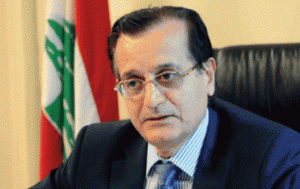
The Minister pointed out that "the report's allusion to the presence of armed opposition was an issue that he had called for including in Arab League resolutions but these suggestions were always rejected."
Citing the examples listed in the report of the use of violence against government forces and dangerous weapons, he went on to stress that media exaggeration of events and number of people killed make the situation more complicated.
Electricity: the Heat Debate
At the Lebanese internal level, wages issue remains stuck as the electricity file headed the local concern with the severe electricity cut Lebanon is suffering.
House speaker Nabih Berri commented on the electricity issue in Lebanon by calling "for equality in electricity rationing among all Lebanon's regions, except for Beirut which encompasses people from all sects."
"As-Safir" quoted Berri's visitors mentioning that "House Speaker called Energy minister Gibran Bassil to tell the Lebanese people the truth regarding the situation of the electricity sector in Lebanon."
Berri is also reportedly to have urged Bassil to reveal "what his plans are to resolve the electricity problem and that he should identify those who are hindering him and preventing his work from progressing."
In an interview with the same daily Monday, Bassil uncovered that "there are obstacles from several sides," reiterating that "certain parties were hindering the implementation of power projects."
"The government should know that it has two choices either electricity or no government," he stressed.
Calling the government to immediately assume its responsibilities through its parliamentary and ministerial majority and take the appropriate steps to push the frozen projects forward, Bassil warned that the government is to be threatened because the electricity issue doesn't burn the minister alone but the entire cabinet."
The minister also accused some parties of politicizing the electricity crisis by claiming that the "Free Patriotic Movement", of which Bassil is a member, was making an unequal electricity rationing.
"This campaign makes us stronger and not the other way around," he told "as-Safir" newspaper.
Nahhas Not to Quit
At another Lebanese concern Labor Minister Charbel Nahhas reiterated on Monday that he would not resign from the government.
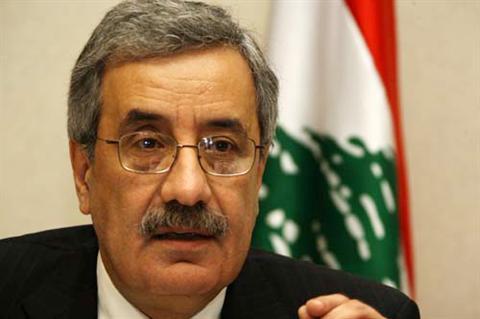
Stressing that he "refused to approve the transportation and education allowances decree," Nahhas told "as-Safir" that "if some members don't like my stance, then all they could do is to try to guarantee 20 ministers to approve my resignation."
He asserted that his rejection to sign transportation allowances "is not a personal issue and that "Change and Reform" Bloc Leader MP Michel Aoun fully supports his position."
Sources close to Prime Minister Najib Miati told "al-Joumhouria" newspaper published Monday that the final decision on the matter would be in the government.
Source: Lebanese newspapers, Translated and Edited by moqawama.org


