
UN Requested Observers in Qlaiat Airport, Strikes Series to be Launched

Parliament Continues Discussion
On its first day, the parliamentary discussion sessions brought no unexpected surprises.
In contrary, the well-directed television show was kept under control.
It seemed just a collection of dispersed statements and positions of Lebanese deputies debating in a very boredom way in spite of some heat from here and there.
Meanwhile, the debate on the electoral law retreated as the country entered the strike's era.
However, the surprise emerged from another place as the Secretary General of Hizbullah His Eminence Sayyed Hassan Nasrallah unveiled that Hizbullah has been in contact with Syria's opposition to find a solution for the Syrian crisis but the latter had turned down offers to hold dialogue with President Bashar al-Assad.
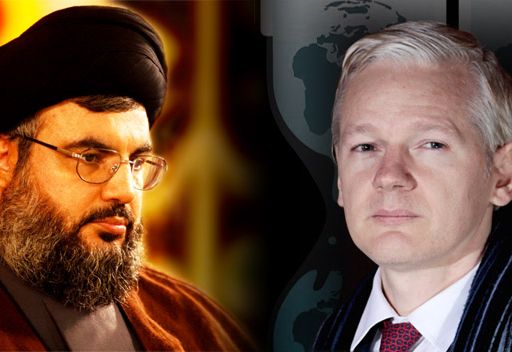
In a rare interview with Wikileaks founder Julian Assange, Sayyed Nasrallah said: "This is the first time I say this - We contacted ... the opposition to encourage them and to facilitate the process of dialogue with the [Syrian] regime. But they rejected the dialogue."
Being the first of several planned guests in the debut of Assange's "The World Tomorrow" on Russia Today, His Eminence stressed that "right from the beginning we have had a regime that is willing to enact reforms and is prepared for dialogue."
"On the other side you have an opposition which is not prepared for dialogue and is not prepared to accept reforms. All it wants is to bring down the regime. This is a problem," Sayyed Nasrallah added.
Lebanon Refuses UN Request on Qlaiat
In parallel, "an-Nahar" daily reported Wednesday that "Lebanese authorities have refused to allow UN observers to land in the Qlaiat airport in the North to give them quick access to the Syrian province of Homs."
According to the newspaper, "the UN requested to use the airport which is at close proximity to Homs and could be used for the possible evacuation of casualties."
"The Lebanese decision to refuse the international request came over fears that the airport could be used as a humanitarian corridor to aid those in need in Syria, which Lebanon had rejected as part of its policy in distancing itself from the Syrian crisis," the report clarified.
On the internal level, the opposition MPs are expected to resume their verbal attacks against the government Wednesday on the second day of a three-day parliamentary session, which will witness statements by 53 more lawmakers.
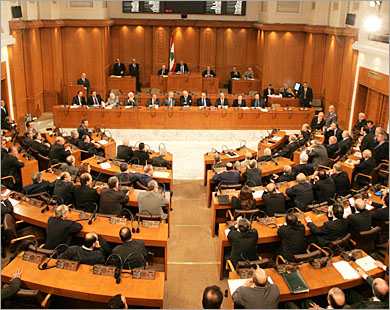
"As-Safir" daily commented on the parliamentary scene by saying: "People who listened to "March 14" MPs waging a violent campaign on the government expected that the natural result of the harsh descriptions would be a confidence vote against the government or some of its ministers."
For its part, "al-Joumhoria" quoted security and diplomatic sources revealing that "a political deal was cut a few days prior to the parliamentary sessions: to keep the street's reaction under control no matter how high the voices in Parliament get."
Meanwhile, Lebanese Prime Minister Najib Mikati defended - in his speech at the beginning of the session- Lebanon's policy of dissociating itself the Syrian crisis.
"This policy is not an evasion of responsibility, it is fulfilling responsibility and protecting Lebanon," he said pointing out that "Lebanon could not affect the course of events in its neighbor but is itself affected by events there."
Strikes Continue
On the strikes front, the transportation sector postponed a strike scheduled for Thursday, following a meeting between a syndical delegation and PM Mikati.
In an interview with "as-Safir" daily the Head of the Transportation Union, Bassam Tleis, said that the "PM understands the union's demands," announcing that "a second meeting will be held with the premier next week to resume the discussions."
"In principle, Mikati approved the request of ceiling oil price on L.L 30,000 pounds for public drivers only and not all the Lebanese,"Tleis uncovered.
Tleis noted that the stance of Mikati and the ministers was "positive concerning all this topics" and that "they requested they be given a chance to make accurate calculations and come up with an implementation mechanism."
"Another meeting between the ministerial panel and the transport union delegation will be held on Tuesday at the Grand Serail in order to put things on the right track," Tleis told "an-Nahar".
On the bakeries scheduled Thursday strike, "as-Safir" learned that "the urgent meeting held between Economy Minister Nicolas Nahhas and the Bakeries Union headed by Kazem Ibrahim failed to postpone the declared open strike."
"The two sides held discussions on Wednesday during which Nahhas asked Ibrahim to postpone the strike until the government discusses the issue during its planned session on Friday," the daily reported clarifying that "the bakers' delegation refused the offer."
"A strike for a day or two won't be a problem but an open-ended strike was rejected," the minister said prompting the head of the Bakeries Union to respond by saying:
"It seems that you have secured biscuits for the people."
He further informed "as-Safir" that "Nahhas suggested to either liberalize the price of bread, or increase the weight of the standard pack of bread from 1,000 grams to 1,250 grams at the cost of LL2,000 which means a LL500 increase, LL125 of which would go to the bakeries."
Suleiman:Expatriates to Vote
In another context, Lebanese President Michel Suleiman announced that "the government will draft a law that would allow Lebanese expatriates to vote in the parliamentary elections."
In remarks to reporters accompanying him in his trip to Australia , Suleiman said "the expats are an added value for Lebanon."
He further told "al-Liwaa" daily that "he was asked for the improvement of the Lebanese consulate in Sydney and an increase in its number of staff."
Source: Lebanese newspapers, Translated and Edited by moqawama.org


