- Home
- ISLAMIC RESISTANCE
- SECRETARY-GENERAL
-
Full Speeches
- Speeches-2000
- Speeches-2006
- Speeches-2007
- Speeches-2008
- Speeches-2009
- Speeches-2010
- Speeches-2011
- Speeches-2012
- Speeches-2013
- Speeches-2014
- Speeches-2015
- Speeches-2016
- Speeches-2017
- Speeches-2018
- Speeches-2019
- Speeches-2020
- Speeches-2021
- Speeches-2022
- Speeches-2023
- Speeches-2024
- Speeches-2025
- Speeches-2026
- Speech-Reports
- SG
-
Full Speeches
- Voices
- Ten Day Dawn
- The Biggest Crime
- Martyr Leaders

UN Condemns Bahrain’s Discrimination against Shia
Local Editor
The UN's religious freedom monitor on Thursday urged Bahrain to halt discrimination against its Shiite majority and its spiritual leader, who was expelled from the Gulf kingdom this week.
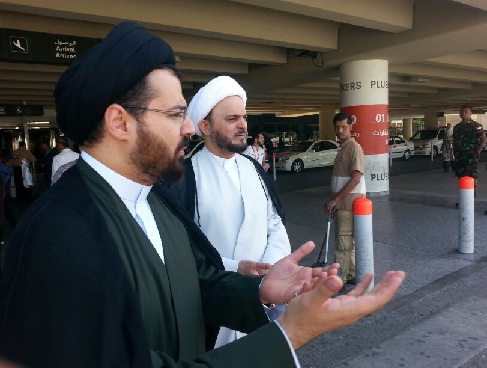 The case of Sheikh Hussein al-Najati was a stark illustration of the broader mistreatment in Bahrain, UN expert Heiner Bielefeldt said in a statement.
He said that he had contacted Bahrain's government to press his "grave concerns" over what he said appeared to be "religiously motivated discrimination" against Najati.
"Targeting the most senior and influential Shia religious figure in Bahrain may amount to intimidating and thus discriminating against the entire Muslim community in the country because of its religious beliefs," he said.
He further added: "Discrimination on the grounds of religion or belief constitutes a violation of human rights and fundamental freedoms."
Najati, the Bahrain representative of Iraq-based Grand Ayatollah His Eminence Sayyed Ali al-Sistani, was among 31 Bahrainis stripped of their citizenship in November 2012 over accusations that they had undermined state security, more than a year after authorities crushed a Shiite uprising in March 2011.
"International law, in particular the Universal Declaration of Human Rights, prohibits arbitrary deprivation of nationality, including on religious grounds," said Bielefeldt, the former head of Germany's national human rights office who took up his UN post in 2010.
Bahrain's interior ministry this week accused Najati - born in 1960 to Iranian parents in Bahrain - of collecting and distributing funds in the name of Sistani despite not being an official representative of a party.
The deported cleric arrived in Lebanon on Wednesday.
"I understand that Mr. Najati has consistently refrained from engaging into politics, and has maintained his position and activities strictly in the realm of his religion," said Bielefeldt.
He further said: "He is not known to have advocated violence or its use, or to have committed acts that would undermine national security or public order, nor has he been charged or sentenced for committing such acts."
As the world continues to turn a blind eye against the Bahraini regime's crackdown, Iran has also criticized the move after Manama decided to revoke Najati's citizenship. Iranian Deputy Foreign Minister for Arab and African Affairs Hossein Amir-Abdollahian called the move provocative and wrong.
Manama has launched a heavy-handed crackdown on anti-regime protesters since the uprising against the ruling al-Khalifa broke out across the kingdom in February 2011.
Source: News Agencies, Edited by website team
Comments
- Related News
13 Killed in ’Israeli’ Strikes on Southern Lebanon
one month ago