’Israel’ Expresses Rage As US Accepts Iran’s Long-Range Missiles
Local Editor
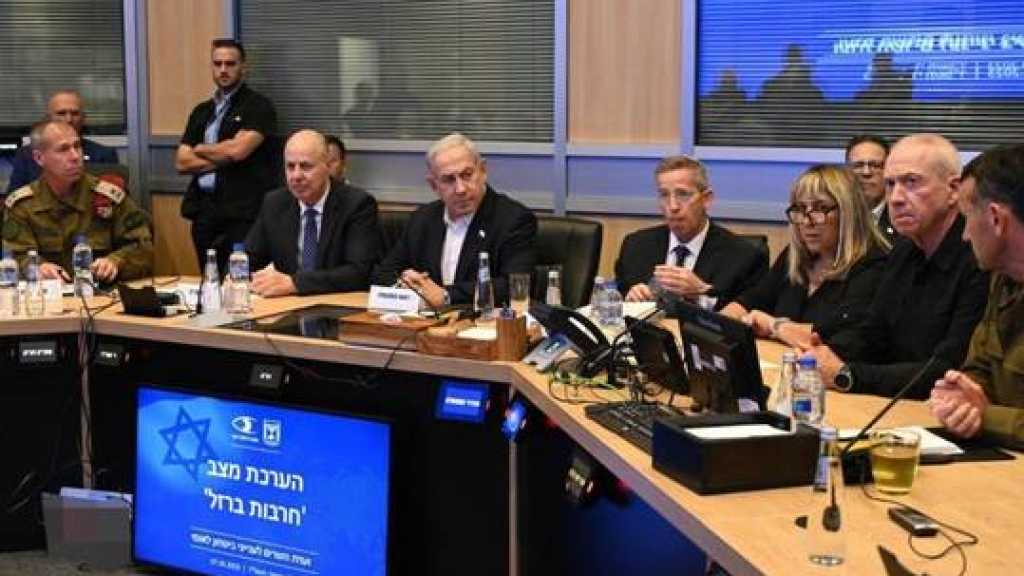
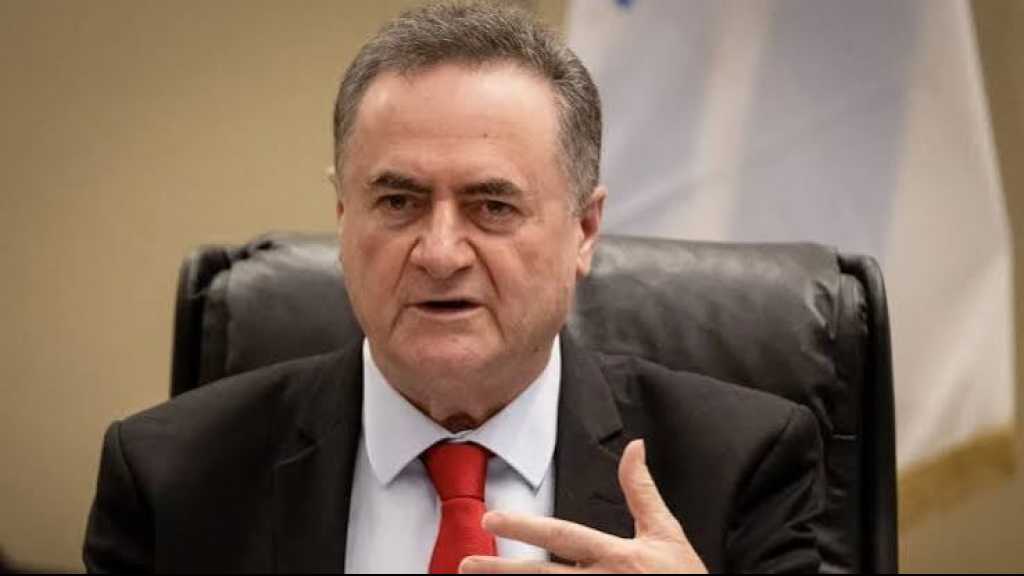
"Israeli" Prime Minister Benjamin Netanyahu expressed fury after senior US administration officials told their Tel Aviv counterparts that they accept Iran's Shahab-3 ballistic missiles which can target "Israel," as they are only concerned over Iran's potential for targeting Europe and the US, a report by the "Israeli" DEBKAfile website said on Sunday.
 US National Security Adviser Susan Rice and War Secretary Chuck Hagel told "Israel" this month that the Obama administration has informed Tehran that the demand to restrict Iran's missile arsenal did not apply to the Shahab-3 ballistic missile, whose range of 2,100km covers any point in the Middle East, including "Israel."
Meanwhile, "Israeli" Prime Minister Netanyahu and War Minister Moshe Ya'alon questioned the US's acceptance of Iran's missiles while excluding Shahab-3.
While Hagel assured some countries that they had nothing to fear from the rapprochement between Washington and Tehran, he was asked to fully explain US President Obama's policy on Iran's missile arsenal.
He replied that the plan was to ‘establish a common anti-missile defense network for the region'.
Moreover, the "Israeli" report alleged that Washington has demanded Iran to place restrictions on its arsenal of ICBMs, whose 4,000 km range places Europe and the United States at risk.
The report which has not been confirmed by any other source comes as Iranian officials have repeatedly stressed that they do not have any plan for developing ICBMs. Furthermore, Iranian military sources have previously said that Iran's Armed Forces have been ordered to limit the scope of their missile programs to a maximum range of 2,000km, indicating that Iran's potential targets are within this range and not beyond.
The "Israeli" report also added that the Obama administration said it was not demanding restrictions on the medium-range missiles capable "only" of striking "Israel," Saudi Arabia and the Persian Gulf. Moreover, it also said that when the comprehensive nuclear accord is finally negotiated, it must apply restrictions on the Sejjil 1, Safir, Simorg [satellite launcher], Ashura1 and Ashura2 [other versions of the Sejjil class].
Iran's Sejjil-class missiles use solid fuel, which means a much more advanced technology of thrust and propulsion compared to those such as Shahab-class which use liquid fuel. Yet, Iran's Sejjil 1 has a range of only 2,000km.
Iran has repeatedly underlined that its missile program would never be an issue of talks with the P5+1 countries.
Recently, the Supreme Leader of the Islamic Revolution His Eminence Sayyed Ali Khamenei, said the western states' demand for restricting Iran's missile capability is nonsense since they continue to threaten the country.
"They expect Iran to limit its missile program while they continue posing military threats against Iran, and hence, such an expectation is foolish and silly," Sayyed Khamenei said.
In recent years, Iran has made great achievements in its defense sector and attained self-sufficiency in developing and manufacturing its essential needs to military tools, weapons, equipment and systems.
Iranian officials have always stressed that the country's military and arms programs serve defensive purposes and should not be perceived as a threat to any other country.
On Friday, Iran and the P5+1 countries wrapped up their fourth round of talks in the Austrian capital of Vienna. The P5+1 countries- the US, Russia, China, France, Britain and Germany- along with Iran have been discussing ways to start drafting a final deal that would end the West's dispute with Iran over the country's nuclear energy program in return for loosening the sanctions imposed on it by the West.
Iran said there has been no tangible progress in writing the draft text of the agreement and it blamed the US for the failure, saying Washington has made excessive demands beyond the agreements made in the previous rounds of talks.
Following the three days of talks, Iran's deputy foreign minister Sayyed Abbas Araqchi said on Friday evening that the Vienna nuclear talks with the P5+1 countries would continue until the achievement of results, while reiterating that Iran would not accept a discussion of its defense program and will only agree to a deal which respects its rights.
Source: News Agencies, Edited by website team
Comments