- Home
- ISLAMIC RESISTANCE
- SECRETARY-GENERAL
-
Full Speeches
- Speeches-2000
- Speeches-2006
- Speeches-2007
- Speeches-2008
- Speeches-2009
- Speeches-2010
- Speeches-2011
- Speeches-2012
- Speeches-2013
- Speeches-2014
- Speeches-2015
- Speeches-2016
- Speeches-2017
- Speeches-2018
- Speeches-2019
- Speeches-2020
- Speeches-2021
- Speeches-2022
- Speeches-2023
- Speeches-2024
- Speeches-2025
- Speeches-2026
- Speech-Reports
- SG
-
Full Speeches
- Voices
- Ten Day Dawn
- The Biggest Crime
- Martyr Leaders

Britain Raises Terrorism Threat Level to ’Severe’ in Response to Iraq, Syria
Local Editor
Britain raised its international terrorism threat level to the second highest level of "severe" on Friday in response to possible attacks being planned in Syria and Iraq, British Interior Minister said on Friday.
 May said in a statement: "That means that a terrorist attack is highly likely, but there is no intelligence to suggest that an attack is imminent."
"The increase in the threat level is related to developments in Syria and Iraq where terrorist groups are planning attacks against the West. Some of those plots are likely to involve foreign fighters who have traveled there from the UK and Europe to take part in those conflicts."
It is the first time since mid-2011 that Britain has been placed on this grade of alert following an assessment carried out by the Joint Terrorism Analysis Center, the body responsible for setting the national threat level.
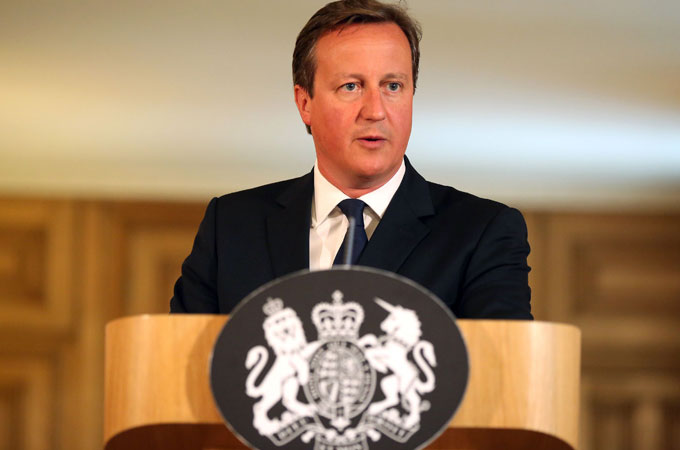
Meanwhile, British Prime Minister David Cameron speaking at Downing Street said on Friday, "We're facing a terrorist organization not being hosted in a country but seeking to establish and expand its own terrorist state," he said. "We're in the middle of a generational struggle . . . that we will be fighting for years and probably decades," he added.
"The ambition to create an extremist caliphate in the heart of Iraq and Syria is a threat to our own security here in the UK," Cameron said.
He added, "This threat cannot be solved simply by dealing with perceived grievances over Western foreign policy. Nor can it be dealt with by addressing poverty, dictatorship or instability in the region - as important as these things are."
Cameron said new powers to stop people travelling overseas and seize passports would be announced in parliament on Monday.
Officials estimate at least 500 Britons have traveled to Syria or Iraq, where the so-called Islamic State [IS] has seized large swathes of territory.
Demands have been made for extra security measures to tackle Britons traveling to the Middle East to join militant groups after officials again warned that some of those who had gone to Syria or Iraq to fight might return to Britain to carry out attacks.
Moreover, British officials have previously warned that the threat posed by extremists returning from Syria and Iraq is one of the most significant security challenges faced by the UK.
Source: News Agencies, Edited by website team
Comments
- Related News