Why the Battle of Qalamoun matters for the Resistance?
Hussein Kobeissi
It was a Saturday evening about one hour after the commencement of the daily evening prayers in Lebanon. As a highly devout religious leader of course, Hizbullah Secretary General His Eminence Sayyed Hassan Nasrallah would always choose the timing of his speeches and addresses while remaining cognizant of the changing daily prayer times.
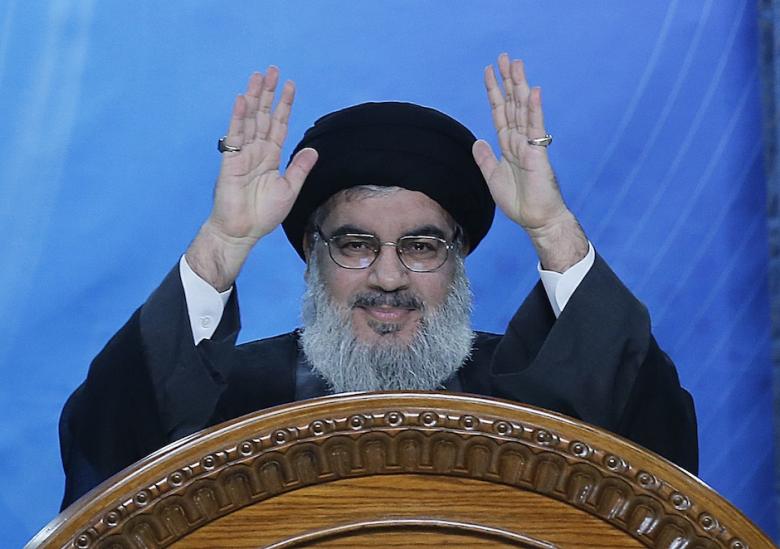
Just 11 days earlier, he had vowed to confront and defeat the thousands of militants positioned in the barrens of the Qalamoun Mountains, which straddle a large section of the Lebanese-Syrian border.
"When we begin, the operation will speak for itself." Sayyed Nasrallah announced.
On May 16 at exactly 8:30p.m., the Hizbullah Secretary General appeared with the usual makeshift-blue backdrop behind him, yet this speech was going to be anything but usual. As anticipated, the focus was on the battle of Qalamoun.
"We [have produced] a very big battlefield victory and a significant and great military achievement."
Battles between Syria's armed forces along with the Lebanese Resistance movement Hizbullah, and foreign-backed militant groups including the al-Qaeda affiliated al-Nusra Front, were raging across parts of Qalamoun. But Sayyed Nasrallah's comments reveal that from a strategic standpoint, the battle for Qalamoun has already been won.
During the speech, Nasrallah outlined the main battlefield achievements, which included,
1) Regaining 300 square kilometres of Lebanese and Syrian-Lebanese border areas from the terrorist groups,
2) Bringing about greater security to the surrounding Lebanese and Syrian towns
3) Gaining the ability to control the movement of militants in the liberated areas after capturing the surrounding hilltops and mountain peaks
4) Cutting off the Zabadani region from Qalamoun for the militants
By most accounts the battle for Syria and indeed the wider region pits the US, "Israel", Saudi Arabia, Qatar, Turkey and whether directly or indirectly - the al-Nusra Front and "ISIL" on one side, and Iran, Hizbullah, Syria, and Iraq on the other.
But the question is: why is the Qalamoun region in particular so important for the Resistance axis? What does the Qalamoun region mean for the strategic military equations between the US-led axis and the Iran-led Resistance axis?
Qalamoun is a mountainous region that stretches 70 km along Lebanon's border. Its rough barren lands expand over 600 square kilometres and include a mountain top that stands at about 2,600 meters above sea level. The region stretches from Syria's Zabadani in the southwest to al-Nabk in the northeast. More importantly the region paves the way to the Syrian capital in the southeast and to the country's third city of Homs to the north.
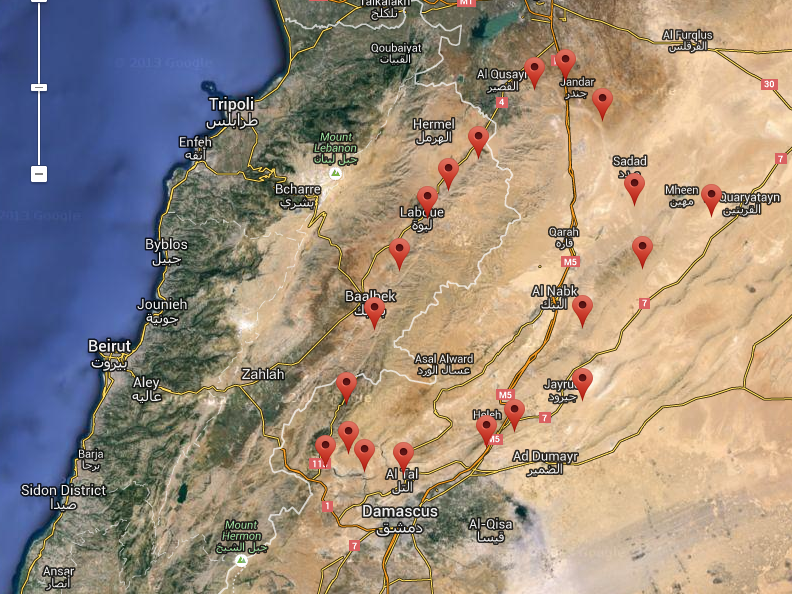
Figure 1: Qalamoun region parameters roughly outlined
Despite the great land mass, there was no need for the whole Qalamoun region to be secured by the Resistance axis from a military perspective. The key, strategic section of Qalamoun for the Resistance front - that has now been liberated - is the region that links the following two areas together:
1) the town of Arsal and its barren lands, a fortress for an estimated 5,000 al-Nusra Front militants, which houses key weapons depots and supply storages, operation rooms, hospitals, and residences for al-Nusra commanders, and
2) the Syrian city of Quneitra - on the foothills of Jabal al-Sheikh and adjacent to the Shebaa Farms - where the al-Nusra Front is looking to increase its already sizeable military presence of several thousand militants.
Of course, the strategic region of Qalamoun is also important because the Lebanese border town of Arsal and its surroundings are a vital supply route for militants inside Syria.
Nevertheless, what is much more significant today is Qalamoun as a link for al-Nusra militants between Arsal and Quneitra. It is this area that I have been, and will continue to refer to it in this article as the "strategic region" of Qalamoun [this region's parameters are roughly indicated with yellow markers in Figure 2 below].
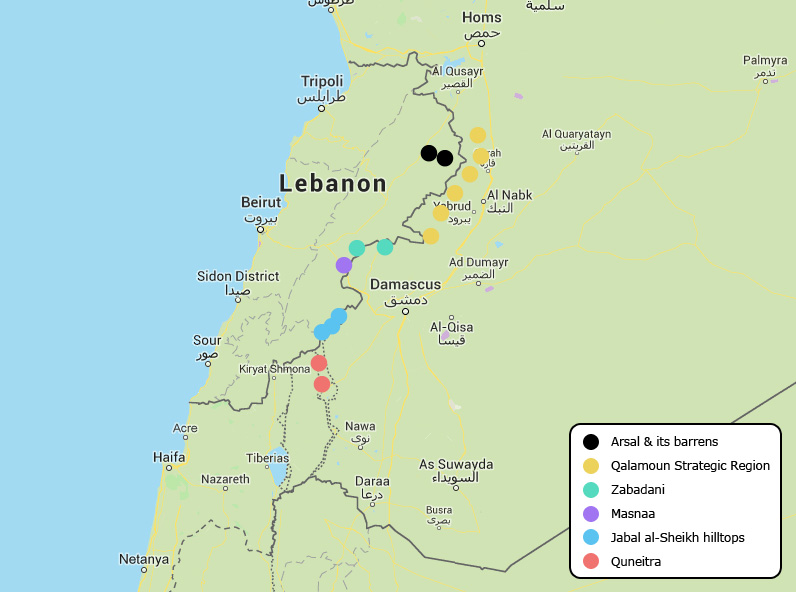
Figure 2: shows the aim of the al-Nusra Front to position itself along the stretch ranging from Arsal to Quneitra
For al-Nusra militants to move from Arsal and its barren lands, they have to pass via two points. The first point is the Syrian city of Zabadani, which houses military bases for al-Nusra, and the other is the Masnaa region, the main border crossing between Lebanon and Syria.
In order for the militants to move from Zabadani to Masnaa, they need to cross the strategic region of the Qalamoun mountain range. In short, the militants are moving from Arsal, to Zabadani, to Masnaa, to Quneitra, via the linking foothills of Jabal al-Sheikh. Al-Nusra is looking to capture this whole region and form a powerful link between Arsal and Quneitra.
Through this large and steady movement and positioning of men, weapons, and supplies along the border between Lebanon and Syria, the US-led axis through the al-Nusra Front aims to achieve at least three objectives:
1) separate Syria from Lebanon
2) separate the Syrian and Lebanese armies
3) connect the strategic depth and power of the Israeli army with the military infrastructure of the al-Nusra Front, that is spread out along the border between Syria and Lebanon
The plans seeks to have the al-Nusra headquarters in Arsal and its barren lands in Lebanon linked by land to the new security belt [meant to protect "Israel"] in the Syrian city of Quneitra, which is similar to the security belt that the "Israelis" formed in southern Lebanon in the 1980s with the colluding "South Lebanon Army", a.k.a. "Lahd Army". Then it was the Lahd Army in southern Lebanon, today it is the al-Nusra Front in southern Syria.
If the US-led axis had managed to reinforce the growing al-Nusra security belt around "Israel" in the city of Quneitra by controlling the route from Arsal, to the strategic region of Qalamoun, to Zabadani, to the foothills of Jabal al-Sheikh in Quneitra, this would effectively transform the geostrategic reality in this region in favour of the militants, and consequently, in favour of "Israel" and the US-led project.
The aim was to separate the members of the Resistance axis from each other, to separate Lebanon and the Lebanese resistance from Syria. However, the battle of Qalamoun has already been decided by the Resistance axis. The Lebanese resistance is currently stationing and fortifying itself in the strategic region of Qalamoun, the roughly 300 square kilometres that Sayyed Nasrallah referred to in his latest speech.
The main battle in Qalamoun that determines the equations of the region is now over, and it was accompanied by "Israeli" commentators moaning the loss of the battle to Hizbullah and the Syrian army.
What remains of the battle of Qalamoun now, is the town of Arsal and its barren lands, in a war seeking to bring back security to the residents of this region. Sayyed Nasrallah called on the Lebanese state to assume its responsibility and deal with the militants in Arsal and its surroundings. If this is not carried out soon, Sayyed Nasrallah affirmed, the "people of Lebanon and the Beqaa will deal with them".
Al-Ahed News