US Senators Consider New Sanctions against Iran
Local Editor
US Republican senators plan to introduce legislation to impose further sanctions on Iran, accusing it of violating UN Security Council resolutions by testing ballistic missiles, while Saudi Arabia called Sunday for a new push against Iran.
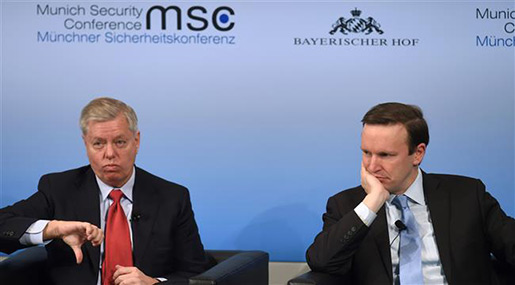
"I think it is now time for the Congress to take Iran on directly in terms of what they've done outside the nuclear program," Senator Lindsey Graham, a member of the Senate Armed Services Committee, told the Munich Security Conference.
Graham said he and other Republicans would introduce measures to hold Iran accountable for its actions.
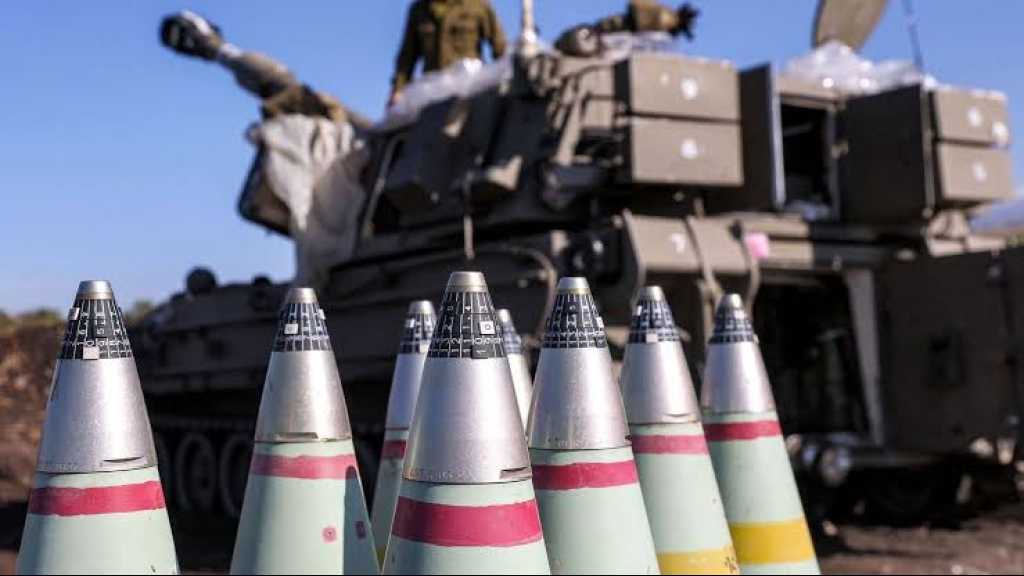
Tensions between Tehran and Washington had risen since an Iranian ballistic missile test which prompted US President Donald Trump's administration to impose sanctions on individuals and entities linked to the country's Revolutionary Guard.
"To Iran, I say, if you want us to treat you differently then stop building missiles, test-firing them in defiance of UN resolution and writing ‘Death to Israel' on the missile. That's a mixed message," Graham said.
Senator Christopher Murphy, a member of the Senate Foreign Relations Committee, told the same panel there was nothing preventing Congress from imposing sanctions beyond those that were lifted as a result of the 2016 nuclear agreement with Iran.
"There's going to be a conversation about what the proportional response is," Murphy said, referring to Iran's missile test.
Murphy said the US needed to decide whether it wanted to take a broader role in the regional conflict.
"We have to make a decision whether we are going to get involved in the emerging proxy war in a bigger way than we are today, between Iran and Saudi," he said.
Iranian Foreign Minister Mohammad Javad Zarif told the conference earlier Sunday that Iran did not respond well to sanctions or threats.
"Everybody tested us for many years - all threats and coercions were imposed on us," Zarif added.
He mocked "the concept of crippling sanctions," which he said didn't stop Iran from acquiring thousands more centrifuges, used for enriching uranium, before talks with the US on the nuclear agreement got underway.
Zarif opened Sunday's session with the call for dialogue to address "anxieties" in the region. This followed a visit by Iranian President Hassan Rouhani to Oman and Kuwait last week to try to improve ties, his first visit to the Gulf states since taking power in 2013.
Asked if Iran's envisioned regional dialogue could include the "Israeli" entity, Zarif said Tehran was looking at a more "modest" approach. "I'm focusing on the Persian Gulf. We have enough problems in this region so we want to start a dialogue with countries we call brothers in Islam," he said.
Saudi Foreign Minister Adel al-Jubeir called Tehran the main "sponsor of global terrorism" and a "destabilizing force in the Middle East" and rejected Zarif's appeal for Gulf Arab states to work with Tehran to reduce violence across the region.
"It's determined to upend the order in the Middle East ... [and] until and unless Iran changes its behavior it would be very difficult to deal with a country like this," he said.
The international community needed to set clear "red lines" to halt Iran's actions, Jubeir added, calling for banking, travel and even trade restrictions aimed at changing Tehran's behavior.
Turkish Foreign Minister Mevlut Cavusoglu also criticized what he called an Iranian "sectarian policy" aimed at undermining Bahrain and Saudi Arabia.
"Turkey is very much against any kind of division, religious or sectarian," he said. "It's good that we are now normalizing our relations with ‘Israel'."
Source: News Agencies, Edited by website team
Comments