Trump Plans to Decertify Iran Nuke Deal
Local Editor
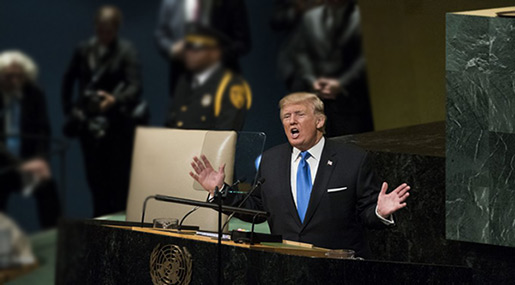
US President Donald Trump is expected to announce next week that he will "decertify" the international nuclear deal with Iran, saying it is not in the national interest of the United States and kicking the issue to a reluctant Congress, people briefed on the White House strategy said Thursday.
The move would mark the first step in a process that could eventually result in the resumption of US sanctions against Iran, potentially derailing a deal limiting Iran's nuclear activities reached in 2015 with the United States and five other nations.
But Trump would hold off on recommending that Congress re-impose sanctions, which would constitute a clearer break from the pact, according to four people familiar with aspects of the president's thinking.
The decision would amount to a middle ground of sorts between Trump, who has long wanted to withdraw from the agreement completely, and many congressional leaders and senior diplomatic, military and national security advisers, who say the deal is worth preserving with changes if possible.
This week, War Secretary Jim Mattis and Gen. Joseph F. Dunford Jr., the chairman of the Joint Chiefs of Staff, expressed qualified support for the deal during congressional testimony. And Mattis suggested he did not believe taking the step to decertify would scuttle the agreement.
Trump is expected to deliver a speech, tentatively scheduled for Oct. 12, laying out a larger strategy for confronting the nation he blames for terrorism and instability throughout the Middle East.
Officials cautioned that plans could still change, and the White House would not confirm plans for a speech or its contents. Trump faces an Oct. 15 deadline to report to Congress on whether Iran is complying with the agreement and whether he judges the deal to be in the US national security interest.
"The administration looks forward to sharing details of our Iran strategy at the appropriate time," said Michael Anton, spokesman for the White House National Security Council.
The fate of the nuclear pact is only one consideration in that larger strategy, US officials said, although given Trump's focus on the deal as an "embarrassment," it is the most high-profile element.
The agreement signed under President Barack Obama was intended to close off the potential for Iran to quickly build a nuclear bomb by curbing nuclear activities the United States and other partners considered most troubling. It allowed some uranium enrichment to continue for what Iran claims is peaceful medical research and energy; the country says it has never sought nuclear weapons. In exchange, world powers lifted crippling US and international economic sanctions.
At issue now is the fate of US sanctions lifted by Obama and, by extension, whether the United States will move to break the deal. That could open an international breach with European partners who have warned they will not follow suit.
Outreach for a "transatlantic understanding" about reopening or supplementing the deal is likely to be part of Trump's announcement, according to one Iran analyst who has discussed the strategy with administration officials. Several other people familiar with a nine-month review of US military, diplomatic, economic and intelligence policy toward Iran spoke on the condition of anonymity because aspects of the policy are not yet set, and Trump has not announced his decision.
Trump said last month that he had decided what to do on Iran but that he would not divulge the decision at that time.
Welcoming military leaders to a White House dinner Thursday night, Trump said Iran had not lived up to its end of the nuclear bargain.
"The Iranian regime supports terrorism and exports violence, bloodshed and chaos across the Middle East," he said. "That is why we must put an end to Iran's continued aggression and nuclear ambitions. They have not lived up to the spirit of their agreement."
The president's senior national security advisers agreed within the past several weeks to recommend that Trump "decertify" the agreement at the Oct. 15 deadline, two of those people said.
Iranian President Hassan Rouhani said last month that he will not reopen the agreement for negotiation. Separately, representatives of Iran, China and Russia told Secretary of State Rex Tillerson the same thing during a meeting on the sidelines of the UN General Assembly session last month, two senior diplomats familiar with that meeting said.
us | iran | NuclearDeal
Source: News Agencies, Edited by website team