- Home
- ISLAMIC RESISTANCE
- SECRETARY-GENERAL
-
Full Speeches
- Speeches-2000
- Speeches-2006
- Speeches-2007
- Speeches-2008
- Speeches-2009
- Speeches-2010
- Speeches-2011
- Speeches-2012
- Speeches-2013
- Speeches-2014
- Speeches-2015
- Speeches-2016
- Speeches-2017
- Speeches-2018
- Speeches-2019
- Speeches-2020
- Speeches-2021
- Speeches-2022
- Speeches-2023
- Speeches-2024
- Speeches-2025
- Speeches-2026
- Speech-Reports
- SG
-
Full Speeches
- Voices
- Ten Day Dawn
- The Biggest Crime
- Martyr Leaders

US Drives Record Global Spending On Atomic Weapons, Despite Ill Performance amid Pandemic
By Staff, Agencies
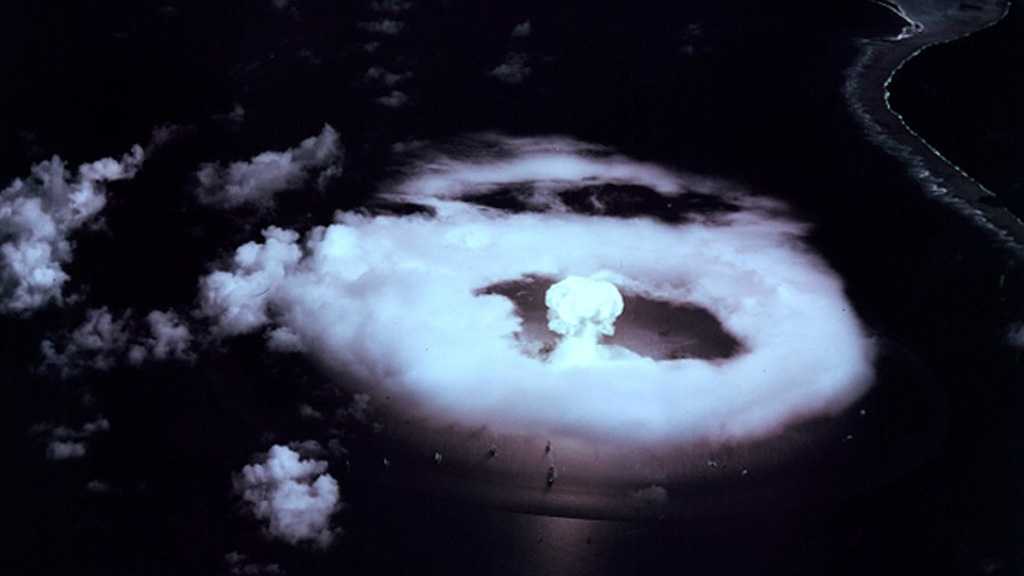
The world’s nuclear powers are increasingly pouring money into their atomic arsenals, a new report shows, with Washington leading the way. The US has also exited a major arms control treaty and deployed a new tactical weapon.
Nine nuclear-armed nations spent an estimated $72.9 billion on their 13,000-plus atomic weapons in 2019, according to a new paper by the International Campaign to Abolish Nuclear Weapons [ICAN]. At $35.4 billion in spending, the US accounts for nearly half the global total, ICAN said.
However, the campaign pointed out that “all this money and all these bombs have done nothing to protect any of these countries from Covid-19.” Nonetheless, those same countries have shown very poor performance in response to the pandemic.
“It’s clear now more than ever that nuclear weapons do not provide security for the world in the midst of a global pandemic,” said Alicia Sanders-Zakre, the lead author of the report, “particularly when there are documented deficits of healthcare supplies and exhausted medical professionals.”
Washington contributed the lion’s share of the world’s $7.1 billion increase in nuclear expenditures between 2018 and 2019, with $5.8 billion in additional spending. This is actually higher than the US share of global military spending, which amounted to 38 percent in 2019, according to the latest figures from the Stockholm International Peace Research Institute [SIPRI].
Russia, which ICAN estimated had more warheads than the US, spent $8.5 billion on them in 2019 – a quarter of the US’ nuclear expenditure, according to ICAN’s methodology – trailing China [$10.5 billion] and the UK [$8.9 billion].
Alarmed by the US efforts to bolster its nuclear arsenal, some in China have called for a drastic atomic build-up of their own, in order to pressure Washington to the negotiating table.
Fears of medium-range ballistic missiles in Europe triggering a global nuclear war led to the 1987 INF arms control treaty, which banned such weapons from the continent – but US President Donald Trump’s administration exited the treaty last year. Officially, they claimed Russia had been violating it, but provided no evidence. US officials further argued the INF was obsolete anyway, because it did not apply to other nuclear powers, such as China.
Comments
- Related News