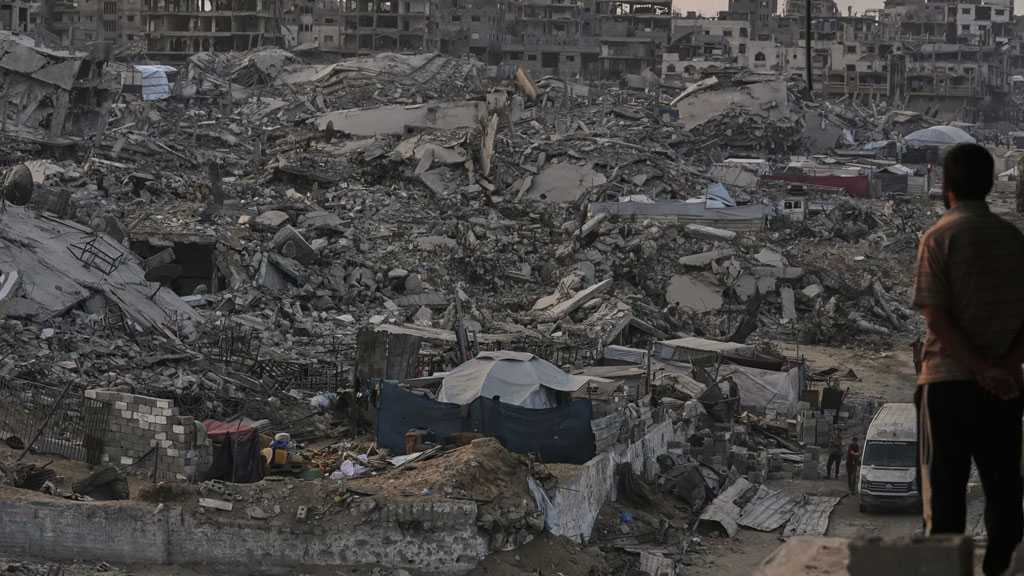
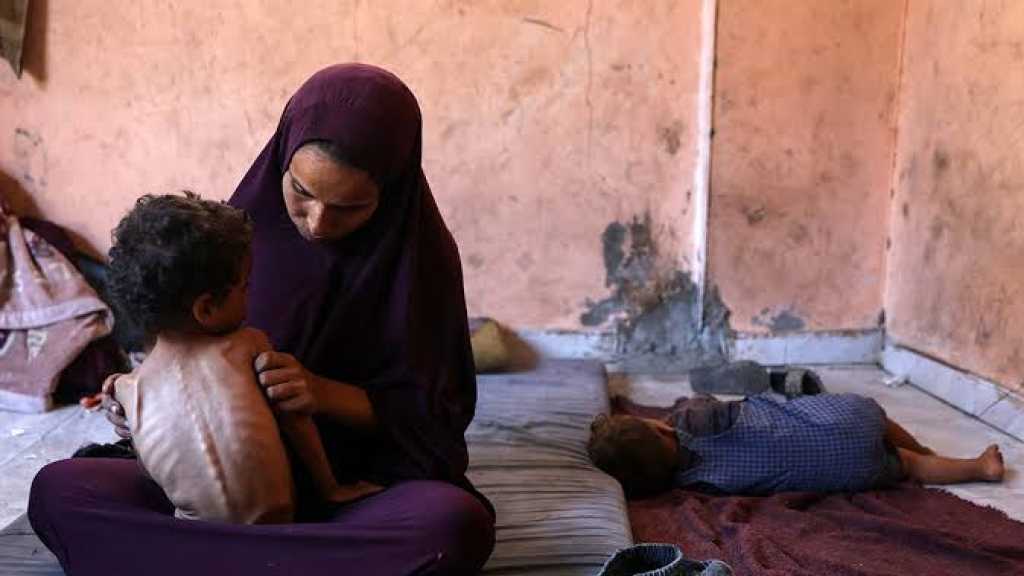
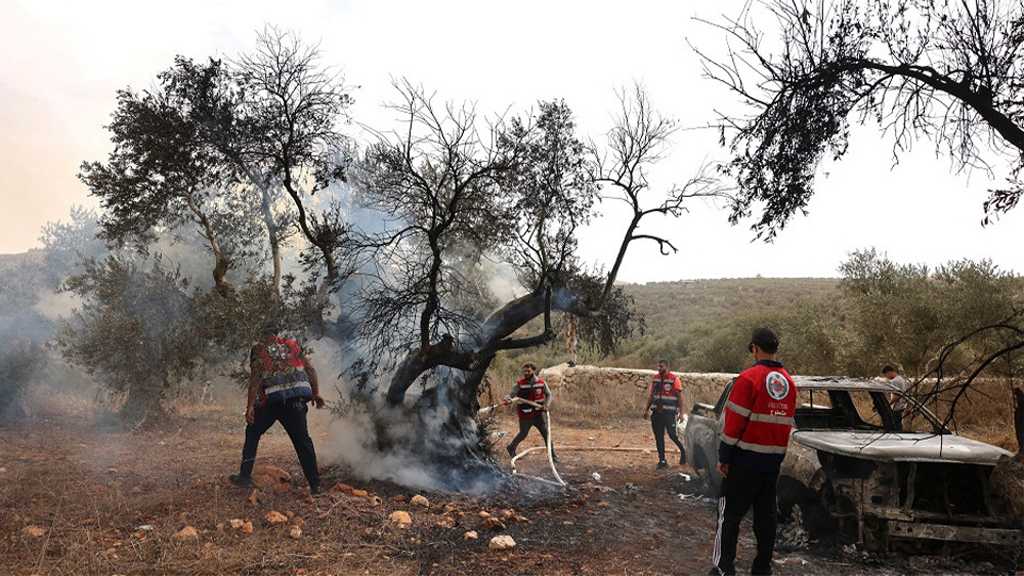
Number of dead in Gaza reaching historic levels
Source: realcities.com, McClatchy N'paper, 3-11-2006
KHAN YOUNIS, Gaza Strip - Malki Shahwan silently picks at the peach tissue she`s using to dab at the tears in the corners of her opaque eyes, eyes that her family says have gone blind from grief.
In the last 12 years, Shahwan has lost three of her eight sons to the battle with "Israel". Now a young nephew, a Hamas militant, has died in a clash with other Palestinian gunmen in a battle for control of the Gaza Strip.
Overcrowded, impoverished and now dominated by Islamist fundamentalists, Gaza has never been a beacon of hope in the "Israeli"-Palestinian conflict. But now an unprecedented chain of events has turned this bedraggled strip of land between "Israel" and Egypt into a place of unrelenting death and mayhem.
Things are so bad that the United Nations` top humanitarian official recently called the Gaza Strip a "ticking time bomb."
"When I call it a time bomb, it means that sooner or later there will be a social explosion which is even worse than the one we have today," said Jan Egeland, the United Nations` undersecretary general for humanitarian affairs.
"There is security chaos," Shahwan said while sitting below a huge poster featuring photographs of her dead sons proudly holding rocket-propelled grenade launchers and machine guns. "There are traitors - they shoot you in the back. There are gangs."
Nearly 540 Palestinians have died in Gaza in the 14 months since "Israel" pulled out in September 2005 - a death rate not seen since the worst years of the intifada, the Palestinian uprising, which officially ended nearly two years ago.
Most of those have been killed in clashes with "Israelis", including nearly 400 who`ve been killed in the four months since "Israel" launched a military offensive aimed at winning the release of a captured soldier. Nearly 40 died in fighting between Hamas and the Fatah faction, which had dominated the Palestinian government until January.
There`s been no movement toward the release of the "Israeli" soldier, and Palestinian groups continue to fire dozens of homemade rockets into southern "Israel". That`s prompted the "Israeli" military to threaten even tougher steps.
With few reasons for optimism, some specialists in the region are beginning to wonder if the deteriorating conditions will spark a third Palestinian revolt.
"Our commissioner general some time ago said that if we continue in this course, then we must be concerned that the next generation will lead the next intifada," said John Ging, the head of the Gaza office of the United Nations Relief and Works Agency.
The most immediate crisis facing Gaza residents is the "Israeli" siege that was imposed after Hamas-led militants tunneled into "Israel" and managed to capture an "Israeli" occupation soldier at a military outpost on June 25.
"Israel" responded by bombing the area`s only power plant, destroying key bridges, attacking government offices, arresting Palestinian lawmakers, closing the borders and launching a prolonged, low-level military operation. Nearly 400 Palestinians died, according to statistics compiled by the "Israeli" human rights group B`Tselem, compared with five "Israelis", two of whom were killed on the Gaza border.
Gaza residents are familiar with "Israeli" military campaigns. But now they`re also facing a threat from internal fighting.
Of the 538 Palestinians killed in Gaza since "Israel" razed its Gaza settlements, 38 died in internal clashes. While internecine fighting has broken out before, Gaza residents such as the Shahwans have never experienced the kind of protracted problems that are putting new strains on the fraying social network.
"Israel" is refusing to stop its attacks in Gaza until Shalit is released and the rocket fire from Gaza ends. The United States is backing "Israel" in its refusal to talk to the Hamas-led Palestinian government until it abandons its longstanding vow to destroy "Israel".
Amid the inertia, "Israel" is warning that it might move troops back along Egypt`s border with Gaza, claiming that Hamas has been using tunnels along the border to smuggle in anti-tank weapons. "Israel" has offered no evidence to support the claim.
Last month, Egypt moved 5,000 security forces to the border region in anticipation of "Israeli" action.
"We`ve continued to send out the alarm bells that the situation is getting worse and worse, and it just seems to continue to get worse and worse on the ground," said UNRWA`s Ging. "For the people living in Gaza it`s a disaster. And it`s a crisis."