Comptroller: IOF Unprepared for Attacks on Hazmat Facilities in Wartime
By Staff, Agencies
Security and emergency response forces are not fully prepared to deal with attacks on the “Israeli” entity’s many hazardous materials facilities in the event of war, according to a state comptroller report released Wednesday.
The Comptroller’s Office found a number of issues in the preparedness of various bodies – including the “Israel” Occupation Forces – when it comes both protecting against attacks on hazmat facilities and responding to the aftermath in the event of a leak.
The threat of an attack on hazmat facilities has become more substantial in recent years, after Hezbollah Secretary General His Eminence Sayyed Hassan Nasrallah threatened to target chemical and oil refineries in Haifa’s bay area. During the 2006 “Israeli” aggression, the Resistance group fired hundreds of rockets at Haifa.
The report said there were “certain gaps” in the entity’s readiness to deal with the threat of drones potentially targeting hazmat facilities, without elaborating further. Military officials said this week they have seen a trend in Iranian drone attacks in recent years, dubbing it Iran’s “UAV terror.”
Responding to the report, the military said that its “Home Front Command” considers “the handling of hazardous materials to be of great importance” and that it would work to “implement the recommendations of the comptroller’s report, subject to resources and priorities.”
However, the IOF claimed 99 percent of hazmat facilities were physically protected in the event of an attack.
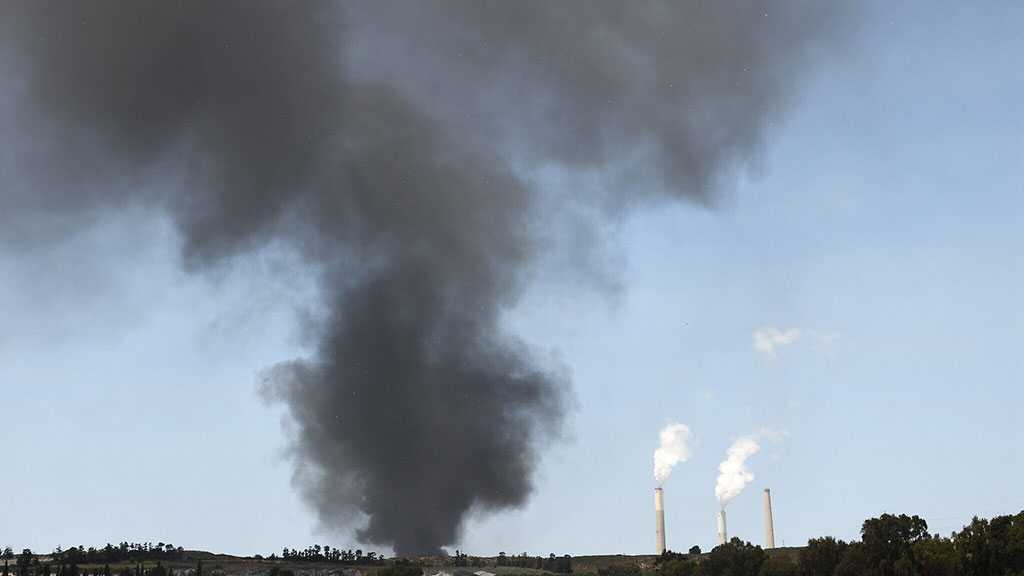
The military touted the May 2021 11-day war with resistance groups in the Gaza Strip as an example of its “a high level of readiness” to deal with attacks on the “home front”. During that conflict, the Eilat-Ashkelon oil pipeline was hit by a rocket and was on fire for several hours, sparking fears hazardous materials could be spread by the flames.
The entity’s State Comptroller Matanyahu Englman said he found that the IOF’s Planning Directorate and the War Ministry’s “National Emergency Management Authority” had not formulated an updated threat assessment on the “home front” since 2016. The IOF, however, insisted it had been updated in January 2021 and was valid for the next four years.
While not specifying the exact contents of the updated assessment, the IOF said the “Home Front Command” also “occasionally examines policy in response to changing threats, and takes necessary steps.”
Englman said there was a lack of complete data on the IOF’s “Home Front Command” competency to respond to an event of hazardous materials.
In its response, the military said all the “Home Front Command” battalions train according to standards set by the IOF, including responding to hazmat incidents. “The gaps will be completed over the next two years and the ‘Home Front Command’ considers their completion as having great importance,” the IOF said.
Englman also found the Environmental Protection Ministry had yet to complete a risk assessment survey for the Haifa Bay area, where several hazmat facilities are located. He also found six of nine fire stations that have hazmat response teams were not fully prepared according to standards set by the “Israel” Fire and Rescue Services.
The report also said the “National Cyber Directorate” had not prepared for the scenario of cyberattacks on hazmat facilities that are not considered to be part of critical infrastructure. In 2020, the “Israeli” entity faced several cyberattacks targeting its water system.
“The war in Ukraine should serve as a warning light regarding ‘Israel’s’ readiness for war,” Englman said, possibly referring to Russia’s attacks on nuclear power plants in the course of its invasion of Ukraine.
“Wars are not a thing of the past. Correcting the shortcomings and implementing the recommendations in the report will help ‘Israel’s’ readiness facing possible aggression,” he said.
Comments