- Home
- ISLAMIC RESISTANCE
- SECRETARY-GENERAL
-
Full Speeches
- Speeches-2000
- Speeches-2006
- Speeches-2007
- Speeches-2008
- Speeches-2009
- Speeches-2010
- Speeches-2011
- Speeches-2012
- Speeches-2013
- Speeches-2014
- Speeches-2015
- Speeches-2016
- Speeches-2017
- Speeches-2018
- Speeches-2019
- Speeches-2020
- Speeches-2021
- Speeches-2022
- Speeches-2023
- Speeches-2024
- Speeches-2025
- Speeches-2026
- Speech-Reports
- SG
-
Full Speeches
- Voices
- Ten Day Dawn
- The Biggest Crime
- Martyr Leaders

“Israeli” Knesset Passes First Reading of Bibi’s Divisive Plan, Despite Months-Long Protests
By Staff, Agencies
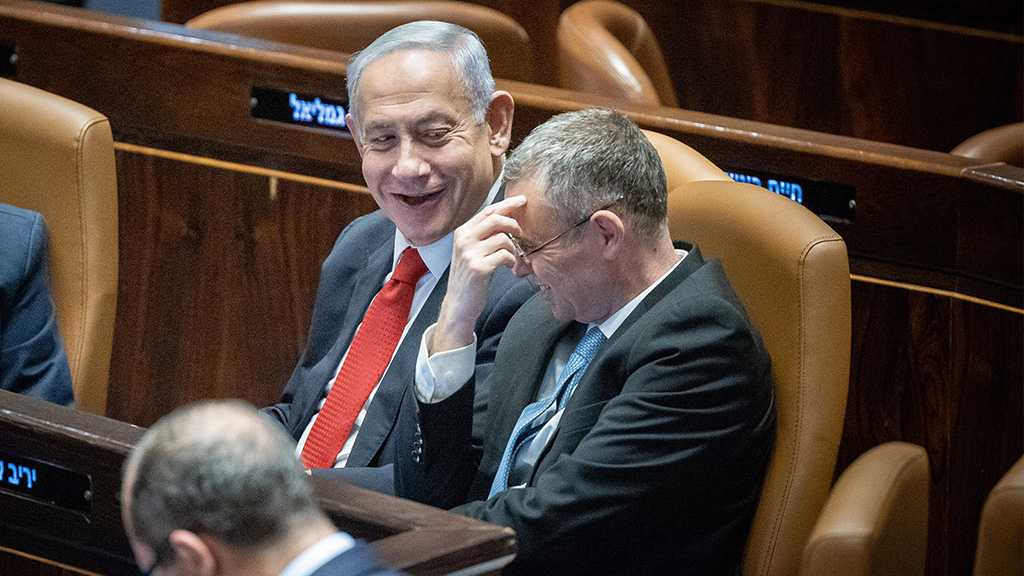
Ignoring 27 weeks of incessant protests, the “Israeli” entity’s legislature has approved the first reading of a highly controversial and divisive plan drawn up by the regime's extremist cabinet to curtail the powers of the so-called “Supreme Court”.
The bill proposed by “Israeli” Prime Minister Benjamin Netanyahu's far-right cabinet won 64 votes against 56 during a stormy parliamentary session on Monday, which was marred by heavy protests outside its building.
Hundreds of protesters marched on the Knesset after holding a massive gathering outside the court.
Ahead of the debate, some protesters entered the Knesset and had to be dragged out by the regime's forces, while others continued to demonstrate outside.
The sound of protesters could be heard loud and clear at the nearby Bank of “Israel”, whose governor Amir Yaron told reporters that continued political uncertainty "is liable to have notable economic costs" for the “Israeli” entity’s regime.
The bill has to clear two more readings before it can be signed into law.
It seeks to reduce the “Israeli” judiciary's power to rule on the cabinet's decisions, including on the very makeup of the cabinet.
The so-called “judicial overhaul” scheme, which was introduced by Netanyahu's extremist cabinet in January, has led to thousands-strong protests across the occupied territories every Saturday for the past six months.
Its supporters allege that it will end decades of overreach by judges, while opponents argue that the plan will remove necessary checks on the power that is wielded by “Israeli” politicians.
Critics have also accused Netanyahu, who is on trial on corruption charges that he denies, of trying to use the scheme to quash possible judgments against him.
Faced with overwhelming protests and a wave of industrial actions, Netanyahu paused the scheme in late March to enable talks on the issue.
However, deeming the negotiations to be pointless last month, he re-launched his bid to push through with the reform package, claiming that he has come up with new proposals, which were more moderate.
Comments
- Related News