17 Years on 2006 July War, “Israel” Fears Strong Hezbollah: Radwan Forces to Infiltrate
Translated by Staff, Walla
Seventeen years have passed since the Second Lebanon War, but the “Israeli” military is still engaged in both an overt and a covert battle against Hezbollah over the border line between occupied Palestine and Lebanon.
Every morning, the Northern Command, led by Maj. Gen. Ori Gordin, promotes an ambitious engineering project. It wants to erect a barrier that includes a fence, a wall, trenches, and an advanced information collection system.
“Israel” is seemingly satisfied with how much of the barrier has already been completed, but the armed infiltration from Lebanon to the Megiddo junction in March highlights gaps in the defenses.
The army’s engineering activities along the border are very worrying for Hezbollah. In recent months, the group has launched a series of provocations with the aim of sabotaging the fence.
The climax came about two months ago with the erection of tents that became Hezbollah’s military barracks on “Israeli”-occupied lands in the Shebaa Farms area.
The army is preparing for the possibility of political efforts failing and having to resort to a military option to have the tents removed – which at this stage do not pose a threat, but embarrassed the enemy’s government and army when the media in Lebanon exposed the developments.
But despite the daily preoccupation with these issues, including Wednesday’s provocations that unfolded in the area where the fence is located and during which the army was forced to use “non-lethal” means against dozens of people in Lebanon, the real threat looks completely different.
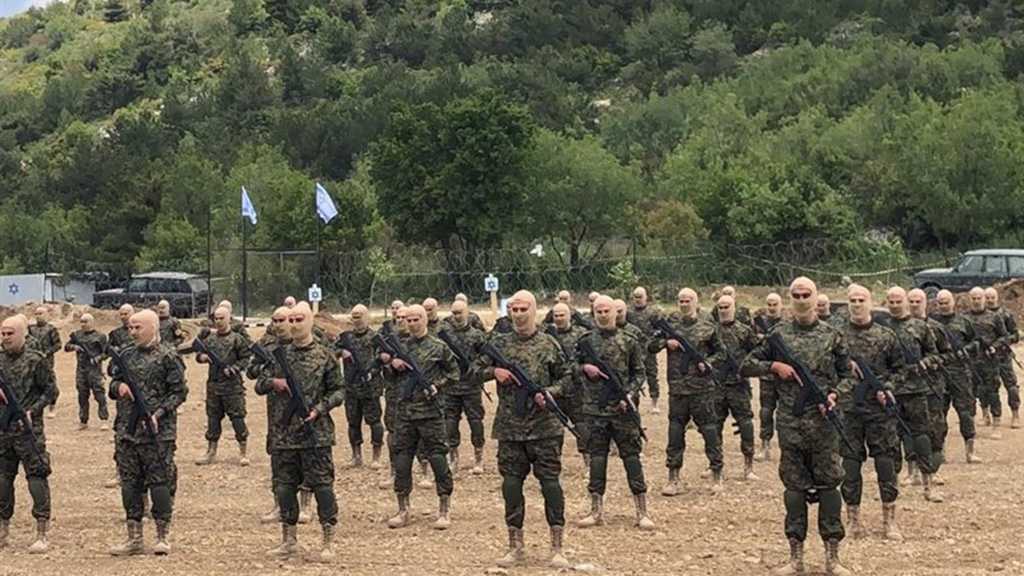
Last year, Hezbollah has succeeded in increasing the number of its special forces, known as the Radwan Force, in dozens of locations along the border line, in a way that allows for a rapid incursion into the occupied territories and securing control, even if temporarily, over the “Israeli” settlements close to the fence.
In addition, Hezbollah has stepped up the pace in building its military outposts near the border, mostly under the guise of environmental organizations. Above all, the group has improved its capabilities in range, scope, lethality, and worst of all, accuracy, which allow it to damage strategic installations, critical infrastructure, and symbols of government.
In addition to this and no less important, Hezbollah has improved its air defense system with the help of Iran and Syria and the range and number of drones that are not only capable of intelligence gathering but also attacking.
According to “Israeli” estimates, in case of war, Hezbollah is ready to launch about 4,000 missile per day in the first stage, after which the rate of fire will decrease according to the attacks of the Air Force.
There is no doubt that Hezbollah in 2023 is stronger and larger than it was in 2006.
Since that 2006 war, the “Israeli” army has succeeded in postponing another war.
At the same time, the “Israeli” army has succeeded in recent years in raising the level of efficiency of ground maneuvers deep in enemy territory. The range of fire that Hezbollah would unleash on the “Israeli” home front would leave the political leadership with no choice but to issue an order from day one to send regular and reserve ground forces to carry out maneuvers in the heart of Lebanon in an effort to assert control over launch sites.
The big question is: will the “Israeli” army know how to extinguish the flames on the Lebanese border and keep the war away? History has shown that as long as there is friction along the border, there are too many mistakes on one side combined with misunderstandings on the other side that can lead to a confrontation. Everyone knows how that starts but no one has any idea how it will end.
Comments