The American Unraveling: Echoes of Old Empires in a Fractured Superpower
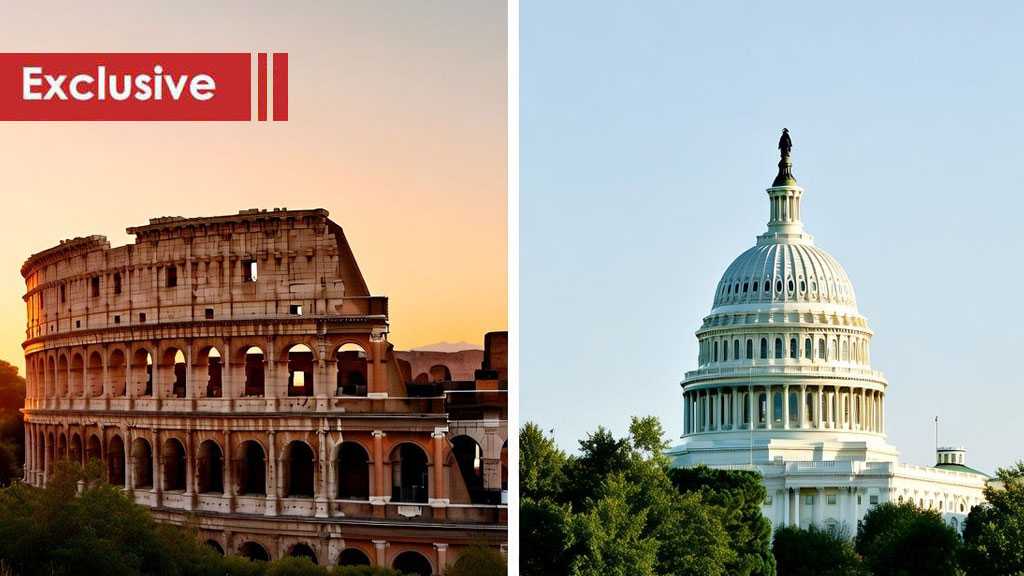
By Mohamad Hammoud
How mounting debt, polarization and overreach echo the declines of the Ottoman, British, and Soviet empires
Empires rarely collapse overnight; they decay internally, often unnoticed until the tipping point arrives. Historians interviewed by The Guardian describe the Ottoman Empire as weakening for decades due to corruption, political infighting, and resistance to reform. Britain faced a similar strain: endless debates over the cost and morality of ruling distant lands fractured the nation. Even the Soviet Union, which appeared to fall suddenly, had been unraveling for years, as officials admitted economic dysfunction in the 1980s, widely reported by The New York Times.
America today shows echoes of these cracks. Gallup polling, reported by CNN, reveals record-low trust in Congress, the Supreme Court, and federal agencies. Political scientists told NPR that polarization paralyzes governance. Like past empires, the US struggles to agree on basic facts, let alone a common purpose—a subtle rot that, if ignored, can grow into something irreparable.
Overreach Abroad and Domestic Neglect
History teaches that overreach can be deadlier than defeat. Britain did not collapse from a single loss; it crumbled under the weight of its global rule, the BBC reported. The United States now carries an even heavier global burden. Defense officials told Reuters that America maintains hundreds of overseas bases and sprawling alliances. At the same time, domestic infrastructure—roads, bridges and water systems—falls into disrepair, according to the American Society of Civil Engineers.
The lesson is familiar: The Ottomans spent heavily to control distant provinces while neglecting their cities. America mirrors this pattern, sending vast resources abroad even as its foundations at home erode. Overreach begins overseas, but its impact inevitably reaches domestic life, touching everything from economic stability to daily safety.
Debt Deepens the Fracture
Financial strain exposes an empire’s fragility. The Joint Economic Committee reports that US gross national debt now stands at $38.09 trillion, with $30.59 trillion held by the public. The average interest rate is 3.393 percent, and net interest alone could consume nearly 14 percent of federal outlays [jec.senate.gov]. Military spending amplifies the pressure: analysts cited by Reuters note that the US outspends the next ten countries combined. While not the only factor, defense outlays drive borrowing patterns and intensify fiscal vulnerability.
The consequences are unavoidable. Bloomberg reports that rising debt limits investment in infrastructure, education, and innovation. Persistent borrowing could force higher taxes, deep cuts to public services, or inflationary measures that erode purchasing power. History reminds us that when empires spend relentlessly beyond their means, their foundations quietly crumble long before the collapse becomes obvious.
Declining Global Influence
Empires falter when authority is no longer assumed. The Ottomans lost control as national movements surged. Britain’s colonies claimed independence once London could not enforce compliance. The Soviet Union fragmented the moment Moscow faltered.
The United States now exhibits similar signs. The Financial Times reports that European allies hedge between Washington and Beijing. At the same time, Reuters notes Middle Eastern states pursuing independent policies. Unwavering support for “Israel” in controversial operations further erodes US credibility. Analysts interviewed by Al Jazeera argue that the gap between America’s human rights rhetoric and policy toward “Israel” undermines moral authority, echoing the hypocrisy that hastened the decline of past empires. The lesson is clear: when trust fades abroad, power at home becomes increasingly tenuous.
Legitimacy Eroded at Home
No empire endures once its people lose faith. Ottoman citizens ridiculed a failing state. British taxpayers questioned why foreign wars drained resources while austerity struck at home. Soviet citizens stopped believing their government could deliver.
In the United States, this erosion is visible. ABC News surveys show growing distrust in elections, federal institutions, and elite actors. Corporate scandals and intelligence-linked controversies reinforce the perception that accountability applies to ordinary citizens, not the powerful. History warns: when legitimacy evaporates faster than authority, decline becomes inevitable.
A Crossroads of Choice
The United States remains the world’s most powerful nation, yet warning signs are unmistakable. The Ottomans decayed from within. Britain collapsed under the weight of global obligations. The Soviets disintegrated when their systems could no longer sustain ambition.
Today, America shows the same patterns: internal division, overextension abroad, rising debt and a legitimacy crisis at home. Empires do not fall solely from external defeat—they fall when they ignore their own weaknesses.
The US now stands at a crossroads: confront these fractures with honesty, or drift toward the fate of empires that once believed themselves too strong, too exceptional and too indispensable to fail. History, once again, offers a warning—power without self-awareness is a fragile illusion.