“Israeli” Army Reserves General: ‘Israel’ at Its Most Vulnerable
By Staff,
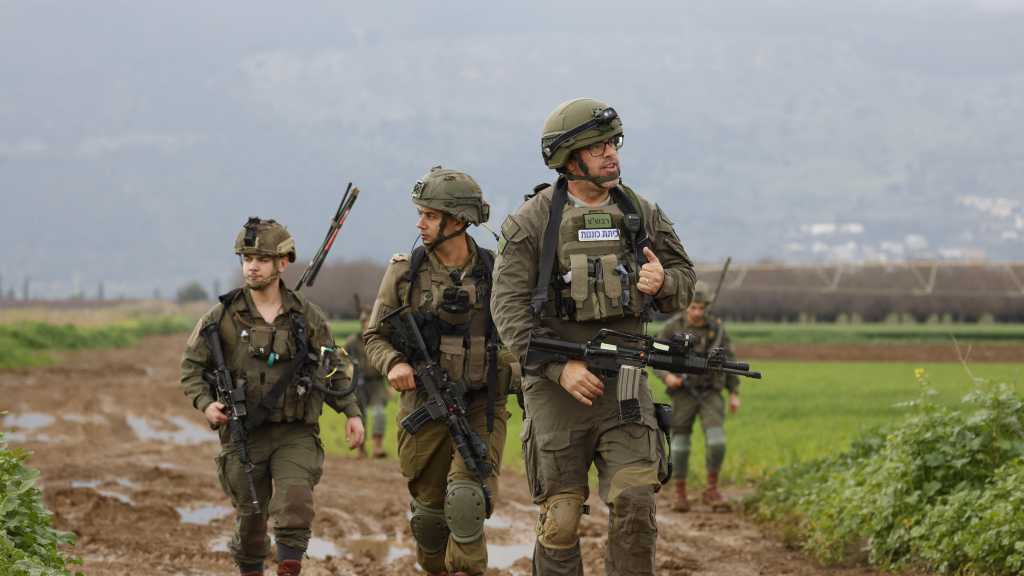
Major General [Res.] in the “Israeli” occupation forces [IOF], Israel Ziv, stated in an interview with Hebrew website "Channel 12", that the operation carried out by the "Israeli" occupation forces in Syria last week exemplifies a state of confusion and lack of strategy, amid a complete absence of political clarity on "Tel Aviv's" objectives.
He described the operation as an operational error, reflecting an incomplete end to the war across all five fronts, leaving everyone uncertain of where they stand and where they are heading.
Ziv, who previously served as head of the IOF's Operations Division, noted that US President Donald Trump had tweeted over the weekend regarding the incident in Syria, saying, "It is important that ‘Israel’ maintain a dialogue with Syria and not hinder its development."
Trump also discussed the matter in a phone call with "Israeli" Prime Minister Benjamin Netanyahu. Ziv asked, "What does 'Israel' really want in Syria? Where is Syria heading? Does Trump even understand what's happening there? Does anyone in 'Israel' comprehend the new dynamics of Turkish expansion in Syria and the re-establishment of what seems to be a “Daesh [Arabic Acronym for the terrorist ISIS/ISIL group] State?”
Ziv further criticized the "Israeli" entity for burying its head in the sand, arguing that for political reasons-aside from the personal relationship between Netanyahu and Trump, or rather, what Trump dictates to Netanyahu-it is completely ignoring diplomacy.
He also explained that, in the absence of any clear political guidance, IOF are left to handle routine "security" tasks. Ziv stressed that the entity conveniently avoids taking responsibility for its political failures by offloading this burden onto the military.
The reserve general also criticized the "Israeli" handling of Syrian sovereignty, saying, “Instead, they are doing what they know best: building a row of unnecessary outposts whose sole purpose is to protect themselves from the attacks that will soon be launched against them, and sending in a reserve battalion to carry out arrests as if they were taking place in Nablus. The flaw in this operation is not merely practical; there is a strategic folly here stemming from an intoxication with power that could be replicated anywhere. Simultaneously, ‘Israel’ is preventing the Syrian army from deploying in areas near its borders. It is completely disregarding Syrian sovereignty.”
According to Ziv, “Israel” needs an agreement with Syria -which remains temporarily frozen-to shift responsibility to the Syrian army, under US supervision, rather than Turkish influence. Such an agreement, he argued, could contribute to reshaping Syria, ensuring a balance of power between Saudi Arabia and Turkey, and be made to establish a demilitarized "security" zone, free of heavy weaponry, under the control of the new Syrian army tasked with preventing terrorism and future hostility against "Israel." Whenever intelligence on such terrorist organizations becomes available, responsibility for addressing them should be transferred to the Syrian side, with "Israeli" oversight to ensure appropriate action is taken. If the threat is not addressed, airstrikes should be conducted. There will be no need for ground troops to patrol Syria as if they were operating in the Araba area.
Major Ziv further cautioned, "In the meantime, 'Israeli' policies are fueling the new Turkish narrative circulating about the [occupied ‘Israel’], which violates the sovereignty of neighboring countries. According to this narrative, 'Israel' controls and occupies land in Gaza, Syria, and Lebanon."
Ziv also stressed that the situation in Lebanon is similar, saying: “Despite the internal justification and the desire to ‘atone for the mistake of October 7,’ reflected in daily strikes on every target, big or small, this is no substitute for a long‑term policy aimed at changing the reality in Lebanon.”
He emphasized that what is happening instead is the creation of a state of ongoing war that weakens the Lebanese government rather than strengthening it. “And rather than assuming the responsibility it committed to regarding dismantling Hezbollah, the Lebanese government will find itself compelled to adopt a hostile policy toward ‘Israel’ and return to supporting Hezbollah in its war against ‘Israel.’”
Ziv underlined that the situation in Gaza is completely stalled, as “Israel” has no political vision whatsoever. Everything, he said, is dictated by narrow, short‑term electoral calculations. In Netanyahu’s campaign narrative, he cannot retreat from the so‑called “yellow line” in Gaza, which is presented as an alternative to “total victory,” even if the price is blocking the second phase, allowing Hamas to recover, and enabling it to maintain control over half the Strip and most of its population.
This, he noted, is clearly the worst possible scenario. It leaves Gaza as an open, festering wound rather than pushing—decisively and in coordination with the Americans—for Hamas’ removal. He stressed that “Israel’s” shift to a supposedly improved defensive posture for its settlements, through consolidating its scattered and vulnerable defenses, is also not being achieved.
Ziv cautioned that as the draft‑dodging law is currently being debated, it must be understood that the amount of force needed to confront all the open fronts simply does not exist—especially given the exhaustion of the reserve forces. He explained that it is impossible to maintain the current number of troops across the so-called “security” areas in Gaza, Lebanon, Syria, and the West Bank without adding another 10,000 soldiers, even before considering the establishment of a security barrier in the Jordan Valley, for which no one knows how manpower will be allocated.
He further highlighted, “We are in a state of continuous drip‑warfare that is gradually turning into a long‑term war of attrition. At the moment, its pace is low, but time will make it flare up. This is a politically driven war; instead of ending with strong agreements, it continues to bleed in order to serve Netanyahu’s power and his various needs—delaying his trial, securing a pardon, keeping his government in place until the last day, and building a new security narrative for the elections. And this is completely at odds with ‘Israel’s’ real security interests.”
Ziv concluded, "This war is draining all remaining gains from the battles, exhausting what little regional and international legitimacy is left, further weakening the already exhausted 'Israeli' army, depleting the budget, and deepening the gloomy general atmosphere that Netanyahu is exploiting to pressure the president for a pardon. The 'drip' war is extremely harmful for 'Israel'."
Comments