“Israeli” Spying Raises Concerns at US-Led Gaza Aid and Planning Hub
By Staff, The Guardian
Sources familiar with internal disputes say “Israeli” operatives have been conducting extensive surveillance of US forces and allied personnel stationed at a new US-run base in the south of the “Israeli” entity, prompting diplomatic and military concern among partner nations.
According to those briefed on the matter, the scope of intelligence gathering at the Civil-Military Coordination Center [CMCC] led the base’s US commander, Lt Gen Patrick Frank, to summon his “Israeli” counterpart and demand that all recording of meetings and discussions cease.
Staff and visitors from other countries have also complained about being recorded inside the facility and were warned to limit the sharing of sensitive information due to concerns it could be collected and exploited.
The US military declined to comment on the surveillance. The “Israeli” military also declined to comment on Frank’s reported warning, stating instead that discussions at the CMCC are unclassified. In a statement, it said the "Israeli" military documents meetings it attends “in a transparent and agreed upon manner,” dismissing accusations of intelligence-gathering against partners as “absurd.”
The CMCC was established in October to monitor the ceasefire, coordinate humanitarian aid and develop plans for Gaza’s future under Donald Trump’s 20-point proposal to end the war. Large copies of the plan hang throughout the building. Troops based there were tasked with facilitating increased aid deliveries into Gaza as part of the ceasefire arrangement.
However, aid flows have remained constrained. The apartheid “Israeli” entity has repeatedly restricted shipments of food, medicine and other essentials, and a full siege during the summer pushed parts of Gaza into famine.
While early reports suggested “Israel” was handing control of aid access to the US military, a US official said Washington has leverage but that “Israel” still controls Gaza’s perimeter and what enters the territory. “They remain the hand, and the CMCC has become the glove over that hand,” the official said.
US personnel at the CMCC included logistics specialists experienced in disaster response and operating in hostile environments. Many arrived hoping to expand aid delivery but found that “Israeli” restrictions, not engineering challenges, were the main obstacle. Within weeks, dozens reportedly left the mission.
Diplomats said discussions at the CMCC helped persuade “Israel” to ease some restrictions on items labeled “dual use,” including tent poles and water purification chemicals.
Dutch Foreign Minister David van Weel said he was briefed there on at least one such barrier being lifted. Other basic items, such as pencils and paper needed to reopen schools, remain banned without explanation.
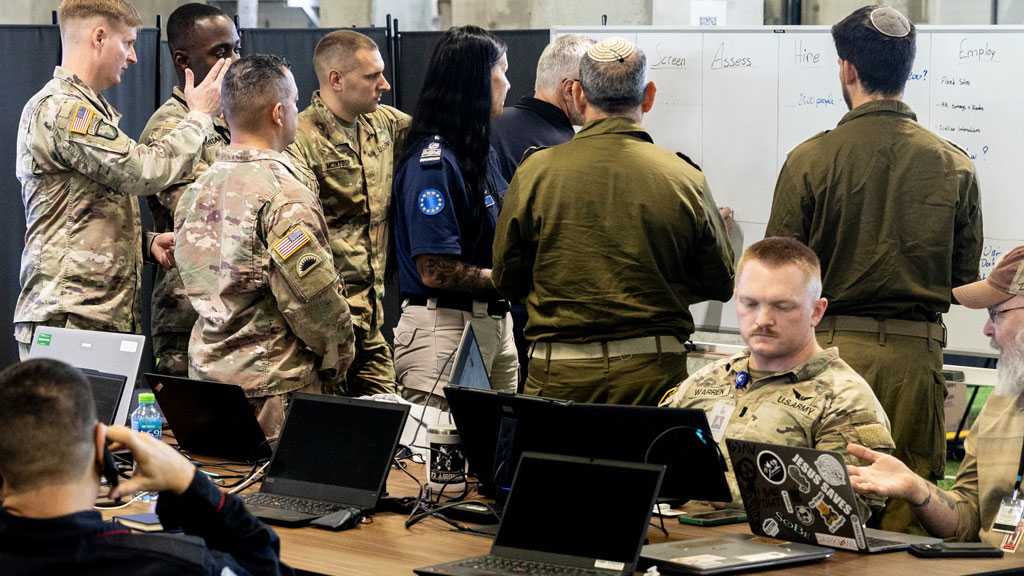
The CMCC brings together military planners from the US, “Israel” and allied countries including the UK and the United Arab Emirates, alongside diplomats and humanitarian actors.
Palestinians, however, are entirely excluded. No Palestinian civilian groups, humanitarian organizations or representatives of the Palestinian Authority are involved, and attempts to include Palestinians via video calls were shut down by “Israeli” officials. US planning documents seen by the Guardian avoid using the terms Palestine or Palestinian, referring instead to Gaza’s population as “Gazans.”
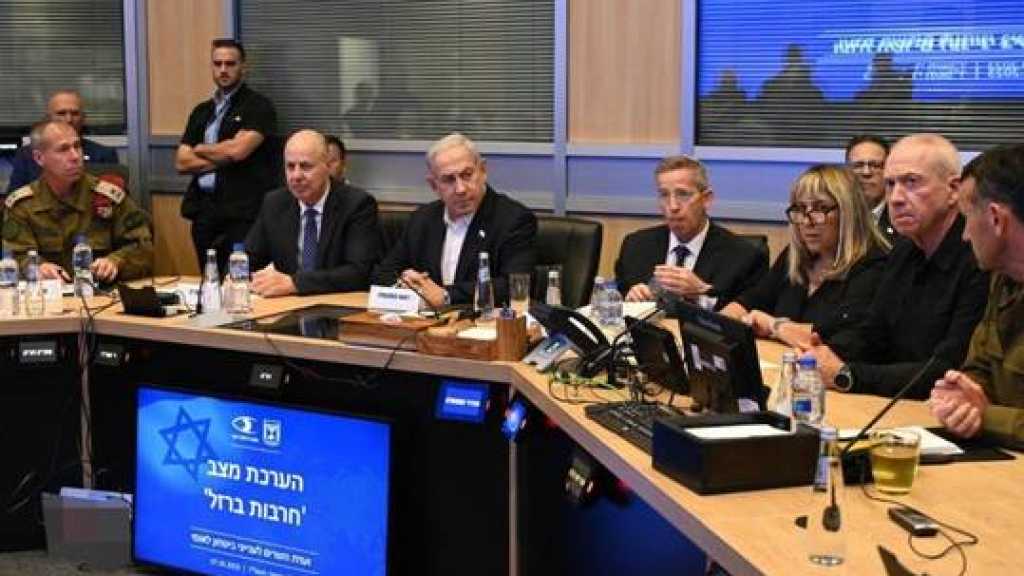
“Israeli” Prime Minister Benjamin Netanyahu has described the CMCC as a bilateral “Israeli”-American initiative, omitting mention of other partners. An “Israeli” military source said Netanyahu’s visit to the center was arranged outside working hours for security reasons and that the US determined which counterparts attended.
The CMCC operates out of a multistory building in “Kiryat Gat”, roughly 20 kilometers from Gaza, formerly used by the Gaza Humanitarian Foundation. Inside, the center resembles a tech startup, with open spaces, whiteboards and corporate-style language.
Aid workers say terms like “end users” are sometimes applied to Palestinians, while themed planning sessions such as “Wellness Wednesdays” and “Thirsty Thursdays” focus on hospitals, schools and water systems devastated during the war.
Many diplomats and aid officials expressed deep unease about participating in the CMCC, citing legal concerns, the exclusion of Palestinians, the blending of military and humanitarian roles and the absence of a clear international mandate. Still, they fear that disengaging would leave Gaza’s future to “Israel” and US military planners with limited knowledge of local realities.
Sources say the CMCC’s role may already be diminishing, with dozens of US personnel returning home after completing their official assignments. Meanwhile, plans developed there face major political obstacles. “Israel” insists the ceasefire will not advance until Hamas is demilitarized, a goal “Israeli” forces failed to achieve despite two years of intense assault.
Earlier this year, a UN commission of inquiry concluded that “Israel” was committing genocide in Gaza, a finding echoed by several humanitarian organizations. Asked when CMCC plans might be implemented, a US official declined to give a timeline, saying the issue ultimately lies “more in the political world” than with the US military.
Comments