Lebanon’s Detainee Association: Official Neglect of Prisoners’ Case
By Mostafa Awada
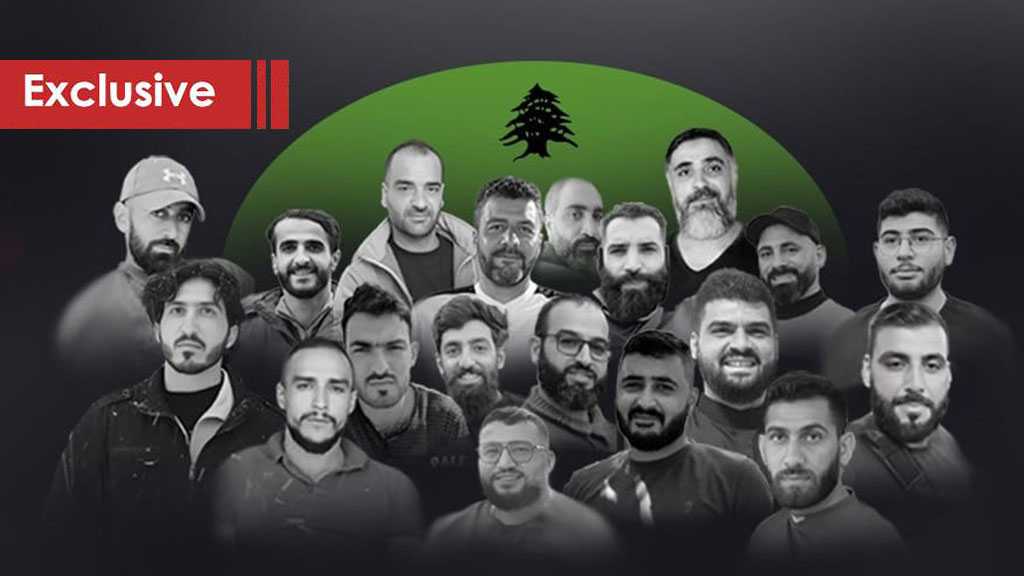
Lebanon – Across Lebanese villages and towns, twenty stories hang suspended between hope and pain. Twenty detainees—some resistance fighters who confronted the occupation in the latest war, others civilians abducted after the ceasefire—now languish behind the bars of the occupation’s prisons. Each name carries a path of steadfastness, and each face is awaited by families still looking on, hoping for any news that might ease their enduring worry.
What raises the most questions is the state’s silence regarding its own people. Amid the neglect of the Lebanese detainees’ case in the occupation’s prisons—and as questions grow over the absence of any official action to determine their fate—the head of the Lebanese Association for Detainees and Liberated Prisoners, Ahmad Taleb, offers al-Ahed news website an exclusive and comprehensive overview of this file and the stagnation and official silence that now surround it.
Taleb affirms from the outset that the file has seen no meaningful progress, and that several detainees remain entirely unaccounted for. Even Palestinian groups inside the prisons confirm that they have no information on the Lebanese detainees, as the occupation isolates them just as it isolates the Palestinians themselves.
He notes that the case of detainee Hussein Karaki is a stark example of this information blackout, as there has been no trace of him since his arrest, nor any data about his health condition or the place of his detention.
Regarding the reasons behind launching the media campaign and the event organized by the association and the detainees’ families, Taleb explains that the primary motive is the purely humanitarian dimension of the issue. It is not merely political; above all, it is a human-rights cause—one whose slogans are raised around the world but collapse at the gates of the oppressed Arab. He adds that this initiative was also a protest against the silence of international organizations, which have shown no interest or willingness to follow up on the situation of the Lebanese detainees or to uncover their fate.
As for the possibility of the file being diluted or treated lightly by official authorities, Taleb answers candidly that this is no longer a concern but an evident reality. The state, he stresses, is taking no steps within its responsibilities and is instead relying on procrastination and delay. He continues, “The state’s negligence is nothing new; we have seen it before in other cases, including the occupation’s decision to prevent residents from returning to their villages, where the state simply watched without taking any meaningful action.”
Taleb stresses that the association and the families of the detainees will continue to raise their voices. He adds, “They say it is forbidden to strike the dead, but we will keep pounding on the state’s door until it wakes from its death and its silence and fulfills its duty toward Lebanese citizens whose fate remains unknown.” He notes that the families can no longer bear to wait quietly while the state remains entirely absent from its sovereign and humanitarian responsibilities.
The head of the association reveals that they waited nearly eight months before issuing their first outcry, hoping that after the war the state would fulfill its duties as a sovereign authority. But the result was disappointing: they discovered that the file means nothing to the state—not in the media, not in official statements, and not in follow-up. From here, the media campaign began, aimed at informing public opinion that there are Lebanese detainees and missing persons whom their own state has not asked about and has taken no responsibility for.
Taleb lists the steps the state should have taken—from following up on the detainees’ file immediately after the ceasefire, to engaging diplomatically with the United Nations, the Red Cross, and relevant human-rights bodies, and even forming a legal and political committee to pursue the case. This is in addition to the most basic duties, such as visiting the families of the detainees and keeping them informed of any developments. Yet none of this has happened.
As for international organizations, Taleb places part of the responsibility on them as well, particularly the International Committee of the Red Cross, which has so far failed to make contact with the detainees or determine their whereabouts. He cites the case of detainee Imad Amhaz, who was abducted from Batroun despite not being in a military position or on the front lines, and whose fate remains unknown to this day.
Taleb concludes that the file of Lebanese detainees is facing complete official neglect and an unjustified international silence, leaving the families alone to confront this absence and this cruelty. As for the association, it remains determined to push forward with its campaign to uncover the truth and hold those responsible to account—ultimately working toward freeing the detainees or at least learning their fate.
Comments