When Words Refuse to Surrender: Learning to Unlearn “Israel”
By Fatima Haydar
Beirut – In Lebanon, we learn early that words can bleed.
In Lebanon, resistance is not confined to the battlefield. It lives in language, in memory and in the refusal to normalize injustice.
For many Lebanese, resistance appears in the words we choose instinctively—in calling things by what they are. We speak of occupation, not borders; of an entity, not a state. This is not stylistic rebellion but a moral position. It is a rejection of an imposed reality: a refusal to grant legitimacy to a settler-colonial, apartheid entity that has brought displacement, occupation and repeated violence into our lives and pretending it’s all normal.
Language here is not neutral. It never has been.
The “Israeli” wars on Lebanon have not only destroyed homes, villages and infrastructure; they have left enduring wounds in collective memory. From the South to the suburbs of Beirut – Dahiyeh – stories of airstrikes, displacement and loss are passed down not as distant history but as lived experience. In such a context, words become shields. Calling things by their imposed names feels like surrender. Resistance language emerges as a way to reclaim narrative sovereignty when political sovereignty is constantly violated.
I remember the first time I heard an adult correct a child for saying the “state of ‘Israel’”. The child was confused. The adult was calm. “We don’t say it like that,” he said, as if correcting grammar—but what he was really correcting was history. “It is occupied Palestine,” he added, after a pause, “or the ‘Israeli’ entity.” From that moment on, language stopped being neutral. It became a line we do not cross.
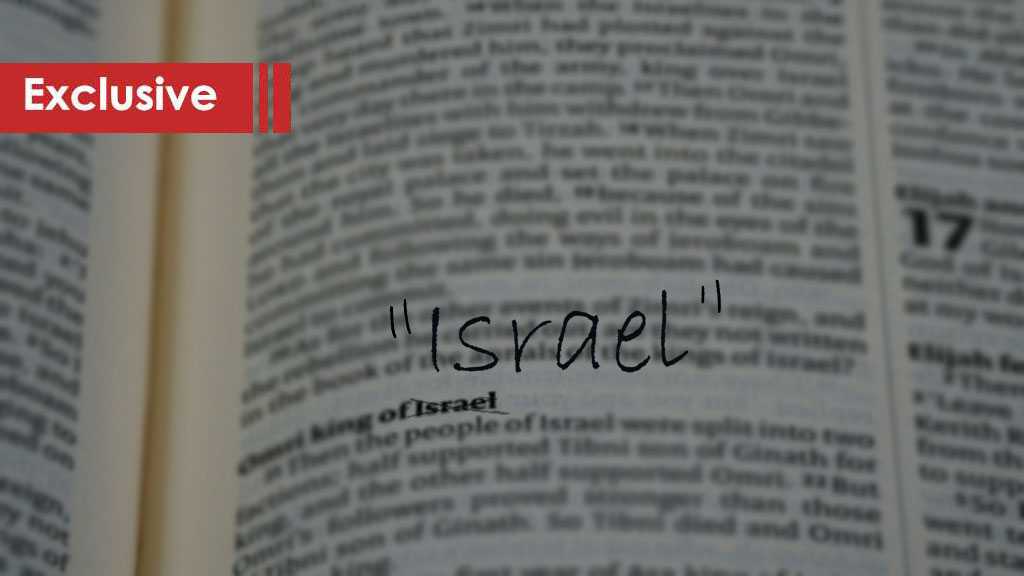
For writers, putting “Israel” in quotation marks is not provocation. It is memory. It is the echo of jets overhead, the count of days without electricity, the silence that follows an airstrike when everyone checks who is still alive. It is a refusal to legitimize an apartheid entity that has made destruction of our homes feel routine and our deaths feel footnoted.
In Lebanese daily life, resistance does not always wear a uniform. Sometimes it holds a pen. Sometimes it lives in conversation, in the stubborn insistence on calling things what they are. We do not speak of “clashes” when villages are erased. We do not say “both sides” when one side has fighter jets and the other has rubble. We do not accept the lie of balance where there is only domination.
During the Battle of the Mighty—Uli Al-Baas—some defended the land with their bodies, standing where the earth itself seemed to say enough. Others defended it differently. Mothers spoke to journalists with trembling voices that somehow never broke. Writers stayed up through the night, documenting names before they could be reduced to numbers. Young people translated pain into words the world could understand, hoping—against experience—that understanding might finally lead to accountability.
I think of a friend from the South who keeps his house keys on the same ring as the key to a home that no longer exists. “When we rebuild,” he says. He never refers to the aggressor as a state. He calls it an entity, an occupation, an apartheid project. For him, this is not ideology; it is accuracy. Language, like architecture, must reflect reality—or it collapses.
In Lebanese daily life, this resistance language appears casually yet deliberately. People speak of “the occupation,” not “the border.” They say “martyrs,” not “casualties.” They refer to “liberated land” rather than “disputed territory.” These choices are not accidental; they are rooted in decades of invasion, bombardment and imposed silence. Each term carries memory. Each phrase resists being forgotten.
The world often asks us to soften our words. To be “measured.” To be “objective.” But objectivity that ignores power is not objectivity; it is complicity. When an apartheid “Israeli” entity flattens neighborhoods and calls it self-defense, resistance language becomes a moral duty. Quotation marks become a quiet scream. Calling martyrs martyrs becomes an act of preservation against erasure.
Resistance language exposes the violence hidden behind sanitized vocabulary and reminds the global audience that what is happening is not abstract geopolitics, but human suffering.
There is a reason the fighters are rarely named in our writing. Not because they are unknown—but because they are understood. Their selflessness does not need branding. Their sacrifices do not need marketing. Everyone here knows who stood their ground so others could sleep, who chose the homeland over their own lives. Even the enemy knows. Especially the enemy knows.
Resistance language is not about rage; it is about truth. It is how a small country refuses to let its suffering be rewritten by press releases and policy briefings. It is how we say: this is not a “cycle of violence,” this is an ongoing assault. This is not a “dispute,” this is colonization. This is not security, this is apartheid.
For Lebanese communities that have buried their martyrs, rebuilt their homes and endured repeated “Israeli” assaults, language becomes a form of survival. It preserves truth when institutions fail. It speaks when international law is selectively applied. It insists that atrocities not be rebranded as unfortunate necessities.
This is why resistance language matters. It is not about hatred; it is about clarity. It is not about aggression; it is about refusing to normalize aggression against us. In a world where the apartheid “Israeli” entity invests heavily in narrative domination, resisting through words is both a right and a responsibility.
In Lebanon, words are not decoration. They are inheritance. They carry the weight of villages destroyed and rebuilt, of children who learned the sound of drones before they learned multiplication tables. To write “Israel” in quotation marks is to pass that inheritance forward—not as hatred, but as vigilance.
As long as injustice demands silence, resistance language will remain loud. And as long as the apartheid “Israeli” entity relies on distortion, we will rely on words that refuse to surrender.