Youth in Soleimani’s Creed: A Portrait of the Future
Mukhtar Haddad
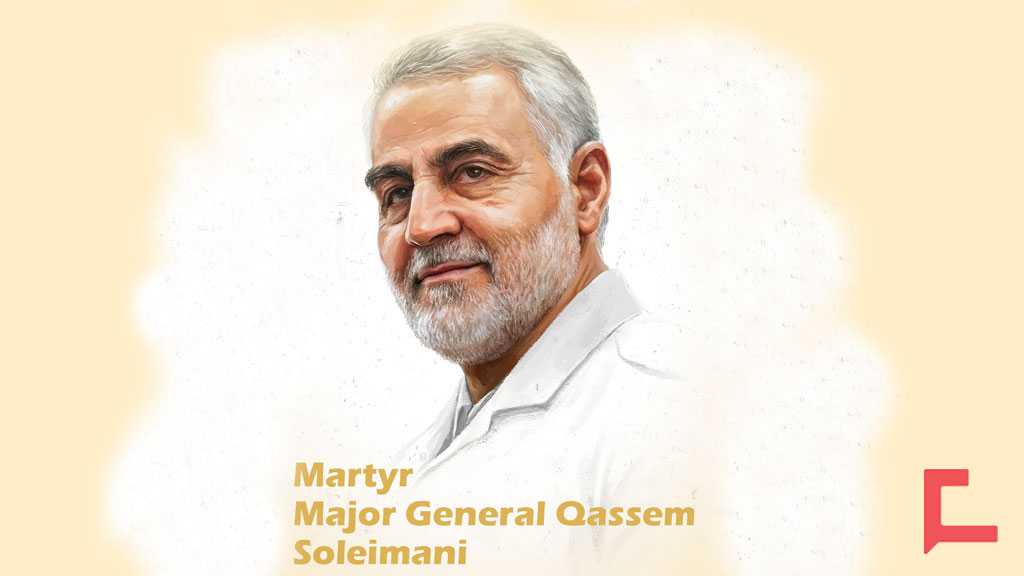
Martyr Hajj Qassem Soleimani was not a military commander in the conventional sense of the word. He was a comprehensive human and educational school whose deep imprint extended to the consciousness of youth inside Iran and beyond. His legacy is not confined to battlefield victories; it is especially defined by his distinctive relationship with young people - his trust in their abilities and his belief in their role in shaping the future and safeguarding values.
Soleimani understood early on that nations are not defeated on the battlefield alone. They are defeated when their youth lose their compass-when a new generation is stripped of meaning and purpose. From this conviction, engaging youth- practically and ethically-became a constant pillar of his journey.
Youth in the Thought of Soleimani and Abu Mahdi
Speeches by Imam Sayyed Ali Khamenei on various occasions following Hajj Qassem’s martyrdom emphasize that this leader was himself a direct product of the Revolution’s trust in youth- and that he, in turn, reproduced this trust in subsequent generations. Soleimani saw in youth an energy that, when paired with faith and awareness, becomes an unconquerable force.
He did not treat young people as mere instruments of execution, but as partners in responsibility. According to accounts recorded in the memoirs of his companions, he often repeated in private gatherings that when a young person feels dignified, miracles can happen.
Martyr Hajj Abu Mahdi al-Muhandis shared the same vision. He regarded youth as the core of serving peoples and repeatedly stressed that Iraq’s strength begins with faithful, conscious youth. He remained close to them wherever he was- listening to their views, entrusting them with responsibility, and seeing them as the generation that would carry Iraq’s future with sincerity and courage.
His relationship with youth was not merely that of commanders to fighters; it was the bond of a father who nurtures and inspires. Hajj Qassem Soleimani held the same outlook: together, the two formed a single school that viewed youth as the cornerstone of protecting homelands and building the future—making them a priority for the nation’s advancement.
The Educator-Leader
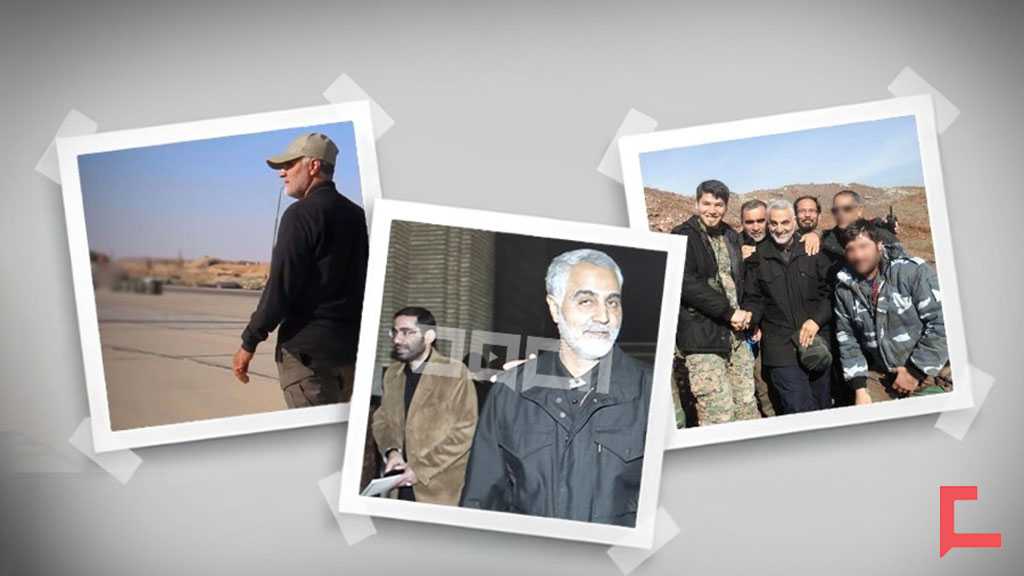
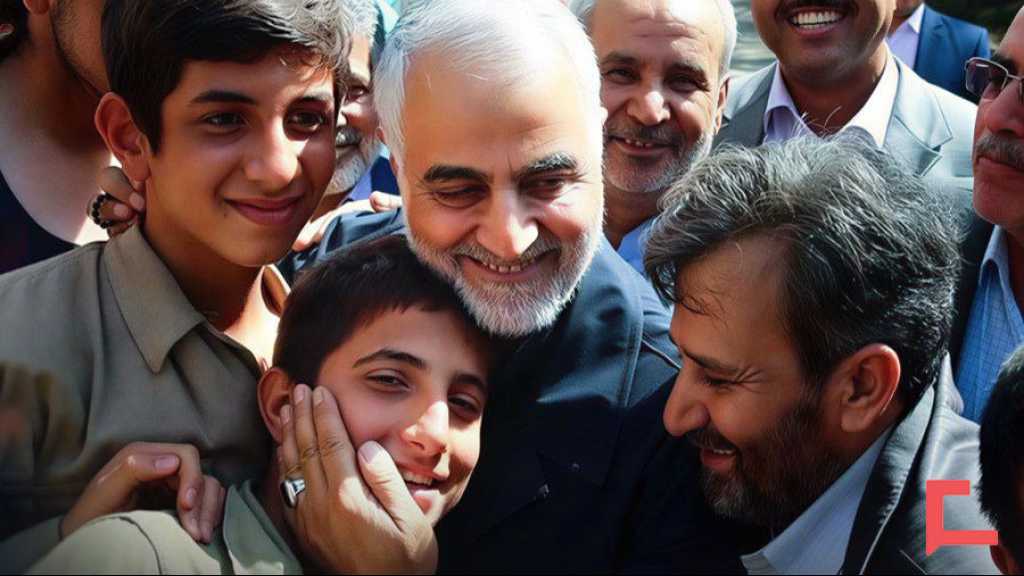
One of the most distinctive aspects of Soleimani’s relationship with youth was his calm, formative approach. He did not rely on top-down commands, but on leadership by example. He led from the front, endured hardships, and shared the daily details of life with soldiers and fighters alike. This made him close to the hearts of young people—not merely respected, but genuinely loved.
Many of the youth who served under his command did not see him as only a military leader, but as an older brother or a spiritual father—someone who listened attentively to their concerns and guided them without belittlement or humiliation.
Faith in Identity and Meaning
At a time when youth identity has been subjected to sweeping cultural and media assaults, Soleimani emphasized—according to his messages and statements—the importance of holding fast to Islamic and national identity, not as slogans, but as sources of self-confidence and dignity.
On more than one occasion, he stressed that when young people lose their connection to their roots, they become easy prey for hegemonic projects. For this reason, he consistently linked religious awareness with national dignity and social responsibility.
From Frontlines of Defense to Arenas of Human Development
Soleimani’s concern for youth was not confined to battlefields. He believed that building the human being is no less important than protecting the land. Accordingly, he supported cultural and educational programs and encouraged the integration of knowledge with faith, academic specialization with moral commitment.
He was quoted as saying that a faithful, conscious young person is stronger than a tank—an expression of his belief that the real battle is one of awareness and will before it is one of weapons.
His Advice to the Youth: The Essence of a Lifetime
Hajj Qassem consistently urged youth not to be dazzled by the false glitter of power, but to hold fast to values, serve people, and defend the oppressed. He did not ask them to become copies of himself; rather, he called on each of them to be true to themselves and to shoulder responsibility in their own fields—whether in science, culture, or social service.
His Impact After Martyrdom
The martyrdom of Hajj Qassem Soleimani did not end his presence among the youth; it amplified it. He became a symbol of sincerity, steadfastness, and devotion—an example invoked in the face of despair.
In the years following his martyrdom, youth interest in his life and legacy has grown, accompanied by numerous cultural and literary works that portray him not as a distant, mythical hero, but as a human being who combined strength with humility, firmness with compassion.
Looking at the life of Martyr Hajj Qassem Soleimani through the lens of his relationship with youth reveals a leader who believed that the future of the Ummah is forged in the minds and hearts of the younger generation. He did not see youth as a problem, but as an opportunity; he addressed them not with fear, but with trust. He left them a moral and intellectual legacy affirming that the path to dignity begins with self-knowledge, adherence to values, and service to people. Thus, Hajj Qassem Soleimani was not only a martyr of the battlefield, but a martyr of education and human formation-and his message will remain alive as long as there are young people in the Ummah searching for meaning, role models, and hope.