The Death of Sovereignty: How the Maduro Abduction Buried International Law
By Mohamad Hammoud
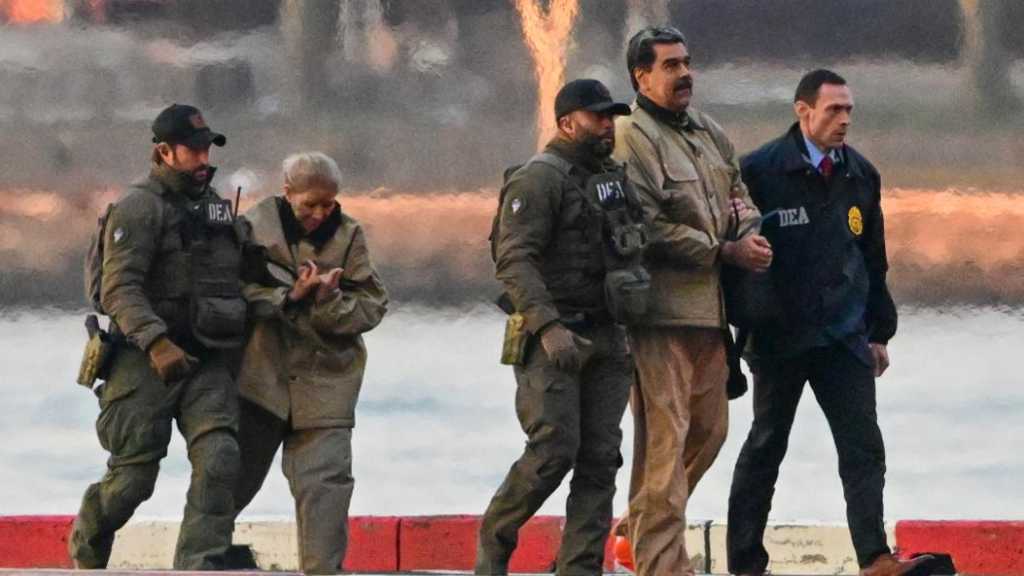
US President Trump opened 2026 by delivering what many legal scholars now regard as the fatal blow to the post–World War II international order. In the early hours of January 3, US forces illegally crossed into Venezuelan territory, abducted President Nicolás Maduro and his wife, and transported them to New York to face federal charges. The operation was framed in Washington as a routine enforcement action, but its implications reached far beyond US-Latin American relations.
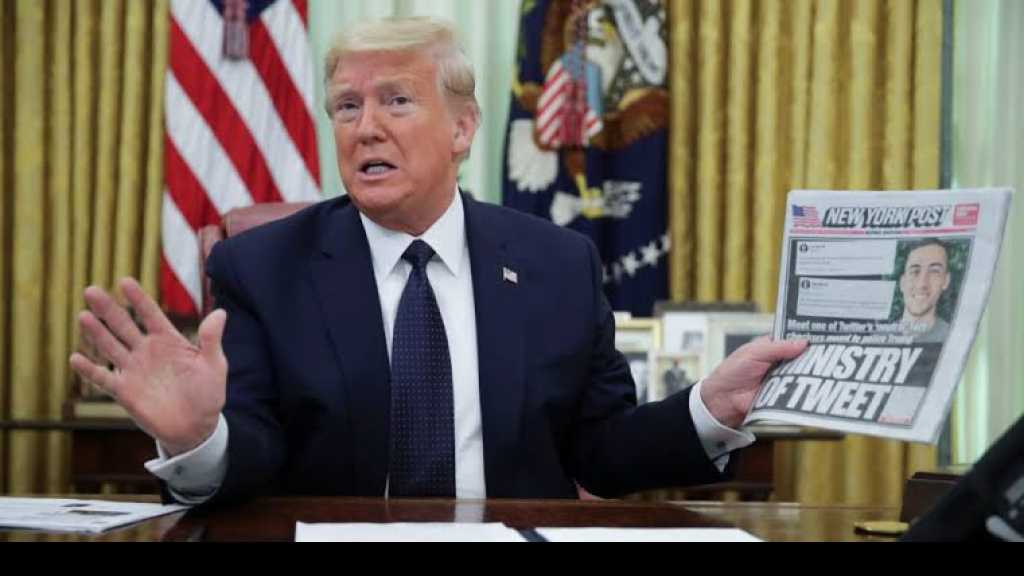
According to coverage by major US networks, President Trump celebrated the mission as a triumph of the “rule of law.” Outside the United States, particularly across the Global South, that narrative collapsed. Legal scholars and diplomats described the operation as international vandalism—a lawless use of force that strips sovereignty of meaning and exposes international law as selectively applied.
What unfolded in Caracas was therefore neither an arrest nor a disguised extradition. It was a kidnapping carried out by a superpower confident it would face no consequences. In that confidence lies the deeper rupture: Washington signaled that the legal order it once championed after World War II is now conditional-invoked when useful, discarded when it obstructs American power.
Selective Legality and the Collapse of the UN Charter
The legal violation was neither technical nor ambiguous. Article 2(4) of the United Nations Charter explicitly prohibits the use of force against the territorial integrity or political independence of any state. No Security Council authorization was sought. No credible claim of self-defense was made. The United States simply acted.
Also violated was the principle of immunity ratione personae, the absolute personal immunity afforded to sitting heads of state to prevent precisely this kind of unilateral seizure. By discarding it, Washington reduced the UN Charter from a binding law to conditional language.
The hypocrisy is unmistakable. While Washington lectures adversaries on the “rules-based order,” it remains- alongside its closest ally “Israel"- among the most persistent violators of international law. Just as “Israel” has operated with near-total impunity despite repeated UN findings, the United States increasingly treats the globe as its private jurisdiction.
Oil, Rubio, and the Regime-Change Playbook
Oil, Rubio, and the Regime-Change Playbook Behind the rhetoric of “narco-terrorism” lies a set of concrete political objectives championed by Secretary of State Marco Rubio. The son of Cuban immigrants and a long-time hardliner on Latin America, Rubio has made his priorities clear: sever Venezuela’s relationship with Cuba to weaken Havana, limit Iranian, Chinese, and Russian influence in what Washington still treats as its strategic backyard, and reassert US control over Venezuelan oil.
Venezuela’s vast proven reserves make it a central prize, but oil alone does not explain the operation. Caracas has functioned as a logistical and diplomatic bridge for US adversaries in the Western Hemisphere, providing Cuba with economic lifelines while facilitating Iran’s sanctions-evasion efforts and expanding cooperation with Beijing and Moscow. From Washington’s perspective, dismantling this network was not incidental-it was the objective.
The Drug War Fiction and Domestic Distraction
The narcotics justification collapses under scrutiny. US government data consistently show that the overwhelming majority of drugs entering the United States originate from Mexico and Colombia, primarily through the Pacific corridor. Venezuela is not the epicenter it is portrayed to be.
As the US economy faces mounting pressure and the dollar’s global dominance erodes, the spectacle of a “captured dictator” serves a domestic political function. It projects strength abroad while distracting from structural decline at home. The controversial Ker–Frisbie doctrine- allowing US courts to try abducted suspects regardless of how they were seized- provides the thinnest legal veneer for what is, in substance, state-sponsored kidnapping.
The New Law of the Jungle
The precedent set in Caracas is chilling. If an indictment issued in a New York courtroom can justify a military incursion and the abduction of a sitting president, no leader outside Washington’s favor is beyond reach. The United Nations is reduced to a stage prop-invoked rhetorically and ignored in practice.
This is the new order: law for the weak, force for the strong. By treating the world not as a community of sovereign states but as a field of targets, the United States has ensured that future conflicts will be decided not by treaties but by coercion.
International law did not merely erode in Caracas.
It was buried.
Comments