- Home
- ISLAMIC RESISTANCE
- SECRETARY-GENERAL
-
Full Speeches
- Speeches-2000
- Speeches-2006
- Speeches-2007
- Speeches-2008
- Speeches-2009
- Speeches-2010
- Speeches-2011
- Speeches-2012
- Speeches-2013
- Speeches-2014
- Speeches-2015
- Speeches-2016
- Speeches-2017
- Speeches-2018
- Speeches-2019
- Speeches-2020
- Speeches-2021
- Speeches-2022
- Speeches-2023
- Speeches-2024
- Speeches-2025
- Speeches-2026
- Speech-Reports
- SG
-
Full Speeches
- Voices
- Ten Day Dawn
- The Biggest Crime
- Martyr Leaders

Germany Seeks Closer Ties With Italy Amid EU Tensions - The Telegraph
By Staff, Agencies
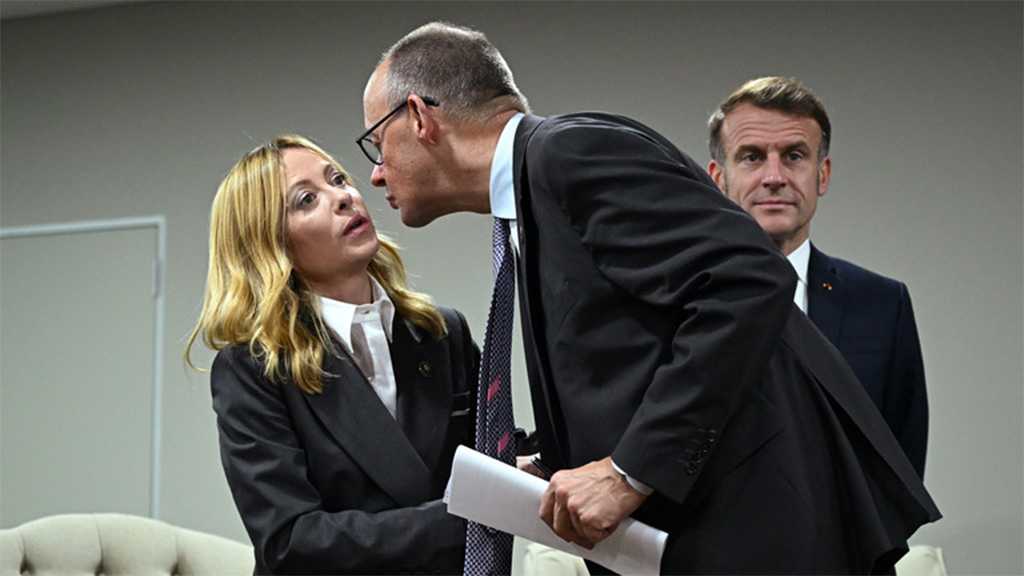
Germany is moving to strengthen ties with Italy as tensions rise with France over EU trade policy, Emmanuel Macron’s impending exit, and relations with US President Donald Trump, The Telegraph reported on Monday, citing EU diplomats.
France and Germany have long been the “engine” of EU policymaking, but Macron is described as a “lame duck” whose mandate ends in 2027.
“Berlin needs partners it can work with. Can they work with Macron at the moment? Not really. He is leaving office soon and France is unstable. Germans hate instability,” an EU diplomat said.
German Chancellor Friedrich Merz has reportedly approached Italian Prime Minister Giorgia Meloni with proposals to restructure Europe.
The plan envisions a “multi-speed Europe,” where a core group of member states, including Germany, Italy, Poland, Spain, the Netherlands, and France, can advance policies more quickly, bypassing broader EU bureaucracy.
Italian officials described the accord as signaling a “new center of gravity inside the EU,” focusing on cooperation on defense, migration, and trade.
France and Germany have clashed over EU governance, with Paris favoring greater borrowing and centralization, while Berlin resists due to its export-dependent economy.
Macron’s calls for the bloc to use its “trade bazooka” during the Greenland dispute drew criticism from Merz, who also cited France’s domestic political gridlock and inability to implement reforms.
Economic pressures compound France’s instability, with a 5.8% budget deficit in 2025 and public debt at 114% of GDP.
High energy costs across the EU, following the phase-out of Russian oil and gas, have strained economies, contributing to Germany’s economic contraction in 2023–2024 and a rise in bankruptcies, according to the German Chamber of Commerce and Industry.
Comments
- Related News