The Full Speech of Sheikh Qassem on the Martyrdom Anniversary of the Martyred Leaders
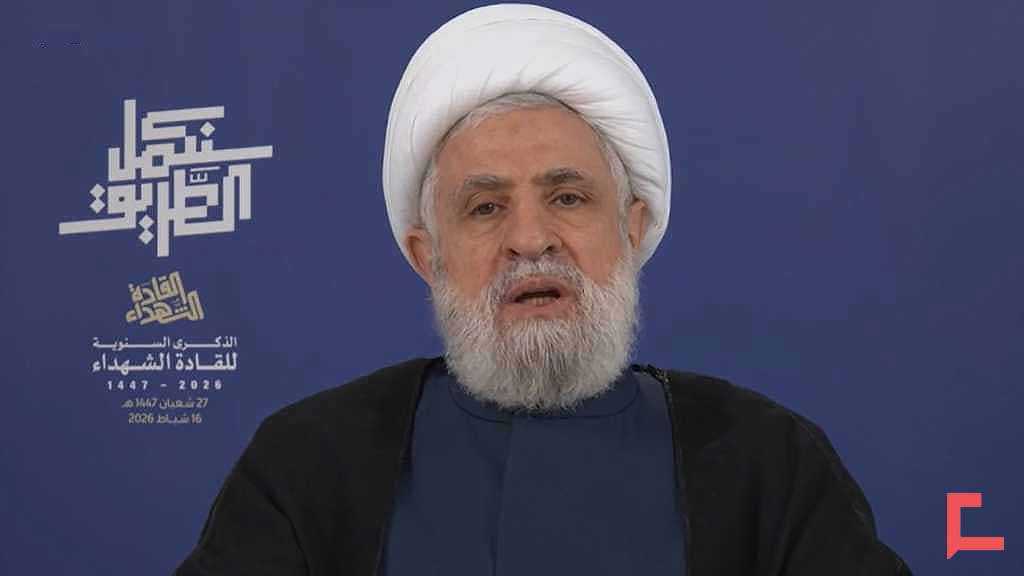
Translated by Al-Ahed News, Hezbollah Media Relations
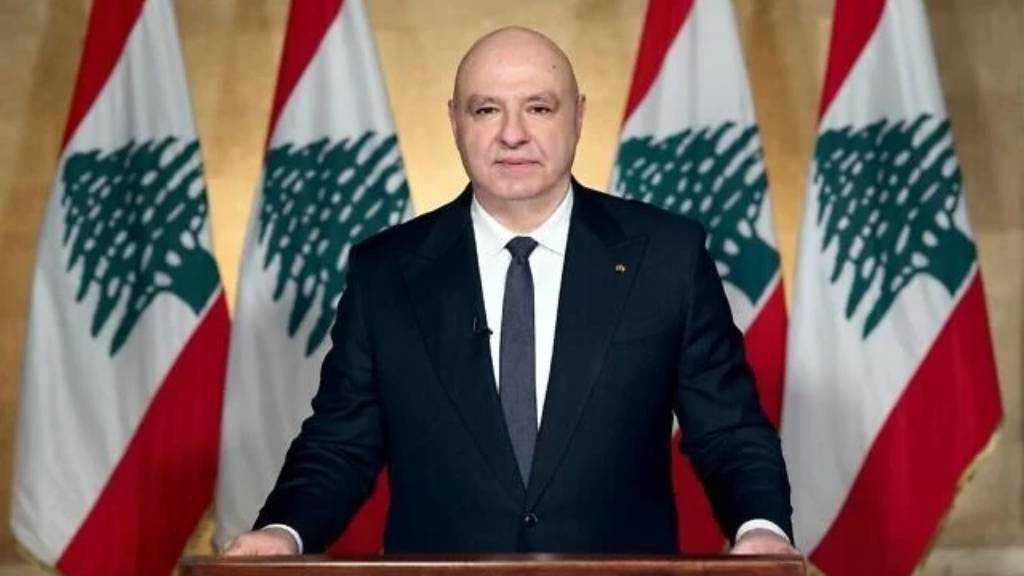
The full speech of Hezbollah Secretary General His Eminence Sheikh Naim Qassem at the festivities held to commemorate the martyrdom anniversary of the Martyred Leaders on February 16, 2026.
In the name of God, the Most Merciful, the Most Compassionate. Praise be to God, Lord of the worlds. Peace and blessings be upon the noblest of creation, our master, our beloved, and our leader, the Messenger of God, our Prophet Muhammad, and upon his pure and immaculate Household, his chosen and righteous companions, and upon all the prophets, messengers, the righteous, and the martyrs until the Day of Judgment. Peace and God’s mercy and blessings be upon you.
I extend my greetings to this honorable, dear, and noble gathering assembled across the southern suburbs of Beirut at the Sayyed al-Shuhada Complex; to those gathered in Nabi Sheet; to those present at the Husseiniya of the town of Jibchit; to those at the Martyr Imad Mughniyeh Complex in Tayr Debba; as well as to everyone watching through television screens and various online platforms. I welcome you all on this cherished and dignified occasion: the annual commemoration of the martyred leaders.
In this address, we will speak about the memory of the martyred leaders and also about the political situation. Between these two topics, there are two important points.
I will begin by speaking about the martyred leaders.
Today, we commemorate the three martyred leaders: Sheikh Ragheb, Sayyed Abbas, and Hajj Imad. Through them, we honor all the martyred leaders who rose as martyrs along this path.
God Almighty says in His Noble Book:
“But the Messenger and the believers with him strived with their wealth and their lives. They will have all the best, and it is they who will be successful.” (Al-Tawbah, 88)
This is the path: that the believers stand with the Messenger of God (peace and blessings be upon him and his family), striving with their wealth and their lives so that they may be among the triumphant. But who are these believers?
“The [true] believers are only those who believe in Allah and His Messenger—never doubting—and strive with their wealth and their lives in the cause of Allah. They are the ones true in faith.” (Al-Hujurat, 15)
The believers are the truthful ones—those who fulfilled their promise and walked this path with sincerity. And, God willing, we will continue along the path charted by these martyred leaders.
With Sheikh Ragheb, we remember a noble and venerable cleric, a man of the earth and of the people, who worked in his village and in all the surrounding villages—indeed, whose impact reached all of Lebanon through his performance and his confrontation with the “Israeli” enemy. He was martyred at the age of 32, yet in those years he presented a pioneering model of the martyred leader—one who transcended his village to embrace the wider community.
In 1976, he established the congregational Friday prayer in Jibshit, affirming unity, solidarity, and close ties with the people. In 1980, he founded the Lady Zaynab Association (AS) as an expression of social care for orphans and families. When the blessed Islamic Revolution triumphed, he was deeply devoted to and enamored of Imam Khomeini (may his noble soul be sanctified). He publicly pledged allegiance in 1979 and always sought to be a supporter, an aide, and a follower under the mantle of the Guardian Imam Khomeini (may his secret be sanctified).
He was arrested in late 1982, and again in March 1983 for 17 days. The people mobilized, forcing the occupation authorities to release him. This devout, God-centered man was always present in the field. He was the one who declared, “A handshake is recognition,” expressing through this phrase the firm rejection of legitimizing the occupation, and embodying a resistance rooted in constant popular presence.
As for Sayyed Abbas (may God be pleased with him), he was martyred at the age of 40. He was turbaned by Imam Musa al-Sadr—may he and his companion return safely—and he pursued advanced religious studies (bahth al-kharij) in Najaf under Grand Ayatollah Sayyed Muhammad Baqir Al-Sadr (may God be pleased with him).
In Najaf, he established the nucleus of the al-Sayyida al-Zahra Seminary for women, and he continued this initiative in Baalbek—reflecting his mindset and his commitment to women’s religious work and to supporting the other half of society. He was a member of the nine-person committee that founded Hezbollah and traveled to Iran in 1982 to pledge allegiance to Imam Khomeini (may his noble soul be sanctified).
On March 18, 1991, he was elected Secretary-General of Hezbollah. In truth, both before and after assuming this position, he was constantly on the move in his car, visiting every front line and every part of Lebanon. He was beloved by the fighters; his life was resistance, his spirit was resistance, his giving was resistance.
This man, who deeply loved the fighters and was loved by them in return, embodied a model of courageous and humble leadership—one that lived among the people and stood alongside them.
As for Hajj Imad Mughniyeh (may God be pleased with him), known as Hajj Radwan, he was martyred at the age of 46. Yet his journey had been rich and eventful since his early youth. At just 15 years old, he joined the ranks of the Palestinian resistance in 1975, gaining experience and developing a deep commitment to the cause of liberating Palestine.
With the founding of Hezbollah, he became one of the central pillars of its jihadi path. In 2000, he served as the military deputy to the Secretary General, Sayyed Hassan (may God be pleased with him). He is regarded as the architect of two major milestones: the 2000 liberation and the 2006 confrontation during the July War.
He was a creative and generous commander who laid the foundations of the resistance’s security and military structures in confronting what is described as the fiercest enemy in our region and the world—the “Israeli” enemy. He succeeded in building a significant and enduring framework whose impact continues to be felt today, and which, God willing, will continue to bear fruit in the future.
These three—Martyr Sheikh Ragheb Harb, the Sheikh of the Resistance’s Martyrs (may God be pleased with him); Sayyed Abbas Al-Moussawi, the Sayyed of the Resistance’s Martyrs (may God be pleased with him); and Hajj Imad Mughniyeh, Radwan, the commander of the two victories (may God be pleased with him)—represent distinct models, each marked by particular noble qualities.
Yet they shared essential traits in common. Foremost among them was the clarity of their mission-driven lives: they were wholly devoted to Islam and fully committed to its religious principles and ethical boundaries, to the point that their personal identities were inseparable from their faith and their adherence to its teachings.
Second, they translated their principles into lived practice, embodying the values they believed in so that they would not remain mere theories, but become a tangible reality in daily life.
Third, they charted their course along the path of the Hussaini line of resistance, drawing from the Revolution of Imam Hussein (peace be upon him) as an enduring source of inspiration and inexhaustible giving.
They followed the example of Imam Khomeini (may his secret be sanctified), who said, “Everything we have is from Ashura.” They were also a living embodiment of what His Eminence, the Sayyed of the Nation’s Martyrs, Sayyed Hassan Nasrallah (may God be pleased with him), declared: “Whoever achieves victory, wins—and whoever is martyred, wins.”
Through these martyred leaders, we honor the memory of all martyred leaders. We must also understand that our path is one of continuity and steadfastness, and that, God willing, we will carry it forward. When these leaders were martyred, others rose to take their place. When those who followed were martyred, others stepped forward. There are always those who come after.
No one replaces another, and no one is identical to another. Each person has his own qualities and unique characteristics. Yet this is a journey that must be led and sustained, and it requires leadership at every stage. Praise be to God, there are thousands capable of assuming leadership positions whenever a leader is martyred. And so, God willing, we will continue on this path.
To their souls, to the souls of all the martyrs, to the souls of all those who love, strive, and stand in solidarity, and to the souls of your departed loved ones, we dedicate the reward of the blessed Surah al-Fatiha, along with prayers upon Muhammad and the family of Muhammad.
The first point: We renew our condolences on the anniversary of the assassination of Prime Minister Martyr Rafik Hariri to his honorable family, to his political movement, to all his supporters and loved ones, and to all the Lebanese people. God willing, we will be able to rise together with this nation, drawing on his experience, his expertise, and his contributions as a foundation for the future.
The second point: We extend our congratulations to Muslims in Lebanon and around the world on the arrival of the blessed month of Ramadan—a month of worship that strengthens our energy and resolve in our relationship with God Almighty. It is a month of transforming behavior by replacing old habits and deeds with better and higher ones, and a month of repentance, where we abandon sins and move toward virtues that are pleasing to God.
God willing, may this blessed month be a time of victory, success, strength, unity among Muslims, elevated morale, and the ability to progress toward what is best, by the blessing of this faith. Congratulations to all Muslims and to all who cherish this sacred month: Ramadan, the month of piety and forgiveness.
I will begin with the political situation and divide the topic into several sections.
First: Occupation, wherever it exists, necessitates resistance to expel it. In Lebanon, we have been a resistance against such occupation. The responsibility for resistance falls on the state, the army, and the people—each bears a duty to resist the occupier in order to liberate the land.
Our resistance in Lebanon is longstanding, linked to the “Israeli” occupation of Palestine and its repercussions on Lebanon at various stages. There were fighters from Palestinian and Lebanese forces, parties, individuals, and religious communities. The last significant formation—so to speak—before the official emergence of Hezbollah was under the leadership of Imam Musa al-Sadr (may God return him and his companions safely), who led genuine resistance in southern Lebanon. He is considered the Imam of the resistors.
There were also various groups from the Islamic Committees, the Amal Movement, and others resisting the “Israeli” occupation, until Hezbollah officially and systematically emerged in 1982. It drew inspiration from the guidance of Imam Khomeini (may his secret be sanctified), combining Islamic, mission-driven, religious, ethical, and practical principles for the benefit of the nation, with the goal of being among those who liberate the land.
In our understanding, resistance is national, Arab, Islamic, and humanitarian. These dimensions cannot be separated. It is national because it defends the homeland and seeks its liberation. It is Arab because it stands in solidarity with the Arab world and neighboring peoples in confronting “Israeli” occupation. It is Islamic because Islam calls for dignity, liberation, and the responsibility of Muslims worldwide. And it is humanitarian because any person with sincere moral and human values cannot accept occupation.
From all these standpoints, we resist. Ours is a national, Arab, Islamic, and humanitarian resistance. Whatever its designation—even if it is called the “Islamic Resistance”—that does not negate its national, Arab, or humanitarian character.
The Islamic Resistance, alongside all honorable fighters from Amal and other groups, confronted the occupation and achieved a major victory in 2000, forcing the “Israeli” enemy out of Lebanon. Over the course of 42 years, the work of the Islamic Resistance—together with all resistance fighters from various parties and forces who contributed and struggled to expel “Israel”—has been marked by cumulative achievements.
The “Israel” we confront is, in our view, an expansionist entity that seeks not only Palestine but the entire region without exception. Its intentions are openly declared, and its conduct reflects them. When the enemy halts—whether through an agreement or for any other reason—it does so out of temporary incapacity, in order to consolidate what it has occupied and prepare for a new phase, including the negotiation of another agreement that it may later bypass when circumstances allow.
In this perspective, its agreements remain words on paper, with no real commitment to honoring them. The evidence, as cited, ranges from Oslo to Madrid and other accords—seen as transitional stages that allowed it to strengthen itself before resuming expansion, consistent with what is described as its inherently expansionist nature.
Do not underestimate what the occupation is doing in Gaza today: more than 60% of Gaza is under direct occupation, while the remaining 40% is subjected to daily assault. Nor should the formal, legal, and gradual annexation of the West Bank by the “Israeli” entity be underestimated.
In this view, the United States is a full partner—indeed, the party managing the operations of annexation, occupation, killing, and destruction. It is argued that if President Trump wished to prevent “Israel” from taking certain actions, he could do so. Instead, he is portrayed as offering conciliatory rhetoric to Arab states and others to quiet opposition, while allowing “Israel” to pursue its expansionist project.
It is also recalled that Trump recognized Al-Quds as “Israel’s” capital and acknowledged “Israel’s” annexation of the Golan Heights. Accordingly, he is described as bearing full responsibility for what is taking place in Palestine today.
As for Lebanon, did you not see those who came to plant trees in Yaroun under the direct watch of the “Israeli” army? Did you not hear about those who attempted to conduct archaeological surveys in Shamaa during operation Battle of the Mighty [Uli al-Bas Battle]? Did you not witness the abduction that took place in the town of Habbariyeh—carried out openly, breaching all fortifications and all that is described as Lebanese sovereignty?
Is the killing of the four young men between Masnaa and Jdeidet Yabous not an act of aggression bearing the marks of extermination? And is the killing of the young man in Hanine, who was transporting students in a van, not an act reflecting a spirit of annihilation?
In reality, we are facing an enemy that seeks to destroy people, devastate the land, and dismantle every source of life and strength. How are we to confront such an enemy? We must remain steadfast—and we have remained steadfast because we are deeply rooted in our faith and embrace martyrdom in our struggle. The fighters are great, and our people are great.
In November 2024, an agreement was reached—indirectly—between the Lebanese state and the “Israeli” entity to halt the aggression, secure “Israel’s” withdrawal, release prisoners, and begin reconstruction. Lebanon has implemented the agreement, while “Israel” has not.
Here, I want to draw attention to an important point: the agreement marked a turning point; it supersedes what came before it and represents a new phase. To those who repeatedly ask about the previous stage of support and confrontation, the response is that the agreement closed that chapter—discussion should now focus on what follows.
What is happening today? “Israel” continues its attacks. Since the agreement was concluded by the Lebanese state, the state bears full responsibility. It is the state’s duty to confront this aggression, safeguard sovereignty, and establish the necessary plans and programs to do so.
However, the current Lebanese government’s focus on disarming the resistance is described as a grave mistake, on the grounds that such a move would serve “Israeli” objectives. Instead, the government is urged to prioritize liberation, national sovereignty, unity, and internal cooperation.
Second, today I will address three contentious issues that are being raised in the context of confronting the “Israeli” enemy.
The first issue: Some say, “The world will not help us unless we surrender and disarm.” I say to you clearly: we do not want the world’s help if it comes at that price. We are capable of rebuilding our country based on our own means, and we will find states that share mutual interests with Lebanon and reach understandings with them accordingly.
What kind of “assistance” is it that turns our country into easy prey for “Israel”? What kind of help imposes foreign tutelage upon us, serving the interests of major powers and “Israel”? This assistance they offer is conditional. They have said they want to arm the Lebanese army so that it confronts the resistance, not “Israel”. Is that the objective we seek—to arm the army in order to take hostile action against the resistance? Is this the objective we seek?
We want the Lebanese army to be armed so it can maintain security, combat drug trafficking, fight crime, ensure people feel safe in their homes, and also uphold sovereignty in the face of “Israeli” aggression. That is what we want—not support designed to serve others’ agendas.
So if they say they will not provide assistance, then let them withhold it—because if their aid is tied to their own objectives, we do not want it. We want support that allows Lebanon to remain sovereign and independent, free of tutelage and in control of its own decisions. Otherwise, Lebanon would be placed on a path of decline in the way some appear to envision.
The second issue: Some say, “We prevent harsh military strikes by making concessions in negotiations and by implementing some of ‘Israel’s’ demands.”
People, these threats represent maximum pressure aimed at achieving political gains while sparing them the burdens of war. They calculate that if we yield under such pressure, they will obtain what they want without paying a price. But if we do not yield, they will not be able to achieve their objectives so easily.
No one should imagine that severe strikes are avoided simply because concessions are made. Rather, it is because “Israel” and the United States act according to timing and calculation. When they judge the moment suitable for a broad aggression, they will launch it regardless of concessions; and when they do not see the timing as favorable, they refrain—not because others have yielded, but because it does not serve their current interests.
We in Hezbollah do not seek war, nor do we pursue it—but we will never surrender, and we are fully prepared to defend ourselves. There is a huge difference between defending against aggression and starting a war initiated by others.
But what if they carry out their threat of war? Let them strike and wage it—we are ready to defend, and the outcome will show itself. “They are threatening us—what, should we just sit and yield under this threat?” No, we will not yield. And be certain: the reason this aggression has persisted at this pace for 15 months is because we remain steadfast, because we have the means to defend ourselves, and because they know the result is not guaranteed in their favor. No one should think that these 15 months of attacks are a gesture of giving us a chance—they attack at this rate because they see it as advantageous for their objectives.
With a determined resistance and a steadfast, resilient people, they will not succeed. Yes, they can inflict pain—that is true—but we can inflict pain on them as well. Do not underestimate the power of defense when the time comes. They may excel in a military round, but they cannot occupy the country. They may control additional parts of Lebanon, but they cannot establish lasting dominance.
As for surrender, then nothing would remain. We are a people who do not surrender, and humiliation is far from us.
The third issue: Some say, “You resist, but a segment of the Lebanese population does not want resistance.” Very well—let us first ask: are we not living in one homeland? We are all partners in this land. Our ancestors lived here, our martyrs shed their blood for it, our wounded sacrificed and labored, our prisoners endured suffering and continue to do so, and our people suffer in the South and other regions. Our communities bear the consequences and burdens of aggression in a particular way.
After all this giving, all this effort, you tell us not to resist if “Israel” demands more? The basic principle is defending the homeland, and defending the homeland is the responsibility of everyone. We must ask: why do you not defend it? Why do you not condemn the aggression? Why do you not stand firmly with those resisting—whether the resistance, the army, or the people—so that we may be united in facing this challenge?
If your choice is surrender, then amend the constitution. According to the Taif Agreement, Article Three, regarding the liberation of Lebanon from “Israeli” occupation, it states:
“Take all necessary measures to liberate all Lebanese territories from ‘Israeli ‘occupation.”
This means the default is combat, confrontation, and defense for the sake of liberation. If you wish to surrender, then secure a national consensus for humiliation under American-“Israeli” tutelage. Humiliation requires national consensus, surrender requires national consensus. Defense, however, requires standing firm against the aggressor, and the responsibility falls on everyone to be on the front line.
All shame and disgrace lie in a partner in the homeland calling on others to protect themselves and their families at the expense of killing their fellow partners.
All shame and disgrace lie in some calling for sedition, in urging the army to fight a segment of the people and the resistance, simply because they are promised political rewards and gains from foreign tutelage and “Israeli” occupation.
All shame and disgrace lie in offering concession after concession without gaining anything, without benefit, without advantage.
All shame and disgrace lie in some hiding behind the sectarian game to drive the country into a structural crisis.
Nevertheless, I say to you openly and clearly: we stand for Lebanese national unity, for full sovereignty and liberation, and we are against all forms of sedition. We support empowering the Lebanese army so that it can provide protection and uphold sovereignty, alongside a national security strategy. We advocate utilizing the strength of the resistance to support the army in achieving liberation, safeguarding sovereignty, and protecting the country. Our position is clear, it is well-defined, and we practice it directly in action.
Third: We are not in favor of gratuitous concessions. We do not accept implementing the directives of American, international, or Arab tutelage, and we will not fulfill “Israel’s” aggressive demands.
Pay attention: we have been patient until now for two reasons:
First, because the state is responsible and must carry out its duties.
Second, out of care for our society and our country during this sensitive phase.
However, this situation cannot continue indefinitely. As for when, how, and what developments will change this reality, we will let the facts tell the story.
I ask a question: why does the government not meet regularly, on a monthly basis, to discuss a plan for achieving sovereignty and its timeline—to review what has been accomplished, where shortcomings exist, and what still needs to be done? Have they carried out the necessary communications? Have they fulfilled their role in applying international pressure, or could they push harder?
Listen, decide as part of the plan to give the Lebanese army the order to prevent violations and stand against the “Israeli” enemy—simply to stand firm, to say “you are not allowed.” Let there be mobilization, and let us see what the countries will do. What will the world do?
Declare that you have fulfilled your duties and stop offering concessions, because every time you indicate a willingness to negotiate, they demand more. Tell them clearly: there is nothing left to give. Halt every initiative whose goal is to confine or seize weapons.
The government’s performance bears some responsibility for the enemy’s continued greed, due to successive concessions and responses to pressure.
I want to ask you: when foreigners come and tell you, “You must give something,” do you not ask them, “Why is ‘Israel’ not giving anything?” What do they answer? Nothing. And you do not respond either? Should we just watch to see what they do?
The solution is simple: if “Israel” does not give, then we do not give. That is how it should be. Let them act as they will—but we do not make concessions.
Fourth: Some are waiting on Iran and the ongoing dialogue between the US and Iran, and have assumed—based on past threats—that Iran has reached its end, and that this will affect the entire current situation. Certainly, Iran has proven capable of steadfastness and, God willing, will continue to stand firm. It shines through its leadership—the leadership of Imam Khamenei (may his shadow endure)—its proud people, its struggle, its contributions, and its sacrifices. God willing, Iran will always remain victorious; with these qualities, it cannot be defeated.
Undoubtedly, Iran influences the region just as Gaza has influenced the region, and just as Lebanon has influenced the region. All these effects are interconnected because the enemy is one—the “Israeli” enemy—and the tyrant is one—the American tyrant. Everything is linked. Where there is a resolution in one place, it will inevitably have some reflection elsewhere. Where there is complication, it will likewise reverberate.
Therefore, even with these interconnections—in Iran, Gaza, Lebanon and the broader region—we consider it essential to have a clear stance in confronting the enemy: grounded in authenticity, struggle, resistance, steadfastness in upholding the truth, and readiness for sacrifice. We will not allow them to achieve their objectives. We will continue the path alongside the martyred leaders and the fighters.
I say to the martyred leaders: you have sown, and your harvest is abundant, steadfast and will continue into the future, God willing.
Peace, God’s mercy, and His blessings be upon you.