- Home
- ISLAMIC RESISTANCE
- SECRETARY-GENERAL
-
Full Speeches
- Speeches-2000
- Speeches-2006
- Speeches-2007
- Speeches-2008
- Speeches-2009
- Speeches-2010
- Speeches-2011
- Speeches-2012
- Speeches-2013
- Speeches-2014
- Speeches-2015
- Speeches-2016
- Speeches-2017
- Speeches-2018
- Speeches-2019
- Speeches-2020
- Speeches-2021
- Speeches-2022
- Speeches-2023
- Speeches-2024
- Speeches-2025
- Speeches-2026
- Speech-Reports
- SG
-
Full Speeches
- Voices
- Ten Day Dawn
- The Biggest Crime
- Martyr Leaders

Lavrov: US-’Israel’ War Aims to Block Iran-Arab Normalization
By Staff, Agencies
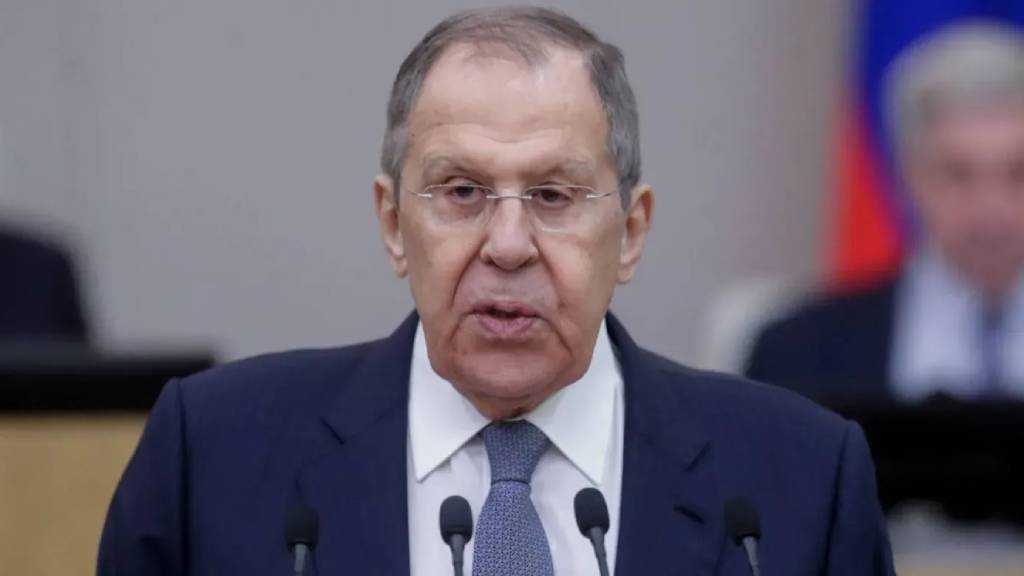
Russian Foreign Minister Sergey Lavrov said Tuesday that the US-"Israeli" war on Iran partly seeks to block Tehran’s normalization with Arab states.
Highlighting the motivation behind the aggression against Iran, Lavrov stated in an interview with RT India that when plans for the war were being developed, one of the goals was to prevent closer relations between Iran and Arab countries.
Building on Russia’s ongoing diplomatic efforts, Lavrov has previously pushed for Arab-Iran normalization. On May 8, he told Saudi Foreign Minister Prince Faisal that efforts to normalize relations between Iran and Arab states should continue, according to the Russian Foreign Ministry.
During that call, both sides discussed the situation in the Middle East and stressed the importance of diplomatic engagement aimed at reducing regional tensions. The talks also covered broader security concerns in the Gulf.
According to the Russian Foreign Ministry, the two ministers expressed the inadmissibility of a return to escalation and supported continued political and diplomatic efforts involving regional stakeholders.
The statement further noted that both sides emphasized the need to resume efforts to comprehensively normalize relations between Iran and the Arab monarchies for the long term.
Turning to multilateral diplomacy, Lavrov said Russia proposed a BRICS statement on the Strait of Hormuz, but it was blocked by disagreements between Iran and the UAE. He added that Moscow might have supported the proposal if India had raised the issue at the BRICS foreign ministers’ meeting in New Delhi on May 14-15.
On regional security risks, Lavrov warned that a conflict in the Bab al-Mandab Strait, linking the Red Sea and Arabian Sea, could inflict immeasurable damage on the global energy sector and turn the strait into a theater of confrontation.
Regarding the Palestinian issue, Lavrov cautioned that without a Palestinian state, the region could remain a hotbed of tension for decades, fueling extremism and causing suffering for “Israel”, its Arab neighbors, and the wider region.
Finally, looking at Eurasia’s broader role, Lavrov emphasized the continent’s geopolitical importance, noting it is the largest and richest region and home to several great civilizations, including Indian, Chinese, Persian, Ottoman, and Russian.
He said Russia, India, and China could promote inter-civilizational dialogue and play a key role in stabilizing the international situation.
Comments
- Related News