We Learned from Palestine… Therefore, We Will Resist!
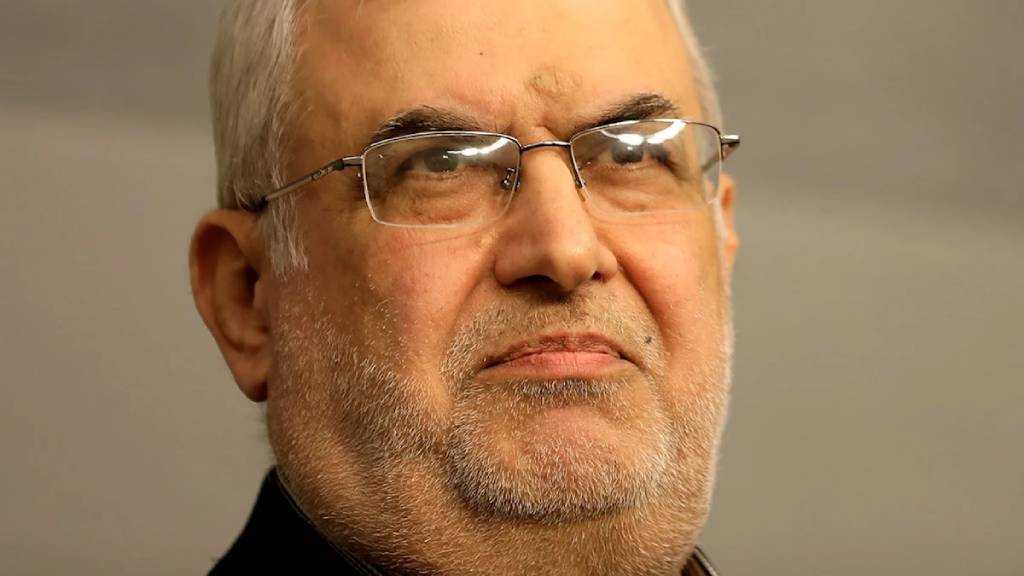
Translated by Al-Ahed News, Mohammad Raad, Al-Akhbar Newspaper
Amid Lebanon’s internal divisions regarding the Zionist war of aggression against Lebanon, the domestic political landscape is split between three main approaches.
The country’s internal situation is influenced by the rise or decline of each of these options. They are:
1- The option of disavowing and rejecting any responsibility for confronting the aggression and placing the blame on the resistance for dragging Lebanon into war. Its supporters argue that this happened either because the resistance insists on keeping its weapons and remaining steadfast while refusing calls for direct negotiations with the enemy, or because of its decision- one that surprised many- to respond to “Israeli” violations after 15 months of restraint, during which the enemy acted with impunity while political and diplomatic efforts failed to stop it.
Those who adopt this position rush frantically to seek an end to the war from the very parties that support the enemy. They back efforts aimed at eliminating the resistance and drawing Lebanon into a trap of submission and surrender to the enemy’s conditions through direct or unequal negotiations.
To demonstrate their “good intentions,” they employ political rhetoric that attempts to outbid the resistance in claiming concern for Lebanon’s stability and an end to the war at any cost. At the same time, they support measures and policies that place increasing pressure on the resistance, responding to the demands of the enemy, the international powers backing the aggression, and certain regional actors seeking a role in Lebanon consistent with their vision of ending the Arab-“Israeli” conflict.
Accordingly, proponents of this option translate the enemy’s demands into policies designed to contain and weaken the resistance domestically—financially, economically, logistically, and politically. This is pursued through government decisions, constitutional and power-sharing violations, and executive measures, beginning with efforts to target Al-Qard Al-Hassan, continuing with calls for the state’s exclusive monopoly on arms despite ongoing aggression, and culminating in attempts to criminalize resistance activities under the pretext that decisions of war and peace belong exclusively to the state.
It is worth noting that the authorities embracing this approach have been in power for more than a year. During that time, Lebanese citizens have seen no significant achievements to boast about aside from a selective, piecemeal, and distorted application of the Constitution, carried out through political maneuvering and deception, under the slogan: “Bear witness before the prince that I was the first to throw the stone.”
2– The option of openly and explicitly betting on the success of Zionist aggression in eliminating Hezbollah’s existence, its resistance, and even its political presence, and of meeting the Zionist enemy halfway—without hesitation or preamble—in a peace agreement and strategic partnership aimed at preserving “regional stability” and “combating terrorism,” while firmly anchoring Lebanon’s alignment with the West and with NATO, and establishing a framework of coexistence and good-neighborly relations with Arab and Islamic countries under the American umbrella.
Those who advocate this option do not refrain from any form of misconduct, taboo rhetoric, or continued malicious and disgraceful incitement—morally, through the media, economically, politically, security-wise, and even militarily—against the resistance and its social base. Nor do they conceal their disappointment over the failure of certain Arab and Western states to secure the election of their preferred candidate to the presidency during the previous presidential election.
Nor do they hide the fact that they have little in common with their opponents, and that their cultural, political, and material interests are shaped by influences imported from overseas and protected by power and domination. The cosmetic tools they employ to advance their projects are merely instruments of convenience, sparing nothing from exploitation- not even religious rituals- when it comes to serving their interests.
3- The option of steadfastness and resistance, embraced by Hezbollah and significant Islamic and national forces. For Hezbollah, this is an existential and strategic choice rooted in a deep understanding of the nature of the Zionist enemy, its expansionist, settler-colonial, and racist project in the region, and the functional and organic relationship between this enemy and the global hegemonic project championed by the major Western powers, led today by the United States at its apex.
Advocates of this option believe that the establishment of “Israel” reflected the convergence of the Zionist project with Western colonial interests seeking to consolidate their influence in West Asia because of the region’s geopolitical position, natural resources, and strategic waterways. From this perspective, they view “Israel” not as a normal state in the region, but as an advanced outpost that guarantees the continuation of Western influence and its political, military, and economic dominance.
This option is also based on the conviction that the bastard entity established by force on the occupied land of Palestine was the product of an alignment between Zionist settlement ideology and Western colonial interests seeking to entrench their influence in West Asia- what they refer to as the “Middle East- because of its geopolitical importance, natural wealth, and strategic maritime routes.
Maintaining control and influence requires a permanent and powerful foothold whose occupants possess strong existential motivations and expansionist ambitions, enabling them to monitor threats continuously, seize favorable opportunities for territorial expansion, ensure the persistence of internal conflicts in neighboring societies in order to weaken them, and create the conditions for gradual encroachment, eventual occupation, consolidation of control, and exploitation of the region’s resources. All of this takes place under an international order that guarantees the superiority of “Israel” over all Arab countries. Lebanon is among the countries most vulnerable to annexation, occupation, and expansionist ambitions. Anyone who overlooks this reality, they argue, cannot effectively confront the Zionist threat, nor fully grasp the extent of the support, protection, and backing that Israel receives for its actions against the peoples and states of the region.
Historical events demonstrate the determination of the Zionist state that occupies Palestine to pursue systematic steps toward realizing the alleged dream of a “Greater ‘Israel’,” whose map was publicly displayed by Netanyahu following the war in Gaza amid shameful Arab abandonment; the day will come when the background, coordination, and division of roles behind that war are fully revealed.
Advocates of the option of steadfastness and resistance are not lulled by the promises of peace promoted by invaders, nor by the initiatives sponsored by their supporters, because the peace being proposed is, in their view, a settler-colonial peace that entrenches the occupation of Palestine, denies the rights of its people, and subjects them to ongoing humiliation. They see it as a peace that compromises Palestinians’ dignity, sovereignty, remaining land and resources, and their right to self-determination. They further argue that all previous negotiations with Israel were intended to create an illusory alternative to the path of resistance, weaken popular Arab engagement with the Palestinian cause, use Arab states to project an image of Israeli commitment to international peace and security, and immerse the region in the illusion of a peaceful resolution to the Palestinian cause.
Supporters of this option in Lebanon believe they have learned the lesson of Palestine well and have resolved to defend their country and prevent “Israel” and the backers of what they describe as its aggressive project from occupying their homeland. For this reason, they embarked on the path of resistance. They have never lost sight of the fact that the path of resistance is arduous, bloody, and costly, and that it cannot endure without popular support and awareness, faith, determination, unity, and organization. They regard it as a long road filled with risks and hardships, and believe that dawn does not break until darkness reaches its deepest point.
They also believe that those who pursue this path require plans and programs, awareness of the adversary’s strategies, and continuous public mobilization to accompany the resistance effort with understanding and constructive criticism, while sustaining and increasing hope. Above all, they believe they need God’s help, guidance, and support, as well as assistance from those who share this vision and are able to contribute through expertise, political support, preparation, training, resources, and other forms of aid—naturally, without conditions or expectations of compensation.
It is well known, and not disputed by anyone, that the Islamic resistance launched by Hezbollah emerged in the aftermath of “Israel’s” 1982 invasion of Lebanon, which reached the capital, Beirut. According to this view, “Israel” sought to pressure the Lebanese authorities into signing an agreement that would effectively turn Lebanon into a Zionist protectorate, allowing “Israel” to dictate policies and strategic orientations in accordance with its interests and broader plans for control and expansion.
Without the almost exclusive support that the Islamic resistance received from Iran—through Syria—at a time when the Iranian Revolution was still in its infancy, the Lebanese would not have witnessed such a rapid shift in military developments against “Israel’s” interests. The countdown to the end of “Israel’s” occupation of Lebanon began when martyr Ahmad Qasir carried out the bombing of the “Israeli” military governor’s headquarters in Tyre, after which operations against “Israeli” forces expanded across various areas of occupation.
The role of resistance movements is to inflict damage on the enemy, exhaust its resources, prevent it from establishing stability in occupied positions, and subject it to continuous daily pressure through every available means until it withdraws. Conventional armies, by contrast, are generally tasked with holding defensive positions along front lines and confronting adversaries with heavy weaponry.
The limited armament and capabilities of the Lebanese Army contributed to the resistance assuming, through its own military means, responsibilities that would ordinarily—or at least at times—fall to a national army.
Nevertheless, the resistance does not assume the army’s role in direct military confrontation, nor can the army perform the role of a resistance movement against occupying forces. For this reason, the complementarity between the two enhances operational flexibility and increases pressure on the enemy. The resistance understands the circumstances facing the brave and dedicated Lebanese Army officers and soldiers and appreciates their adherence to political decisions that do not fully match the troops’ willingness to confront the enemy.
On the other hand, sustained resistance operations can generate pressure for a cessation of hostilities from a position of influence and leverage rather than from one of defeat or discouragement, which characterizes the approach currently being pursued by the Lebanese authorities.
From this perspective, “Israel’s” occupation of parts of Lebanese territory, the displacement of residents, and the destruction of homes and villages constitute acts of aggression that impose upon all Lebanese a duty to resist, repel, and defeat those objectives. This demonstrates the importance of resistance activity and explains why states may need it. In that sense, broad national steadfastness itself becomes a form of resistance.
Conversely, insisting on direct negotiations with the enemy can serve a functional role in weakening national resilience and signaling a willingness to submit to the enemy’s demands, even when it has not committed to a ceasefire.
A national catastrophe occurs when the state signals defeat to the country’s enemy and abandons its people’s right to resist during a period of aggression.
The state’s retreat from confronting the enemy is no less defeatist than a decision to criminalize citizens and deny them the right to resist. The Lebanese authorities have repeatedly sent signals that enabled “Israel” to evade the ceasefire agreement it accepted on 27 November 2024, thereby allowing it to impose additional conditions on the Lebanese state and draw the country into an internal crisis. This includes the government’s suspicious silence regarding the U.S. State Department’s announcement of a “statement of understanding” between Lebanon and “Israel” on April 14, 2026, which grants only “Israel” the right of self-defense.
In contrast to all of this, only resistance and steadfastness remain as the vital force opposing occupation—an option for which there is no substitute and without which the country would inevitably be led toward submission and surrender.