Defiance in the Rubble: Ashura in Dahiyeh and the Triumph of Endurance
By Mohamad Hammoud
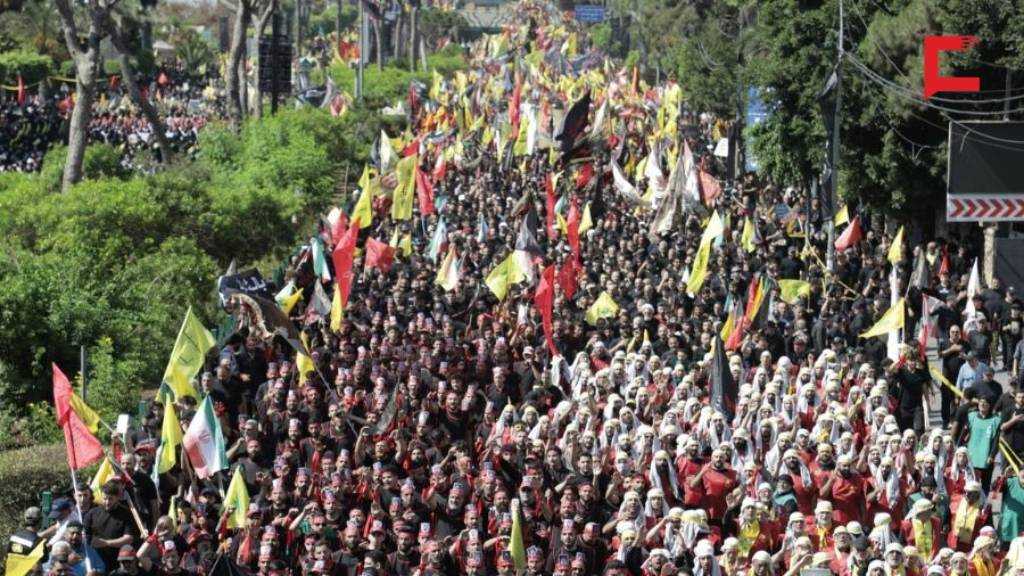
There are moments when a people are defined not by their losses, but by what they refuse to abandon. After “Israel” bombed Beirut’s southern suburb [Dahiyeh], neighborhoods were left in ruins. Apartment blocks were flattened, grief weighed heavily, and thousands mourned loved ones lost in recent months. Yet when Ashura arrived, those same shattered streets filled with people defiant enough to gather by the hundreds of thousands.
They did not gather because it was safe. The ceasefire was hanging by a thread, and “Israel’s” drones still circled overhead. They gathered because fear had not beaten conviction. Their presence carried a single declaration, repeated across generations since Karbala more than thirteen centuries ago: “Hayhat minna al-dhilla” - Far from us is humiliation.
Ashura as a Living Experience
For many outsiders, Ashura is a ritual of mourning. For those who filled the streets of Dahyieh, it is something far more immediate: a lived identity shaped by grief, memory, and resistance. Many participants had buried relatives. Others walked past the ruins of their own homes. The destruction was not distant history- it was present reality. Instead of retreating from it, they transformed it into the backdrop of a collective statement of presence.
Among them was Fatima, who described how deeply this year had changed the meaning of Ashura. “This year is different,” she said. “We lost many young men and martyrs. Ashura is no longer just remembrance- is the blood of the martyrs. Ashura is Dahyieh itself.”
She acknowledged the continuing uncertainty. “At any moment, everything could happen again,” she said. “The threat is still there. But that is exactly why this year feels greater. We aren’t afraid of them. This land is ours. No matter what is used against us- missiles, drones, destruction- it remains ours.”
When asked about those who believed the Resistance had been broken, she answered simply: “Just look around today. Then decide if we are finished.”
Her words reflected a broader conviction: survival here was not passive endurance, but active presence.
A Child’s Testimony
That same conviction appeared even in the voice of the youngest participants. Ali, a ten-year-old boy walking with the crowd, explained why he was there. “We are here to renew our vow,” he said, “that we will never accept humiliation and that we always stay on the path of Imam Hussein.”
His words echoed those of adults around him, but carried a striking simplicity. When asked what he hoped for in the future, his answer reflected both innocence and a worldview shaped by his surroundings. He said he looked forward to growing older so he could become like his father- defending the land and, if necessary, becoming a martyr in its defense, as a hero.
In that brief exchange, Ashura appeared not only as memory or political expression, but as a tradition passed directly into the imagination of a child.
A Younger Generation Speaks
The same continuity was expressed by two members of the Mahdi Scouts, who described Ashura as a reaffirmation of commitment under pressure.
One of them said, “After everything that happened- the war, the pressure from outside and inside- we are still here. We are still holding Ashura and following the path of Imam Hussein. Nothing will make us leave this path.”
His companion emphasized continuity across generations. “Every year Ashura renews its lessons,” he said. “Imam Hussein was martyred more than thirteen centuries ago, but his message is still alive. We will not abandon this path, no matter what happens.”
When asked about those who said their movement had ended, he pointed toward the vast crowd. “This is the answer,” he said. “We are still here. Our path will not end.”
Together, their words reflected a generation shaped by instability yet grounded in a narrative of perseverance.
Karbala as a Moral Framework
At the heart of Ashura is the story of Imam Hussein at Karbala, standing with a few against an overwhelming force, refusing to bow. That moment has endured not as a tale of military victory, but as a moral framework about dignity under pressure. It asserts that justice is not measured by bombs or tanks. In Dahyieh, that lesson was not abstract. It was lived, standing among the ruins.
A Collective Declaration
Ashura in Dahyieh became a convergence of voices- Fatima’s testimony of loss and belonging, the scouts’ affirmation of continuity, and a child’s vow shaped by inherited memory. Young or old, each voice insisted: there would be no surrender of dignity, no forgetting.
Together, they echoed a cry that outlived centuries and returned to Beirut’s broken streets: “Hayhat minna al-dhilla.”
It is no abstraction, but a lived conviction- spoken among ruins, carried by a people who chose to remain, and passed even to those too young to fully understand its weight, yet old enough to repeat its promise.
Comments