The Echo of Broken Covenants: Why Lebanon Cannot Afford to Trust the Paper Promises of “Israel”
Mohamad Hammoud
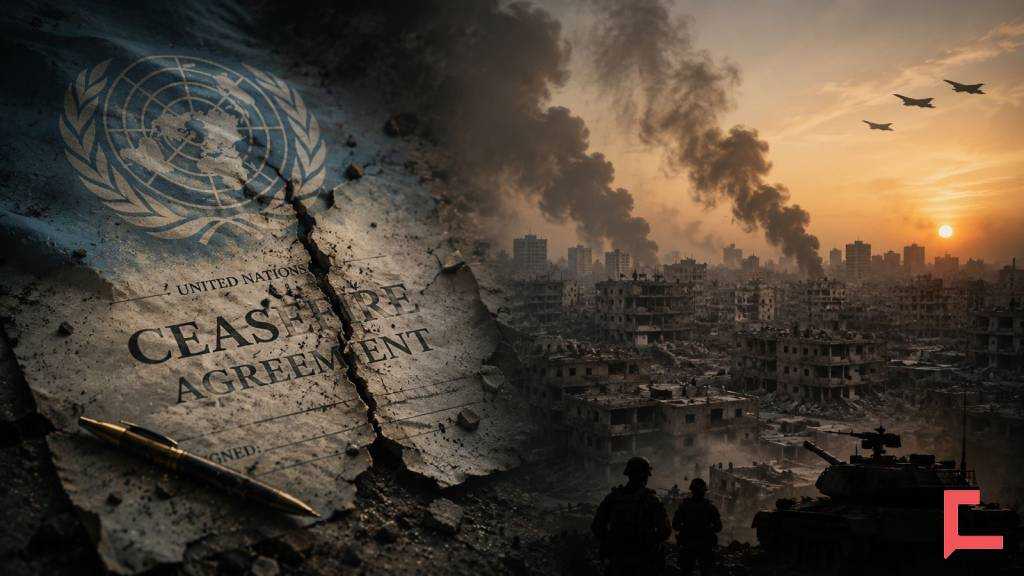
The tragedy of modern Middle Eastern diplomacy is that so many still believe “Israel” can be held to promises made on paper. When Representative Rashida Tlaib spoke in the US House in June 2026, debating her Lebanon War Powers Resolution, she didn’t mince words: she urged Beirut to think twice before trusting security guarantees brokered in Western capitals. Her warning—that a ceasefire with “Israel” means you cease and they fire—wasn’t just a slogan, but a lived reality for many in the region. This deep loss of trust echoes an age-old warning from Surah Al-Baqarah 2:100, which describes how the ancestors of “Israel” repeatedly discarded their covenants. These threads—scriptural caution and modern skepticism—combine to show why treaties signed by “Israel” often prove empty for those most vulnerable.
The Precedent of Betrayal
To understand Lebanon’s precarious position today, look back to the 1981 Habib Ceasefire—a betrayal that set a grim precedent. After the siege of West Beirut, an American-negotiated deal saw Palestinian fighters lay down their arms and leave, counting on Western security guarantees. But as Human Rights Watch later detailed, those guarantees crumbled once the evacuation ended. With “Israel” providing the flares that lit the way, Maronite-Christian Phalangist militias entered Sabra and Shatila, massacring thousands of defenseless refugees.
Structural Impunity and Airspace Violations
The post-2006 era reinforced the same pattern. UNSC Resolution 1701, intended to guarantee Lebanese sovereignty and establish a demilitarized zone, became instead a cover for continued violations. UN monitors documented tens of thousands of aerial and maritime incursions by “Israel” since the resolution’s adoption. Western governments largely ignored these breaches, treating them as tactical necessities rather than violations of international law.
This reveals how agreements function in practice: they disarm the weaker side, while the stronger side keeps its grip. For Lebanon, impunity is woven into the very frameworks that claim to protect it. Enforcement is never equal—these international deals tend to favor the violator, not the victim.
The Illusion of Modern Truce
Recent events drive the point home. Between 2024 and 2026, diplomatic efforts unraveled, showing that “Israel” never truly abandoned its expansionist playbook. The November 2024 ceasefire may have promised a phased withdrawal, but on the ground, nothing changed.
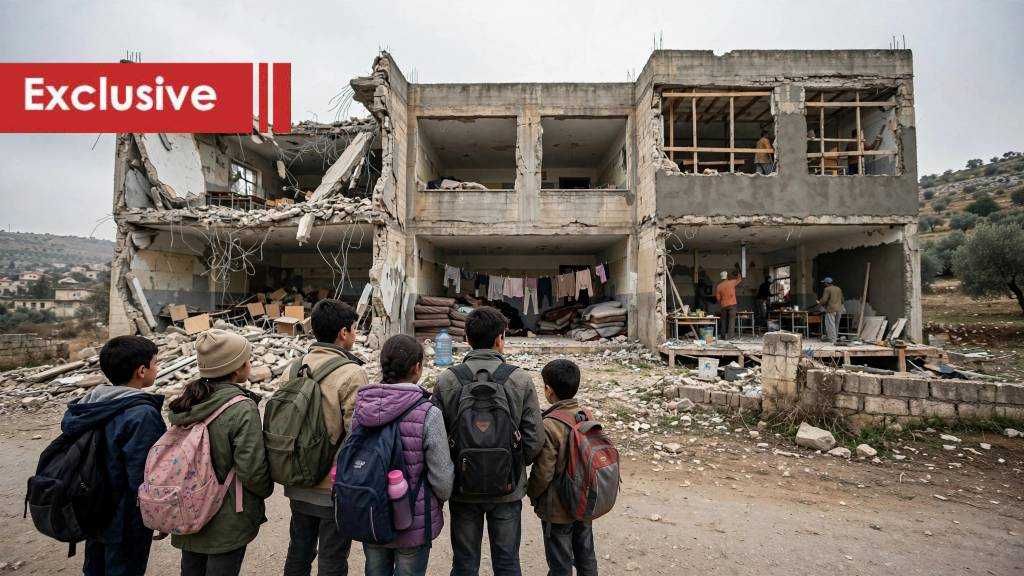
Médecins Sans Frontières reported more than 15,400 violations of the ceasefire by the “Israeli” military, which used the pause not for peace—but to move artillery and entrench its positions. By June 2026, the agreements were tossed aside, and fighting erupted again. Amnesty International found that the “Israeli” military’s mass evacuation orders forced about 15 percent of southern Lebanon’s population from their homes, leaving behind bombed-out areas that became permanent “no-return zones.”
These developments stand as a warning to Beirut: any agreement requiring the Resistance to disarm in exchange for a promised withdrawal functions as an invitation to national erasure.
Gaza as the Ultimate Blueprint of Deception
The occupied Gaza Strip stands as the clearest historical example of how international treaties fail to restore stolen land or halt colonial expansion. Decades of agreements—from Oslo to countless UN resolutions—have only isolated Palestinians further, as their land was carved up piece by piece.
Reports from Al Jazeera document how diplomatic roadmaps repeatedly collapse into siege structures, where “Israel” manages the optics of occupation rather than ending it. This pattern demonstrates how reliance on global institutions traps the oppressed in endless negotiation while conditions on the ground deteriorate.
Gaza illustrates a central reality: the so-called rules-based order does not enforce its own commitments against protected powers, leaving affected populations exposed to continuous displacement.
The Price of Amnesia
The historical arc leaves no room for illusions about mediation or ink-based guarantees. The warning from Surah Al-Baqarah, echoed by Tlaib, leads to one conclusion: deals with “Israel” are tactical moves, not blueprints for peace.
Time and again, history shows that when an occupying power senses weakness or an overreliance on treaties, it answers with escalation—destroying infrastructure and targeting civilians. Nations that ignore these lessons are condemned to repetition, trading real security for fragile promises drafted in distant capitals.
Ultimately, the survival and dignity of Lebanon do not rest upon the guarantees of international law or bilateral frameworks, but upon deterrence capable of preventing violations of its sovereignty at their source.