On Independence Day, a Question Arises: Is America Truly Independent and Democratic?
Mohamad Hammoud
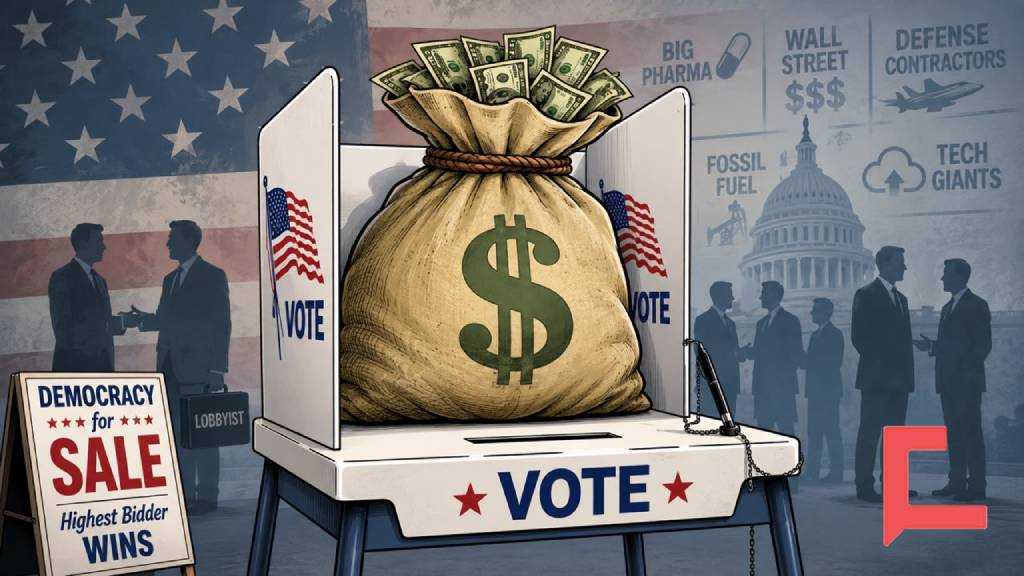
Every Fourth of July, Americans gather beneath fireworks and flags to celebrate independence, liberty, and the founding promise that government derives its authority from the people. But is America still truly independent and democratic, or has political power shifted toward the wealthy and well-connected?
To answer that question, one must return to the foundational principles of democracy articulated by some of history’s most influential political thinkers. In his classic study of American democracy, French philosopher Alexis de Tocqueville warned that the greatest danger to a democratic republic was the erosion of civic virtue and the rise of a soft despotism driven by narrow self-interest. Democracy depends on equal political representation, where an ordinary citizen's voice carries the same weight as that of the wealthy elite.
Far removed from that ideal, American elections have become increasingly dependent on major donors and organized interest groups. The influence of money has reached a point where even long-serving politicians can lose their positions if they lack the backing of powerful financial networks.
When financial power determines which candidates compete, which voices receive attention, and which issues dominate public debate, equal participation begins to collapse. Independence Day therefore carries an uncomfortable irony: the United States celebrates freedom while its political system becomes increasingly captive to financial power.
The United States remains a constitutional democracy with competitive elections, but those elections are effectively confined to two major parties because of the growing influence of wealthy donors and lobbying organizations. Without significant financial backing, a third-party candidate has virtually no chance of competing seriously. Few examples illustrate this tension more clearly than the expanding political influence surrounding the American relationship with "Israel" and the role of the American "Israel" Public Affairs Committee, commonly known as AIPAC.
The Price of Political Power
Modern American elections are not simply contests of ideas; they are also contests of financial resources. Since the Supreme Court's Citizens United decision in 2010, outside groups have been able to spend enormous sums independently supporting or opposing candidates. The result is a political environment in which a candidate's message competes against millions spent on advertising and campaign operations.
In this environment, interest groups can shape political outcomes long before voters enter polling stations. A candidate who challenges powerful organizations such as AIPAC may face a heavily financed opponent, while those aligned with influential networks often receive substantial political support. Politicians therefore increasingly strive to satisfy organized interests rather than ordinary citizens.
AIPAC has become one of the clearest examples of this phenomenon. Investigations by OpenSecrets and ProPublica show that AIPAC and its affiliated super PAC, United Democracy Project, spent $126.9 million during the 2024 election cycle and achieved a near-perfect win rate across 322 races. In New York's 16th District, AIPAC spent $14.7 million to defeat incumbent Jamaal Bowman and elect George Latimer, who aligned with AIPAC's agenda.
Another recent example was the defeat of seven-term Kentucky Congressman Thomas Massie. After taking positions critical of US policy toward "Israel," Massie faced a massive financial campaign from pro-"Israel" political groups, including AIPAC-affiliated organizations, that spent millions supporting his primary challenger. This was not democracy; it was financial engineering of representation. When one organization can overwhelm opponents with cash and effectively guarantee victories, the people's voice is drowned out.
When Senators and Representatives Put “Israel” First
The influence is not hidden. Senator Ted Cruz once declared in an interview that his entry into politics was driven by his religious conviction to support "Israel." Senator Lindsey Graham has repeatedly argued that America's security is tied to "Israel's" survival and has pledged unconditional aid regardless of domestic needs. Representative Ritchie Torres of New York openly describes himself as "the strongest supporter of "Israel" in Congress," while Representative Debbie Wasserman Schultz has spoken of her "dreams of "Israel"" as guiding her political mission. These are not isolated remarks; they reveal a political culture in which elected officials publicly prioritize “Israel” over the interests of many of their own constituents.
Trump’s Transformation Under Pressure
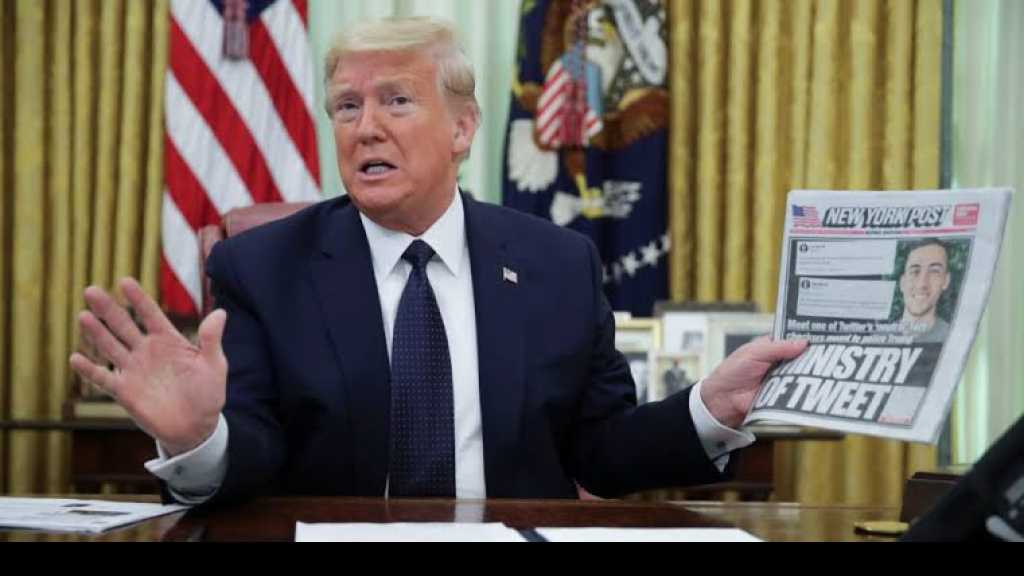
Before his election, Donald Trump criticized previous presidents for launching wars in the Middle East, arguing that they squandered American "blood and treasure." Yet once in office, he reversed course. Under pressure from AIPAC, billionaire donors such as Miriam Adelson, and the broader pro-"Israel" lobby, Trump recognized Jerusalem as "Israel's" capital and advanced policies that deepened US involvement in the region.
His shift illustrates how even a president who campaigned against foreign entanglements could not resist the machinery of donor influence. The suspicion that leverage—financial or personal—was exerted over him underscores the vulnerability of American leaders to powerful interests.
Comments