Are the Explosions Paving the way for the “Judaization” of the Litani?
By Latifa Al-Housseini
Why is the “Israeli” occupation army intensifying its demolition operations in the southern villages? This question arises amid the authorities’ silence as attacks escalate – through bulldozing, blasting, and demolitions targeting homes and buildings across the south.
If we tried to count the towns witnessing daily explosions, we would never reach a final list: the operations continue around the clock. But to understand what these intensifying actions in the south are aimed at, we need to examine what Zionists have been openly expressing about their movement and vision for the southern front. Are these merely attacks intended to cause destruction and harm, or are they part of a larger and more dangerous project?
“Awaken the North”
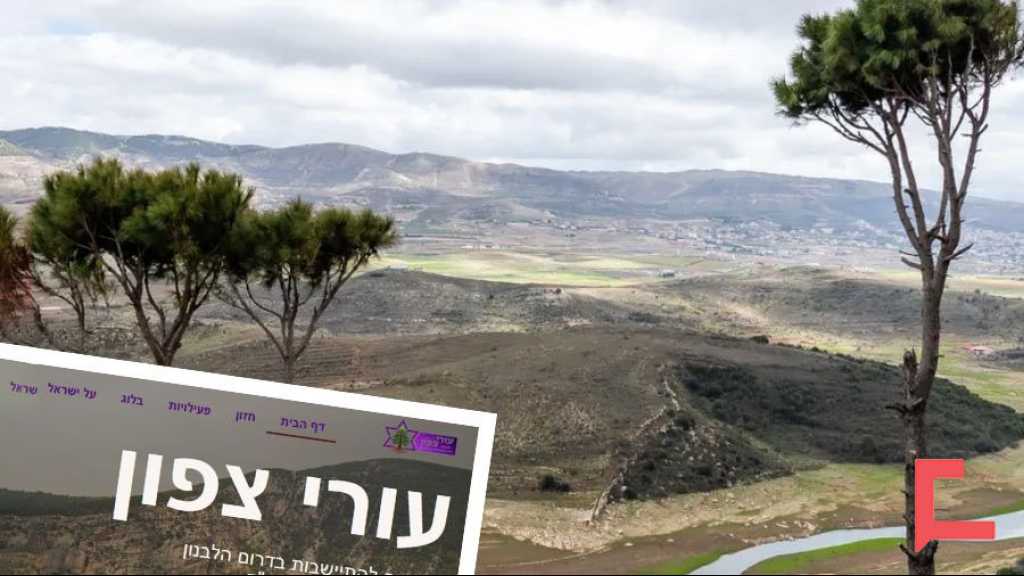
When examining “Israel’s” plans for southern Lebanon, the far-right current comes to the fore- one whose figures have repeatedly voiced intentions to expand the borders and extend settlement into Lebanon. The most recent example was not merely a statement or an insinuation, but an action on the ground: in February 2026, dozens of activists affiliated with the settler movement Uri Tzafon – meaning “Awaken the North” in Arabic-crossed the border into southern Lebanon, where they called for the establishment of Jewish settlements in the area.
At the time, some participants attempted to plant trees on Lebanese land, a symbolic gesture intended to promote the idea of settlement expansion.
The movement’s ideology calls for creating “‘Israeli’ civilian settlements” in southern Lebanon, maintaining the occupation of the area, and treating the south as part of what it describes as the Jewish people’s “historic land.”
It also argues that the security of northern settlements cannot be guaranteed through security arrangements alone, but requires changing the geographic and political reality of the border region.
Some circles associated with this movement use phrases such as “reaching the Litani” or “making the Litani ‘Israel’s’ security border,” referring to the Litani River, which lies dozens of kilometers north of the border with occupied Palestine.
This rhetoric draws on a mix of security, ideological, and religious considerations. “Israel’s” religious-nationalist camp sees control over additional territory as a potential “protective belt” for northern settlements, while some of its supporters link the area to biblical and historical notions of a “Greater Land of ‘Israel’.”
“Judaizing the Litani”
On 19 March 2026, Haaretz published a report on the “Judaization of the Litani” project, which “Israel’s” right-wing camp is seeking to advance under the cover of war by expanding the borders.
The idea stems from the “First Lebanon Conference,” held in “Israel” in June 2024 under the title: “Settlement in Southern Lebanon Will Protect Galilee Communities from Hezbollah.”
At the conference, organizers affiliated with the Uri Tzafon movement presented their vision for establishing Jewish settlements in the area between the northern border and the Litani River. They argued that the current border with Lebanon is “artificial.”
One speaker, Dr. Haggai Ben-Artzi, said that Lebanon’s current borders were “entirely artificial” and that the Galilee extends as far as the Litani River.
The conference addressed “Lebanon in the Bible,” “Lebanon from the Second Temple period to the modern era,” and “the legal aspects of settlement in Lebanon,” as well as previous settlement models and lessons that could be applied to southern Lebanon.
According to this logic, articulated by the “Israeli” right, the area described in the movement’s ideological discourse as the “Galilee’s natural northern boundary” includes:
● Bint Jbeil
● Marjayoun
● Khiyam
● The central sector of southern Lebanon
● Areas between the current border and the Litani River
“Israel’s” Obsession with the Litani River
On April 9, 2026, Haaretz published an article by journalist Moshe Gilad titled, “Re-enacting the Nakba: ‘Israel’s’ Obsession with Lebanon’s Litani River.” Gilad wrote that “what had for years been discussed within small circles of the religious and nationalist right as an ideological dream began to emerge openly during the most recent war on Lebanon. The discussion was no longer limited to creating a ‘buffer zone’ or ‘security belt’; rhetoric also emerged calling for the ‘Israeli’ army to remain permanently in southern Lebanon, paving the way for an ‘Israeli’ civilian presence in the area.”
He notes that this position rests on its proponents’ belief that “Israel’s” withdrawal from southern Lebanon in 2000 was a “strategic mistake,” and that security can only be achieved through permanent control of the land.
Gilad devotes considerable space to the Litani River, explaining that it has become, for some right-wing currents, a political and ideological symbol rather than simply a military objective.
He explains that some leaders of the Uri Tzafon movement present the Litani as the northern boundary “Israel” “should” have reached. They draw on historical and political readings dating back to the early Zionist movement, when demands were made to expand Mandatory Palestine northward to include the Litani basin because of its water and agricultural importance.
“Greater ‘Israel’”: the ever-present project
This project is, of course, closely tied to the idea of “Greater ‘Israel’,” which “Israeli” Prime Minister Benjamin Netanyahu invoked in August 2025, when he affirmed his strong attachment to a “Greater ‘Israel’ vision” based on expansion, the occupation of more Arab land, and the displacement of Palestinians.
The roots of this longstanding plan date back to the late nineteenth century and the beginnings of the Zionist movement, when some Zionist figures and organizations advanced differing visions of the desired Jewish state’s borders. At the 1919 Paris Peace Conference, representatives of the Zionist movement submitted a memorandum proposing borders extending northward to include parts of southern Lebanon-particularly the headwaters region and the Litani River- on strategic and economic grounds linked to water resources.
With the rise of religious Zionism after the 1967 war, the concept took on a doctrinal dimension. Some religious and nationalist movements drew on passages from the Book of Genesis describing land extending “from the river of Egypt to the great river, the Euphrates,” viewing them as the biblical promise to the “Children of ‘Israel’.”
The Lebanese State Sees No Expansionist Ambitions by the Enemy in the South
Looking at the daily explosions and demolitions that are destroying homes, houses, and livelihoods across southern villages, it appears clear that this project features on “Israel’s” military agenda and has a place in the enemy’s thinking. Although it is currently framed through other pretexts—such as destroying Hezbollah infrastructure and establishing a new security belt—the reality on the ground points to the open implementation of a project to encroach on southern Lebanese land.
Yet the Lebanese state has failed to recognize the gravity of this project, whether in its activities and statements or in its direct negotiations with the “Israeli” enemy. So far, the official authorities have acted as though the enemy has no territorial ambitions in the south.
Comments