Sayyed Mohsen: The Mobilizing Mind That Shaped the Resistance’s Consciousness
By Latifa Al-Husseini
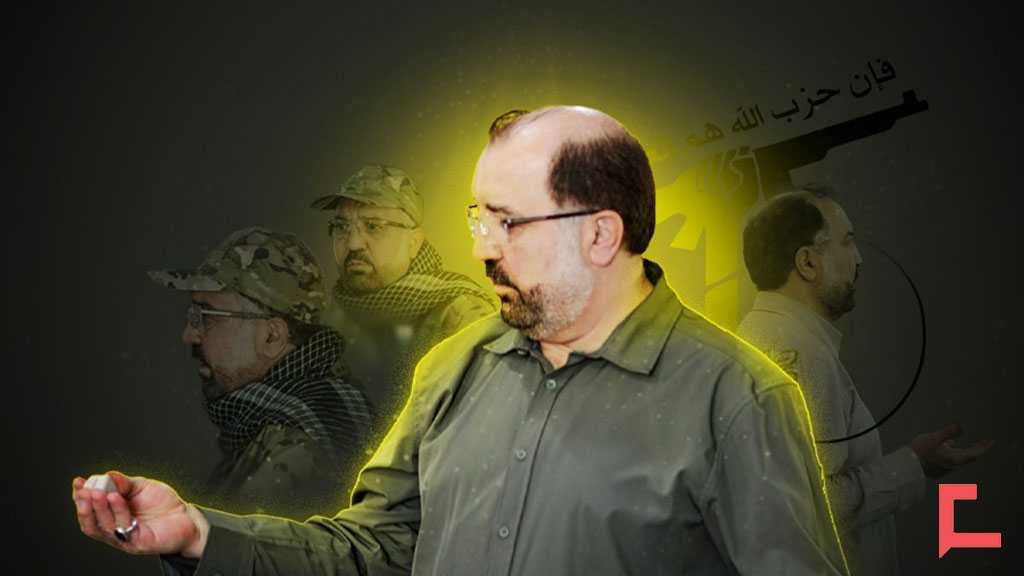
“Fouad [the heart] of the Resistance” was not a title borrowed from a name or nickname. In the case of the prominent jihadi commander Fouad Shokor, known as Sayyed Mohsen, it was a genuine reflection of who he was – one rooted in the earliest days, as the movement’s committed young members began to grow and find their place.
At the heart of this faith-driven resistance movement, Sayyed Mohsen helped build its foundations. He worked tirelessly to secure weapons for the fight against occupation - from Khaldeh and the cry of the “Khomeinists,” to his companions in Ouzai and Burj, the gatherings in mosques, and onward to the south, its hills, and its front lines.
His record was rich in preparation, training, arming fighters and building organizational structures. Yet the most defining aspect of his character was his ability to inspire, mobilize, and strengthen the resolve of the fighters around him. He was a central figure who devoted his life to service and leadership.
At many points throughout his journey, Sayyed Mohsen addressed different generations of resistance members through training, coordination, and mobilization. What remained constant in every responsibility entrusted to him was his impact on the determination of resistance members, fighters, future leaders and those who would come after him.
Loyalty to God Is an Unwavering Covenant
In several of his lectures, Sayyed Mohsen emphasized faith and one’s relationship with God as an essential foundation for every person, whether within Hezbollah or beyond it.
He spoke of loyalty to God and to His path as the only way to avoid loss and misguidance. He returned often to this idea, encouraging his audience to remain sincere in their devotion to God and steadfast in His way, whatever the circumstances and however great the challenges.
In his view, loyalty was not a passing emotional state or a slogan raised in times of ease. It was a lasting covenant that binds a person to their Creator – making them more resilient in the face of temptation, more certain during hardship, and more committed when distractions and calls to retreat grow stronger. From this perspective, he stressed that walking God’s path requires sincerity free of self-interest and loyalty that cannot be shaken by pressure. Together, they form the safeguard that protects the believer from straying and gives them the strength to continue to the very end.
The First Step Toward Victory Is Knowing the Enemy and the Objective
In his lectures, Sayyed Mohsen set out what he saw as a key condition for victory, telling his students and the generation shaped by his military teachings: “The first step toward victory is knowing the enemy and the objective.”
He also spoke about the qualities of true leadership, stressing that “a leader who sends others on martyrdom missions without possessing the spirit of martyrdom himself is, inevitably, a traitor and a hypocrite.”
Follow Us
The alignment between words and actions was central to Sayyed Mohsen’s approach. In his lectures and addresses to groups of fighters, he emphasized that people should see themselves as soldiers and gunners, ready to stand on the front line – at the first artillery piece, the first rocket launcher, and in the first strike – and say to those who follow them: “Follow us.”
The Resistance as an Extension of Karbala
Imam Hussein held a central place in Sayyed Mohsen’s discourse. His name was present in nearly every lecture. Drawing on Hussein’s legacy as a guide for reaffirming truth, reforming society, and pursuing victory, Sayyed Mohsen consistently stressed that rejecting injustice is the one constant on the path to either victory or martyrdom.
Sayyed Fouad devoted considerable space in his speeches to the meanings and values of Karbala when addressing fellow fighters and students. He described the Resistance as “an extension of Karbala. Before the 1982 invasion, it was an abstract value; afterward, we saw its meanings embodied, words translated into action, and the Islamic Resistance brought into being.”
This was the message he sought to instill in his listeners: that Imam Hussein [AS] is not merely a memory recalled at a particular time of year, nor a historical event retold from the pulpit, but an enduring model for shaping the resisting individual. In this view, truly understanding Karbala means recognizing that supporting justice is not a slogan but a responsibility, and that standing against oppression is not a choice dictated by circumstances, but a duty that endures across time. Sayyed Mohsen therefore connected the banner of Hussein with that of the resistance, seeing both as grounded in the same principle: rejecting submission, confronting falsehood, and being prepared to make the greatest sacrifices.
For this reason, his constant reference to Imam Hussein was not simply a religious citation. It was an educational and mobilizing act – one that shaped awareness before shaping a position, and instilled conviction before calling for confrontation. He wanted the fighters who listened to him to carry Karbala in their minds, hearts and conduct, so that Ashura would become an ongoing project and every field of defending justice an extension of the enduring stand taken by Imam Hussein [AS] in Karbala.
In Sayyed Mohsen’s view, this Husseini form of preparation strengthened the resolve of fighters and those involved in the resistance. It rested on the belief that a strong believer is better and more beloved to God, meaning that awareness must be developed and readiness cultivated – both in terms of equipment and determination – in confronting the objective.
An Exceptional Mobilizing Figure
Sayyed Mohsen was both a military and moral asset to Hezbollah. His role extended beyond building organizational structures: he helped shape committed fighters – people who believed in their cause, trusted their choices and were prepared to give everything for it.
He possessed an exceptional ability to mobilize others, reaching both minds and hearts. He did not address fighters through orders alone, but through faith and conviction. He instilled a sense of purpose before assigning responsibility, and grounded the cause in their conscience before asking them to bear its burdens. His efforts were therefore not limited to a particular battle or confrontation; they formed a broader project aimed at shaping people who would carry the message with clear purpose and continue their path despite great sacrifice.
Perhaps the source of his influence was that he never called others to live by standards he did not uphold himself, nor did he urge sacrifices that he was not among the first to make. His words matched his actions, and his principles matched his conduct. He became a model for fighters to emulate and a source of moral and motivational guidance. Sayyed Mohsen did not simply lead men- he shaped them. That is why he was seen as the heart of the Resistance.
Comments