- Home
- ISLAMIC RESISTANCE
- SECRETARY-GENERAL
-
Full Speeches
- Speeches-2000
- Speeches-2006
- Speeches-2007
- Speeches-2008
- Speeches-2009
- Speeches-2010
- Speeches-2011
- Speeches-2012
- Speeches-2013
- Speeches-2014
- Speeches-2015
- Speeches-2016
- Speeches-2017
- Speeches-2018
- Speeches-2019
- Speeches-2020
- Speeches-2021
- Speeches-2022
- Speeches-2023
- Speeches-2024
- Speeches-2025
- Speeches-2026
- Speech-Reports
- SG
-
Full Speeches
- Voices
- Ten Day Dawn
- The Biggest Crime
- Martyr Leaders

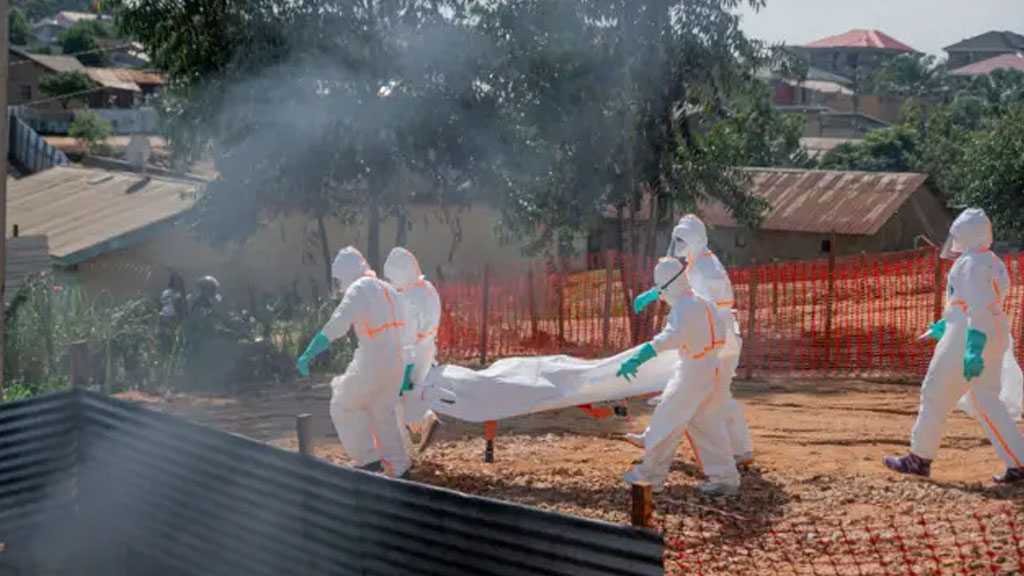
DR Congo Intensifies Ebola Response as Death Toll Exceeds 1,750
By Staff, Agencies
Health authorities in the Democratic Republic of Congo have called for an accelerated response to the country’s Ebola outbreak after the death toll surpassed 1,750 amid continued transmission of the virus.
According to the latest official situation update released on Wednesday, the outbreak has recorded at least 3,874 confirmed cases, including 1,751 deaths, making it the world’s second-largest Ebola outbreak by the number of recorded infections.
Officials said the outbreak currently has a case fatality rate of 45.1%. A total of 717 patients remain in isolation or are receiving treatment in hospitals, while 749 people have recovered.
The country’s Public Health Emergency Operations Center urged stronger coordination and expanded contact tracing to help contain the spread of the virus, warning that high levels of population movement continue to increase the risk of further transmission.
The outbreak has affected five provinces—Haut-Uele, Ituri, North Kivu, South Kivu and Tshopo—with Ituri remaining the epicenter of the epidemic caused by the Bundibugyo strain of the Ebola virus.
On Tuesday, officials from the Africa Centers for Disease Control and Prevention [Africa CDC] and the World Health Organization [WHO] visited Ituri to assess response efforts and meet with local health teams.
During the visit, they inaugurated the Rwangole Ebola Treatment Centre in the provincial capital, Bunia. The new facility is expected to improve access to timely medical care while strengthening efforts to contain the outbreak and protect affected communities.
WHO Regional Director for Africa Mohamed Janabi said the current response remains insufficient as the virus continues to spread and claim lives. He called for increased international support, warning that the outbreak is advancing faster than response efforts.
According to the WHO, more than 17,000 people identified as potential contacts of confirmed cases are currently under monitoring.
A study published last week in the journal Science concluded that the outbreak likely began in January—or possibly even earlier—in a remote mining town in eastern Ituri Province, several months before authorities officially declared the outbreak in mid-May.
Comments
- Related News