
Reports: Syria’s Opposition Suffering Divisions despite Arms from GCC

Local Editor
As the snowball of conspiracy against Syria is melting due to sun rays of unity and ground facts, astonishing facts are being unveiled at the level of Syria's opposition.
Under the title, "After a Year, Deep Divisions Hobble Syria's Opposition," "New York Times" highlighted that the 80 diplomats gathering Friday in the so-called Tunisian "Friends of Syria's meeting" "will find their efforts compromised even before they begin by the lack of a cohesive opposition leadership."
"A year after the uprising began, the opposition remains a fractious collection of political groups, longtime exiles, grass-roots organizers and armed militants, all deeply divided along ideological, ethnic or sectarian lines, and too disjointed to agree on even the rudiments of a strategy to topple President Bashar al-Assad's government," the paper clarified.
Noting that Tunisia's meeting will focus intensely on the "need to build a united opposition," the famous US daily underscored that "the council's internal divisions have kept Western and Arab governments from recognizing it as a kind of government in exile."
"The Tunis summit meeting will probably not change that," the report stressed.
The paper further added that "the divisions and shortcomings within the council were fully on display last week when its 10-member executive committee met at the Four Seasons Hotel in Doha, Qatar."
"Time is running out for the Syrian opposition to establish its credibility and viability as an effective representative of the uprising," said Steven Heydemann, who focuses on Middle East issues at the United States Institute of Peace, a research group financed partly by Congress.
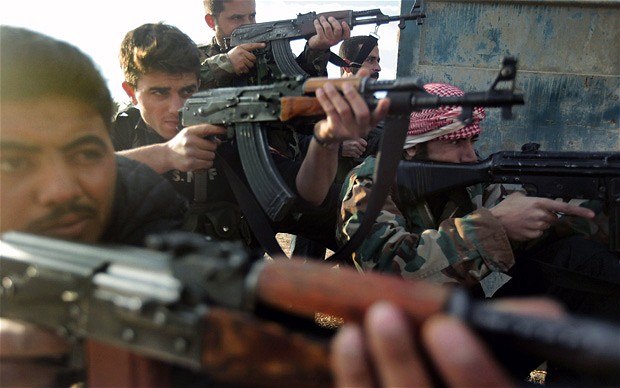
In parallel, recent reports reflected that weaponry is being smuggled to Syria's opposition in large quantities from all over the place."
Saudi Arabia and Qatar, have reportedly come to an agreement to offer financial aid to Syria's flagging opposition movement for the purchase of much-needed arms.
According to Russia Today, a secret meeting has been conducted between opposition leaders and Saudi and Qatari officials to discuss funding for the movement's dwindling weapons supply.
The opposition has hit major stumbling blocks recently, having been unable to smuggle sufficient arms across Syria's borders.
A Syrian dissident interviewed by the British newspaper "The Times" emphasized "the importance of the agreement," saying that "the Free Syria Army had received financial backing almost solely from independent donors."
"The Saudis are offering their support in any way," he told.
Their support was further reaffirmed with the Saudi government's announcement on Friday that it will recognize the Syrian National Council as the official representative of the country.
The dissident also mentioned the possibility of Turkish-led raids on Syrian airbases and weapons stores.
"It is pretty clear that the rebels have been receiving arms from abroad and Syrian television has been showing almost daily shipments of arms being smuggled into Syria via Lebanon, Turkey and other border crossings," the professor from Zaytouneh University Ibrahim Alloush told Russia Today.
"Since the rebels are being supported by the GCC (Gulf Cooperation Council) and by NATO it is safe to assume that they are getting their financing and weaponry from the same sources that are offering them political cover and financial backing," he explained.
"This help, however, has nothing to do with the struggle for democracy or reforms in the country," Alloush says.
"What we are dealing with here is an armed rebellion that does not express the will of the Syrian people."
Source: NY Times, edited by moqawama.org
As the snowball of conspiracy against Syria is melting due to sun rays of unity and ground facts, astonishing facts are being unveiled at the level of Syria's opposition.
Under the title, "After a Year, Deep Divisions Hobble Syria's Opposition," "New York Times" highlighted that the 80 diplomats gathering Friday in the so-called Tunisian "Friends of Syria's meeting" "will find their efforts compromised even before they begin by the lack of a cohesive opposition leadership."
"A year after the uprising began, the opposition remains a fractious collection of political groups, longtime exiles, grass-roots organizers and armed militants, all deeply divided along ideological, ethnic or sectarian lines, and too disjointed to agree on even the rudiments of a strategy to topple President Bashar al-Assad's government," the paper clarified.
Noting that Tunisia's meeting will focus intensely on the "need to build a united opposition," the famous US daily underscored that "the council's internal divisions have kept Western and Arab governments from recognizing it as a kind of government in exile."
"The Tunis summit meeting will probably not change that," the report stressed.
The paper further added that "the divisions and shortcomings within the council were fully on display last week when its 10-member executive committee met at the Four Seasons Hotel in Doha, Qatar."
"Time is running out for the Syrian opposition to establish its credibility and viability as an effective representative of the uprising," said Steven Heydemann, who focuses on Middle East issues at the United States Institute of Peace, a research group financed partly by Congress.
In parallel, recent reports reflected that weaponry is being smuggled to Syria's opposition in large quantities from all over the place."
Saudi Arabia and Qatar, have reportedly come to an agreement to offer financial aid to Syria's flagging opposition movement for the purchase of much-needed arms.
According to Russia Today, a secret meeting has been conducted between opposition leaders and Saudi and Qatari officials to discuss funding for the movement's dwindling weapons supply.
The opposition has hit major stumbling blocks recently, having been unable to smuggle sufficient arms across Syria's borders.
A Syrian dissident interviewed by the British newspaper "The Times" emphasized "the importance of the agreement," saying that "the Free Syria Army had received financial backing almost solely from independent donors."
"The Saudis are offering their support in any way," he told.
Their support was further reaffirmed with the Saudi government's announcement on Friday that it will recognize the Syrian National Council as the official representative of the country.
The dissident also mentioned the possibility of Turkish-led raids on Syrian airbases and weapons stores.
"It is pretty clear that the rebels have been receiving arms from abroad and Syrian television has been showing almost daily shipments of arms being smuggled into Syria via Lebanon, Turkey and other border crossings," the professor from Zaytouneh University Ibrahim Alloush told Russia Today.
"Since the rebels are being supported by the GCC (Gulf Cooperation Council) and by NATO it is safe to assume that they are getting their financing and weaponry from the same sources that are offering them political cover and financial backing," he explained.
"This help, however, has nothing to do with the struggle for democracy or reforms in the country," Alloush says.
"What we are dealing with here is an armed rebellion that does not express the will of the Syrian people."
Source: NY Times, edited by moqawama.org


