
GE Back to the Front, Ghosn Warns: Smuggling Weapons Escalated

The 1st of April didn't pass away from a big lie that emerged from Turkish Istanbul: The so-called "Friends of Syria" conference spread a cover of legitimacy on the so-called Syrian National Council.
The step, that isn't expected to score any progress at the level of Syrian opposition, embedded a clear admission of failure.
Moreover, away from high ceiling bets against the Syrian regime, the conferees announced support for the mission of UN envoy to Damascus, Kofi Annan.
Another scene appeared as the pocket of gulf money was opened in front of the armed Syrian opposition.
Ghosn: Smuggling Arms into Syria on Rise
This came as the Lebanese Defense Minister Fayez Ghosn unveiled Sunday that smuggling weapons from Lebanon into Syria escalated recently.
"Smuggling persists and is in fact increasing. The Lebanese Army is fighting it as much as it can but smuggling operations are on the rise because they bring large profits," Ghosn unveiled.
He added the poorly demarcated 330-kilometer border between Syria and Lebanon includes several illegal border crossings and is difficult to monitor from both sides
"The Army is ready but sometimes there are gaps and problems," he said.
The minister also touched on military aid from foreign countries, saying no country has fulfilled its promises of funding Lebanon's Army or selling it equipment at reduced prices.
He also asserted that "the LA is fully carrying out its duty in arresting terrorists and gangs."
Similarly, Palestinian "Fatah Movement" commander Maj. Gen. Mounir Makdah stressed Monday that "the trade of weapons in Lebanon flourished after the Syrian crisis."
In an interview with "al-Joumhoria" newspaper, Makdah stated that "the Palestinian movements are in full coordination with LA to find the details of the case of the Lebanese Mohammad Terro."
The army seized on Saturday Terro as he was trying to smuggle arms and ammunition hidden in his vehicle outside the Ain al-Hilweh Palestinian refugee camp.
On the internal level, the political circles are busy tackling files of electricity, electoral law, and oil wealth.
Electricity Whirlpool Continues
Regarding electricity, the electricity ministerial committee is scheduled to meet Monday headed by Prime Minister Najib Mikati.
The committee is to discuss the possibility of reducing the prices of renting vessels while additional data appeared on the "General Electric" file.
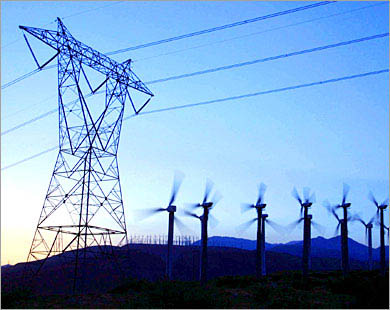
After previously confirming that the mentioned company did not submit any offer to build an electricity generating plant in Lebanon, "as-Safir" Lebanese newspaper clarified that "the offer was unofficial."
However, the paper added that "PM Mikati's friend [a director in the company] contacted him on the personal level and told him that GE is able to construct the plant within one year or less."
"Despite the fact that the company's offer is not formal, it reflects facts concerning the work of the company," "as-Safir" mentioned pointing out that "the GE's management is committed to undertake the informal letter content, if asked by the Lebanese government."
In parallel, the dispute between Mikati and Energy minister Gibran Bassil has a technical face.
Mikati's sources expressed astonishment on Bassil's declaration that it is difficult to negotiate the decrease of price of renting vessels.
"Bassil shouldn't foresee the results of the negotiations with the two companies," they confirmed.
In remarks to "as-Safir", sources questioned Bassil's real intentions behind the minister's announcement that "the summer season would be disastrous if the government didn't approve the vessels, knowing that those wouldn't arrive before the coming September."
For his part, Bassil accused Mikati as "sometimes acting like the "Future Movement's" representative in the government."
"Mikati's statement that there were no funds to rent the power-generating ships was not sufficient because it opened the door wide open for many suggestions," Bassil told New TV.
The minister also said that he was being targeted for attempting to alter "the reality of the electricity sector."
"Why didn't they build power plants in the previous phase? And why didn't they implement the [Change and Reform bloc's] plan to increase electricity output by 700 Megawatts?" he wondered.
Asked about the Iranian proposal to provide electricity for Lebanon, Bassil said it was "good and tempting."
"However, the proposal can't be accepted without establishing tenders," he clarified.
Safadi: I Support Mikati for life
In parallel, Finance Minister Mohammed Safadi denied on Monday that the ties between him and the PM had deteriorated.
In comments to "as-Safir", the minister stressed that "other than our different points of view over the electricity plan we have no dispute."
"I warn those who are trying to [incite a dispute] between me and PM Mikati in order to weaken us in politics," Safadi said.
He further hoped that his "relation, cooperation, and partnership with Mikati continue as long as we're alive."
The minister, who is loyal to Mikati, ruled out the media reports saying that he is seeking for a candidacy to the Prime Ministry.
"We have a PM called Najib Mikati, and I am his ally in the government. How can I announce my candidacy against him?" Safadi wondered.
Electoral Law Adopted Soon
On another level, the government is expected to approve a draft electoral law based on a system of proportional representation within two months at the latest despite objections by some ministers.
According to the Lebanese "Daily Star", "the tendency within the government is to approve an electoral law based on a system of proportional representation as the majority of ministers have come out in support of this law."
"The government will resume discussion of the draft law after the [Easter] holiday," Charbel told "as-Safir" noting that "the government is heading toward adopting the proportional representation plan."
"Once it has been approved by the cabinet, the draft law will be referred to Parliament," the minister added.
Charbel's draft laws along with other election proposals were discussed during a meeting between President Michel Suleiman, PM Najib and Charbel at Baabda Palace Saturday.
For his part, House Speaker Nabih Berri considered Monday that "it was a mistake to adopt the 1960 electoral law, which is based on simple majority representation, in the upcoming 2013 parliamentary elections.
"Committing this mistake again means going backwards," Berri told "as-Safir" newspaper announcing support for an electoral law based on proportional representation.
Source: Lebanese newspapers, Translated and Edited by moqawama.org


