Obama to Move Forward with Arming Syria Rebels, Dempsey Proposes Military Options
Local Editor
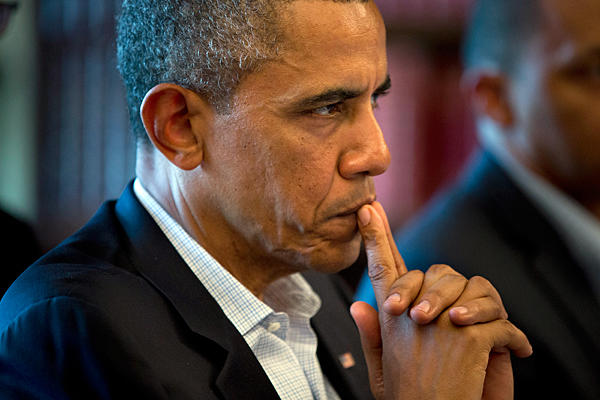
US President Barack Obama will move forward with a plan for the United States to arm the Syrian armed groups, after some congressional concerns were eased, officials said on Monday.
 "We believe we are in a position that the administration can move forward," House of Representatives Intelligence Committee Chairman Mike Rogers stated.
A source familiar with the administration's thinking said on condition of anonymity, "We have been working with Congress to overcome some of the concerns that they initially had, and we believe that those concerns have been addressed and that we will now be able to proceed."
"It is important to note that there are still strong reservations," Rogers said. "We got a consensus that we could move forward with what the administration's plans and intentions are in Syria consistent with committee reservations."
The source familiar with the administration's thinking said, "The committees were persuaded and we will be able to move forward."
Meanwhile, the top US general informed Congress of options for military intervention in Syria, but stressed that the decision of whether to go to war was one for civilian leaders.
In a non-classified letter made public Monday, chairman of the Joint Chiefs of Staff General Martin Dempsey set out five options -- from nonlethal intelligence and weapons training to a boots-on-the-ground plan to "assault and secure" the Syrian regime's chemical weapons.
Saying he was mindful of ongoing deliberations over whether to intervene militarily, Dempsey wrote that such a decision is "a political one that our nation entrusts to its civilian leaders."
But his letter -which was addressed to Senate Armed Services Committee chairman Carl --- also detailed risks, such as the empowering of extremists and retaliatory strikes by the regime.
"Once we take action, we should be prepared for what comes next," he wrote. "Deeper involvement is hard to avoid."
Beyond training, Dempsey said the United States could conduct lethal stand-off strikes that would degrade the regime's air defenses as well as ground, missile and naval forces.
Such an option would require hundreds of aircraft and ships and, "depending on duration, the costs would be in the billions."
Another option, one backed by hawkish Senator John McCain, is the establishment of a no-fly zone to prevent the regime from using its aircraft to bomb rebel areas.
A deeper commitment would be establishing buffer zones or so-called humanitarian corridors.
The most aggressive plan would entail "thousands of special operations forces and other ground forces... to assault and secure critical sites" that contain Syria's chemical weapons.
Meanwhile, Representative Adam Schiff, a Democrat on the House Intelligence Committee, opposes sending US arms to the rebels.
"It's too late to affect the outcome with a small amount of arms," Schiff said. "I think we would have to provide such a massive amount of arms, and additional military support to change the balance on the battlefield, that we would inevitably be drawn deeply into the civil war," he said.
"And I think we also have to expect that some of the weapons we provide are going to get into the hands of those who would use them against us," Schiff said.
He said after two wars in Iraq and Afghanistan, there is "little appetite for getting involved in a third."
Source: News Agencies, Edited by website team
Comments
US Military Faces Strain as Iran War Continues
one month ago