- Home
- ISLAMIC RESISTANCE
- SECRETARY-GENERAL
-
Full Speeches
- Speeches-2000
- Speeches-2006
- Speeches-2007
- Speeches-2008
- Speeches-2009
- Speeches-2010
- Speeches-2011
- Speeches-2012
- Speeches-2013
- Speeches-2014
- Speeches-2015
- Speeches-2016
- Speeches-2017
- Speeches-2018
- Speeches-2019
- Speeches-2020
- Speeches-2021
- Speeches-2022
- Speeches-2023
- Speeches-2024
- Speeches-2025
- Speeches-2026
- Speech-Reports
- SG
-
Full Speeches
- Voices
- Ten Day Dawn
- The Biggest Crime
- Martyr Leaders

WSJ: US Planning Limited Strikes against Syria
Local Editor
The Wall Street Journal reported Wednesday that Pentagon officials firmed up plans for military strikes against Syria that would likely use cruise-missile strikes to "deter and degrade" Syria's security forces without dramatically altering the country's balance of power, senior war officials said Tuesday.
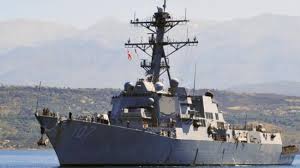 The daily further mentioned that "the plans, which await a sign-off from President Barack Obama, could rely on four US destroyers in the Mediterranean, each armed with dozens of advanced Tomahawk cruise missiles that can be fired at Syrian military and intelligence compounds, front-line artillery batteries and other regime targets."
Not on the list of targets are chemical-weapons supplies, given the potential for widespread collateral damage, the military officials said.
According to the daily, "The Obama administration's planning appears likely to mirror, in scope and tone, punitive strikes taken under President Bill Clinton in 1998 against al Qaeda, and Operation Desert Fox, a four-day military campaign by US and British forces against Iraq in December that same year."
"We are ready to go, like that," War Secretary Chuck Hagel told the BBC in an interview while traveling in Brunei.
This comes as the US Navy beefed up its presence in the eastern Mediterranean last week.
The four destroyers currently in position are typically equipped with a few dozen advanced cruise missiles that would be capable of hitting multiple targets in Syria. "They are positioned far enough from Syria to avoid the regime's Russian-made Yakhont antiship missiles, which have a range of about 200 miles," officials said.
The US Navy has two aircraft carriers-the USS Truman and the USS Nimitz-in the nearby north Arabian Sea, putting their jets within striking distance of Syria if necessary, officials said. Neither carrier is expected to take part in the initial strikes, officials said.
The Navy also has submarines with cruise missiles that could contribute to the effort. Military officials declined to discuss their movements.
The Pentagon has also considered an approach that could involve targeting military airstrips, airplanes and helicopters, and even Syrian military units linked to the suspected chemical attacks. But a more extensive target list would require use of US aircraft, which demand greater complexity of operations.
"I want to make clear that the options that we are considering are not about regime change," said White House spokesman Jay Carney. "They are about responding to clear violation of an international standard that prohibits the use of chemical weapons."
Comments
- Related News