Cloud of Uncertainty Governs US after Shut down, Pentagon Warns of Consequences
Local Editor
Pentagon officials warned of the consequences of the first government shutdown in the US over the last 17 years as hundreds of thousands of civilian employees have been furloughed.
 According to US military officials, about half of the Pentagon's 800,000 civilian employees were placed on unpaid leave Tuesday after Republicans and Democrats in US Congress failed to reach a deal on a spending bill.
"This dark cloud of uncertainty... affects our missions around the world. It affects our allies questioning our commitment," US War Secretary Chuck Hagel told reporters in Seoul, South Korea, on Tuesday.
As the US government shutdown is heading for its second day, both Republicans and Democrats warned Tuesday that it could last for weeks.
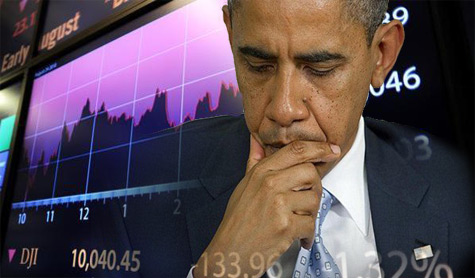
The President Barak Obama admonished House Republicans to quit fighting his three-year-old health care law and to "reopen the government," a show of defiance that reflected Democrats' confidence that conservatives have overreached after years of budget battles with the White House.
"As long as I am president, I will not give in to reckless demands by some in the Republican Party to deny affordable health insurance to millions of hard-working Americans," Obama said from the Rose Garden, flanked by new beneficiaries of the insurance program.
Then, gesturing toward his guests, he added, "I want Republicans in Congress to know - these are the Americans you'd hurt if you were allowed to dismantle this law."
On Tuesday, uninsured Americans, about 15 percent of the population, could begin enrolling in the state-based insurance marketplaces, known as exchanges, created by the 2010 law.
It was unclear how long the shutdown might go on, and no one in either party could say if Republicans would remain firm in their insistence that Democrats agree to significant changes to the health care law. But on the initial day of the first shutdown in nearly 18 years - when a Republican-controlled Congress battled another Democratic president, Bill Clinton - there was little business getting done in the House or the Senate other than photo opportunities and partisan speeches.
On Tuesday night, Speaker John A. Boehner and House Republicans tried to ease the effects of the shutdown and force Democrats into negotiation. The Republicans proposed three bills - to finance veterans' programs, the National Park Service and federally run services in Washington - but because they introduced the measures under a fast-track procedural rule that required a two-thirds vote, each of them failed.
Earlier, the District of Columbia Council approved a measure to keep city government functioning and pay its employees from a contingency fund that would last for about two weeks.
On Capitol Hill, an uneasy calm descended after the 12:01 a.m. shutdown. By the morning light the usual hordes of tourists were barred from entering the Capitol and many House and Senate aides stayed home, furloughed without pay.
Obama said once again that he would not negotiate over the debt ceiling and "allow anybody to drag the good name of the United States of America through the mud just to refight a settled election or extract ideological demands." He added: "I'm not out there saying, ‘Well, I'm going to let America default unless Congress does something that they don't want to do.' That's not how adults operate."
Meanwhile, Members of the American Federation of Government Employees called on the government to reopen after its first shut down in seventeen years.
Holding a press conference at the working offices of the US Congress House of Representatives along with representatives from the Democrats, the members carried banners reading "We want to work."
Noting that the reopening of government would be one of the best services, the speaker of the group called on Republicans to act more sensitively regarding the country's economy.
The federal government was shut down twice in 1995-96 when Bill Clinton was president, but has not closed since then.
Source: News Agencies, Edited by website team