UN: US Drones Killed More Civilians than Publicly Acknowledged
Local Editor
A UN report accused the United States of downplaying the number of civilians killed in drone operations, while failing to assist in the investigation by releasing its own figures.
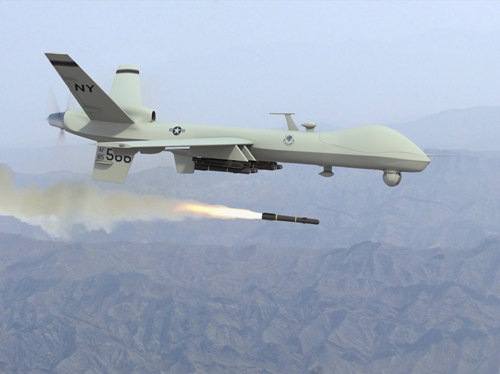 With the increased use of remotely piloted aircraft in military operations in a number of countries, the nagging question of civilian "collateral damage" as a consequence of these deadly technologies is a growing concern for the United Nations and human right groups.
In Afghanistan, for example, the number of aerial drone strikes surged from 294 in 2011 to 447 during the first 11 months of 2012, according to data released by the US Air Force in November 2012, UN Special Rapporteur Ben Emmerson noted in his interim report.
Pakistan officials confirmed that out of 2,200 deaths "at least 400 civilians had been killed as a result of remotely piloted aircraft strikes and a further 200 individuals were regarded as probable non-combatants."
Although the first missile test-fired from a drone occurred in February 2001, it wasn't until the end of 2012 that the UN Assistance Mission in Afghanistan [UNAMA] released data showing that 16 civilians had been killed and 5 injured due to drone strikes during the course of the year.
In its latest published figures, covering the first six months of 2013, UNAMA documented 15 civilian deaths and 7 injuries in seven separate attacks by drone aircraft.
Emmerson's 24-page document, which is due to be presented to the UN General Assembly next Friday, mentions a report by a US military advisor that contradicted official US claims that drone attacks were responsible for fewer civilian deaths compared with other aerial platforms, for example, fighter jets.
He pointed to research by Larry Lewis, a research scientist at the Center for Naval Analyses, who examined aerial strikes in Afghanistan from mid-2010 to mid-2011. With the help of classified military data, Lewis found that the missile strikes conducted by drones were "10 times more deadly to Afghan civilians" than those performed by fighter jets, according to a report by The Guardian newspaper.
The United States and the United Kingdom have been reluctant to hand over information regarding drone strikes of any sort, including those that result in civilian deaths. For example, on February 21, 2010, 23 civilians were killed and 12 wounded in a Predator strike in southern Afghanistan's Uruzgan province.
The US military released partially declassified information on the incident, suggesting "administrative and disciplinary sanctions" against the crew for providing misleading "situational information" as well as "a predisposition to engage in kinetic activity (the release of a missile)."
Emmerson said the US, which has attracted a lot of scorn in Afghanistan over the drone attacks, had created "an almost insurmountable obstacle to transparency."
"The Special Rapporteur does not accept that considerations of national security justify withholding statistical and basic methodological data of this kind," Emmerson wrote in the report.
The United Kingdom, which also figured into the report, has officially admitted to one civilian casualty incident, in which four civilians were killed and two civilians injured in a remotely piloted aircraft strike by the Royal Air Force in Afghanistan on March 25, 2011.
However, that figure remains open to speculation given that the United Kingdom's ‘Reaper' drone has flown more than 46,000 hours in Afghanistan, averaging three sorties per day, with a total of 405 weapons discharged.
Source: News Agencies, Edited by website team
Comments