Seymour Hersh: Obama ‘Cherry-Picked’ Intelligence to Justify Syria Strike
Local Editor
Washington knew Syrian rebels could produce sarin gas but "cherry-picked" to blame President Assad for the Aug. 21 attack on Ghouta, Pulitzer Prize-winning investigative journalist Seymour Hersh has revealed, citing senior US security sources.
The report was published in the London Review of Books after two of Hersh's regular publishers, The New Yorker and The Washington Post, turned the article down.
Hersh, whose Pulitzers were for his exposes on American military misconduct in the Iraq and Vietnam wars, got his information on Syria from whistle-blowing acting and former intelligence and military officers, who for security reasons were not identified in the report.
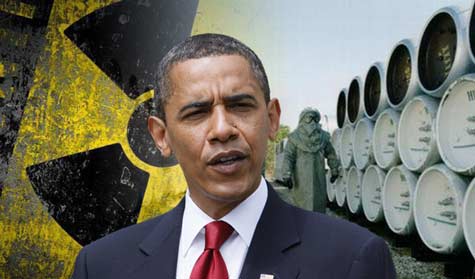
According to Hersh's findings, months before the chemical weapons attack on the outskirts of Damascus, which almost prompted US air strikes on Syria, "the American intelligence agencies produced a series of highly classified reports... citing evidence that the al-Nusra Front, a jihadi group affiliated with al-Qaeda, had mastered the mechanics of creating sarin and was capable of manufacturing it in quantity."
The attack took place on August 21, the same day UN inspectors arrived in Damascus to investigate allegations of use of chemical weapons. The casualty figures have ranged from several hundred to more than 1,400 deaths.
Before the attack, the Obama administration repeatedly described the use of chemical weapons in Syria as a "red line," which would signal the US could intervene in the conflict.
Hersh wrote that he does not believe the intelligence data, pointing at the rebels' having capability for making sarin, could have in any way escaped the White House's attention.
"Already by late May, the senior intelligence consultant told me, the CIA had briefed the Obama administration on al-Nusra and its work with sarin," he wrote.
Obama's laying the blame for the nerve gas attack on Assad's forces, completely disregarding al-Nusra as a suspect in the case, is thus described in the report as the administration's having "cherry-picked intelligence to justify a strike against Assad."
"The cherry-picking was similar to the process used to justify the Iraq war," Hersh wrote.
It's because of the lack of sufficient evidence against Assad that Obama quickly abandoned his plan for military strikes.
"Any possibility of military action was definitively averted on 26 September when the administration joined Russia in approving a draft UN resolution calling on the Assad government to get rid of its chemical arsenal," the report reads. "Obama's retreat brought relief to many senior military officers. (One high-level special operations adviser told me that the ill-conceived American missile attack on Syrian military airfields and missile emplacements, as initially envisaged by the White House, would have been ‘like providing close air support for al-Nusra'.)"
The investigative journalist then points at an annual budget for all national intelligence programs, leaked to the media by Edward Snowden and partly published by The Washington Post.
Hersh also analyses the news coverage of the chemical gas attack investigation, pointing to instances when the media outlets omitted the information that suggested there could be other suspects, beside Assad.
The UN September 16 report, confirming the use of sarin, contained one part that noted that the organization's experts did not have immediate access to the attack sites controlled by rebels, so potential evidence could have been manipulated there. The passage was largely ignored in the news.
"We had technical analysts from the Central Intelligence Agency, the Defense Intelligence Agency, weapons people, and I & W [indications and warnings] people working on the problem ... They concluded that the rebel forces were capable of attacking an American force with sarin because they were able to produce the lethal gas. The examination relied on signals and human intelligence, as well as the expressed intention and technical capability of the rebels," the report read.
Hersh has summed it up with a warning against ignoring alleged al-Nusra's chemical weapons potential.
"While the Syrian regime continues the process of eliminating its chemical arsenal, the irony is that, after Assad's stockpile of precursor agents is destroyed, al-Nusra and its Islamist allies could end up as the only faction inside Syria with access to the ingredients that can create sarin, a strategic weapon that would be unlike any other in the war zone."
Source: Websites
Comments
US Military Faces Strain as Iran War Continues
one month ago