Obama Announces NSA Programs Overhaul
Local Editor
US President Barack Obama announced as expected on Friday a major overhaul to some of the National Security Agency's most disputed surveillance operations seven months after they was first exposed, reining in the metadata collection program among others.
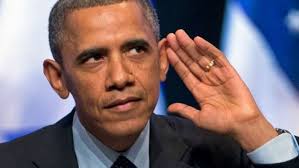 Effective immediately, Obama said, NSA officials must obtain court permission in order to access the government's archive of telephone metadata - a trove of intelligence that has been regularly collected by the government through a program that its proponents say is a legally sound and crucial counterterrorism tool justified under Section 215 of the United States Patriot Act.
Evidence of that program was exposed last June through classified documents disclosed to the media by former NSA contractor Edward Snowden.
"I believe we need a new approach," Obama said. "I am therefore ordering a transition that will end the Section 215 bulk metadata collection program as it currently exists, and establishes a mechanism that preserves the capabilities we need without the government holding this bulk metadata."
Exactly who will be in charge of holding onto the phone records pertaining to millions of Americans has yet to be decided, however, and Obama said he's tasked United States Attorney General Eric Holder, the intelligence community and Congress with finding a solution.
Among the first of top-secret documents leaked by former NSA contractor Edward Snowden since June is evidence that revealed the US government has regularly compelled the nation's telecommunication companies for so-called metadata, in turn receiving on routine basis the primitive details about each and every phone call dialed. But while Obama and his administration has largely defended the program up to and during Friday's speech, critics have condemned that program and others like it exposed by Snowden and have accused the government of violating the civil liberties and rights to privacy of not just Americans, but millions around the globe.
The president said during his address that he wouldn't "dwell on Snowden's actions or his motivations," citing the ongoing investigation into the leaks, but insisted that when individuals who oppose government policy take it upon themselves to publically disclose classified information as the former contractor did, then the US government "will not be able to keep our people safe or conduct foreign policy." WikiLeaks founder Julian Assange, an ally of Snowden, told CNN that the leaker will respond to the new NSA reforms next week.
Other documents disclosed by Snowden since June have revealed NSA programs that target the communications of foreign persons, including average citizens and allied leaders alike. As expected, Obama announced his intent to reform some of those operations during Friday's address as well.
Revelations that the NSA had tapped the personal phones of foreign leaders like German Chancellor Angela Merkel caused outrage around the world last year, but on Friday's speech Obama said that the US is the "world's only superpower" and must continue to conduct operations allies are not able to accomplish on their own.
"We will not apologize simply because our services may be more effective," the president said, "but heads of state and governments with whom we work closely . . . should feel confident that we are treating them as real partners."
The US government "will continue to gather information about the intentions" of foreign governments, the president said. On the contrary, though, he also promised the NSA "will not monitor the communications of heads of state" atop the ranks of allied partners unless there are compelling national security purposes at stake.
Section 702 of the Foreign Intelligence Surveillance Act (FISA) will be subjected to new reform as well, he said, allowing the government to intercept the communications of overseas targets with important information without putting as many Americans and foreign persons incidentally targeted under the looking glass.
More of the president's new plans involve activity at home, however, including reformations meant to address concerns with how the government collects an array of intelligence gathering operations that may at times turn up the details pertaining to US persons.
Source: News Agencies, Edited by website team
Comments
GOP Divisions Grow Over Trump’s Iran War
one month ago