CIA Misled on Interrogation Program, Harsh Treatment

Local Editor
A report by the Senate Intelligence Committee concludes that the CIA misled the government and the public about aspects of its brutal interrogation program for years - concealing details about the severity of its methods, overstating the significance of plots and prisoners, and taking credit for critical pieces of intelligence that detainees had in fact surrendered before they were subjected to harsh techniques.
 The report, built around detailed chronologies of dozens of CIA detainees, documents a long-standing pattern of unsubstantiated claims as agency officials sought permission to use - and later tried to defend - excruciating interrogation methods that yielded little, if any, significant intelligence, according to US officials who have reviewed the document.
"The CIA described [its program] repeatedly both to the Department of Justice and eventually to Congress as getting unique, otherwise unobtainable intelligence that helped disrupt terrorist plots and save thousands of lives," said one US official briefed on the report. "Was that actually true? The answer is no."
Current and former US officials who described the report spoke on the condition of anonymity because of the sensitivity of the issue and because the document remains classified. The 6,300-page report includes what officials described as damning new disclosures about a sprawling network of secret detention facilities, or "black sites," that was dismantled by President Obama in 2009.
Classified files reviewed by committee investigators reveal internal divisions over the interrogation program, officials said, including one case in which CIA employees left the agency's secret prison in Thailand after becoming disturbed by the brutal measures being employed there. The report also cites cases in which officials at CIA headquarters demanded the continued use of harsh interrogation techniques even after analysts were convinced that prisoners had no more information to give.
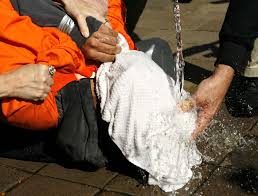
The report describes previously undisclosed cases of abuse, including the repeated dunking of a terrorism suspect in tanks of ice water at a detention site in Afghanistan - a method that bore similarities to waterboarding but never appeared on any Justice Department-approved list of techniques.
US officials said the committee refrained from assigning motives to CIA officials whose actions or statements were scrutinized. The report also does not recommend new administrative punishment or further criminal inquiry into a program that the Justice Department has investigated repeatedly. Still, the document is almost certain to reignite an unresolved public debate over a period that many regard as the most controversial in CIA history.
A spokesman for the CIA said the agency had not yet seen a final version of the report and was, therefore, unable to comment.
Current and former agency officials, however, have privately described the study as marred by factual errors and misguided conclusions. Last month, in an indication of the level of tension between the CIA and the committee, each side accused the other of possible criminal violations in accessing each other's computer systems during the course of the probe.
The Senate Intelligence Committee is expected to vote Thursday to send an executive summary of the report to Obama for declassification. US officials said it could be months before that section, which contains roughly 20 conclusions and spans about 400 pages, is released to the public.
The report's release also could resurrect a long-standing feud between the CIA and the FBI, where many officials were dismayed by the agency's use of methods that Obama and others later labeled torture.
Several officials who have read the document said some of its most troubling sections deal not with detainee abuse but with discrepancies between the statements of senior CIA officials in Washington and the details revealed in the written communications of lower-level employees directly involved.
"The CIA conflated what was gotten when, which led them to misrepresent the effectiveness of the program," said a US official who has reviewed the report. The official described the persistence of such misstatements as among "the most damaging" of the committee's conclusions.
If declassified, the report could reveal new information on the treatment of a high-value detainee named Ali Abdul Aziz Ali, the nephew of Khalid Sheik Mohammed, the self-proclaimed mastermind of the Sept. 11 attacks. Pakistan captured Ali, known more commonly as Ammar al-Baluchi, on April, 30, 2003, in Karachi and turned him over to the CIA about a week later. He was taken to a CIA black site called "Salt Pit" near Kabul.
At the secret prison, Baluchi endured a regime that included being dunked in a tub filled with ice water. CIA interrogators forcibly kept his head under the water while he struggled to breathe and beat him repeatedly, hitting him with a truncheon-like object and smashing his head against a wall, officials said.
As with Abu Zubaida and even Nashiri, officials said, CIA interrogators continued the harsh treatment even after it appeared that Baluchi was cooperating. On Sept. 22, 2003, he was flown from Kabul to a CIA black site in Romania. In 2006, he was taken to the US military prison at Guantanamo Bay, Cuba. His attorneys contend that he suffered head trauma while in CIA custody.
Last year, the Senate Intelligence Committee asked Baluchi's attorneys for information about his medical condition, but military prosecutors opposed the request. A US official said the request was not based solely on the committee's investigation of the CIA program.
Two other suspects, from Libya - Mohammed al-Shoroeiya and Khalid al-Sharif - endured similar treatment at Salt Pit, according to Human Rights Watch. One of the men said CIA interrogators "would pour buckets of very cold water over his nose and mouth to the point that he felt he would suffocate. Icy cold water was also poured over his body. He said it happened over and over again," the report says. CIA doctors monitored the prisoners' body temperatures so they wouldn't suffer hypothermia.
The two men were held at Salt Pit at the same time as Baluchi, according to former US intelligence officials.
Officials said a former CIA interrogator named Charlie Wise was forced to retire in 2003 after being suspected of abusing Abu Zubaida using a broomstick as a ballast while he was forced to kneel in a stress position. Wise was also implicated in the abuse at Salt Pit. He died of a heart attack shortly after retiring from the CIA, former US intelligence officials said.
Source: WP, Edited by website team
US Military Faces Strain as Iran War Continues
one month ago