US Secretly Created ‘Cuban Twitter’ to Stir Unrest
Local Editor
The US government secretly created a ‘Cuban Twitter' social network to stir political unrest and undermine the country's form of government, The Associated Press has learned on Thursday.
Documents and interviews revealed the involvement of the US Agency for International Development (USAID) in the ‘Cuban Twitter' platform, which was built with secret shell companies and financed through foreign banks in order to stir unrest in the country.
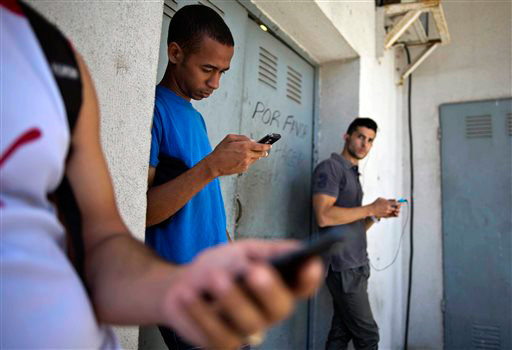
USAID went to extensive lengths to conceal Washington's ties to the project; they set up front companies overseas in Spain and the Cayman Islands to hide the money trail, and recruited CEOs without telling them they would be working on a US taxpayer-funded project.
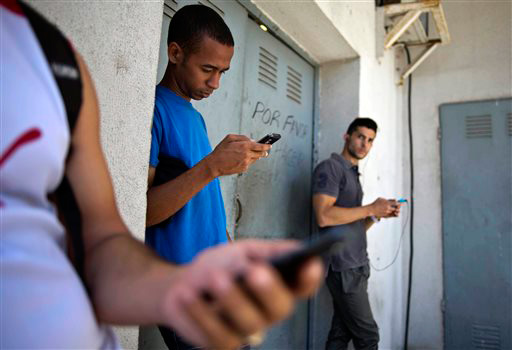
The project lasted more than two years and drew in tens of thousands of subscribers who were unaware that it was being backed by Washington.
It evaded Cuba's internet restrictions by creating a text messaging service that could be used to organize political demonstrations. First, the network would build a Cuban audience, mostly young people; then, the plan was to push them toward dissent.
The project, dubbed "ZunZuneo," slang for a Cuban hummingbird's tweet, was publicly launched shortly after the 2009 arrest of American contractor, Alan Gross, in Cuba. He was imprisoned after traveling repeatedly to the country on a separate, clandestine USAID mission to expand Internet access using sensitive technology that only governments use.
Yet, its users were neither aware it was created by a US agency with ties to the State Department, nor that American contractors were gathering personal data about them, in the hope that the information might be used someday for political purposes.
The AP obtained more than 1,000 pages of documents about the project's development. It independently verified the project's scope and details in the documents through publicly available databases, government sources and interviews with those involved in ZunZuneo.
James Eberhard, a key player in the project's development, declined to comment about Cuba or US involvement. Creative Associates referred questions to USAID.
It is unclear whether the scheme was legal under US law. Officials at USAID would not say who had approved the program or whether the White House was aware of it.
"There will be absolutely no mention of United States government involvement," according to a 2010 memo from one of the project's creators. "This is absolutely crucial for the long-term success of the service and to ensure the success of the Mission."
USAID said in a statement that it is "proud of its work in Cuba to provide basic humanitarian assistance, promote human rights and fundamental freedoms, and to help information flow more freely to the Cuban people." The agency said its work was found to be "consistent with US law."
The social media project began development in 2009 after Washington-based Creative Associates International obtained a half-million Cuban cellphone numbers. It was unclear to the AP how the numbers were obtained, although documents indicate they were done so illicitly from a key source inside the country's state-run provider. Project organizers used those numbers to start a subscriber base.
ZunZuneo's organizers wanted the social network to grow slowly to avoid detection by the Cuban government. Eventually, documents and interviews reveal, they hoped the network would reach critical mass so that dissidents could organize "smart mobs" - mass gatherings called at a moment's notice - that could trigger political demonstrations, or "renegotiate the balance of power between the state and society."
At a 2011 speech at George Washington University, Secretary of State Hillary Rodham Clinton, said the US helps people in "oppressive Internet environments get around filters." Noting Tunisia's role in the Arab Spring, she said people used technology to help "fuel a movement that led to revolutionary change."
The estimated $1.6 million spent on ZunZuneo was publicly set aside for the purpose of an unspecified project in Pakistan, public government data show, but those documents don't reveal where the funds were actually spent.
ZunZuneo's organizers worked hard to create a network that looked like a legitimate business, including the creation of a companion website - and marketing campaign - so users could subscribe and send their own text messages to groups of their choice.
"Mock ad banners will give it the appearance of a commercial enterprise," one written proposal obtained by the AP said. Behind the scenes, ZunZuneo's computers were also storing and analyzing subscribers' messages and other demographic information, including gender, age, "receptiveness" and "political tendencies." USAID believed the demographics on dissent could help it target its other Cuba programs and "maximize our possibilities to extend our reach."
A Cuban user, Ernesto Guerra, who never suspected the network had ties to Washington said, "How was I supposed to realize that? It's not like there was a sign saying, 'Welcome to ZunZuneo, brought to you by USAID.'"
Executives set up a corporation in Spain and an operating company in the Cayman Islands to pay the company's bills so the "money trail will not trace back to America," a strategy memo said. That would have been a catastrophic blow, they concluded, because it would undermine the service's credibility with subscribers and get shut down by the Cuban government.
Similarly, subscribers' messages were funneled through two other countries - but never through American-based computer servers.
For more than two years, ZunZuneo grew and reached at least 40,000 subscribers. But, documents reveal the team found evidence Cuban officials tried to trace the text messages and break into the ZunZuneo system.
ZunZuneo vanished abruptly in 2012.
Source: News Agencies, Edited by website team
Comments