Netanyahu Faces Internal Wave of Criticism after Congress Speech: We’re Isolated , Bibi Unfit
Local Editor
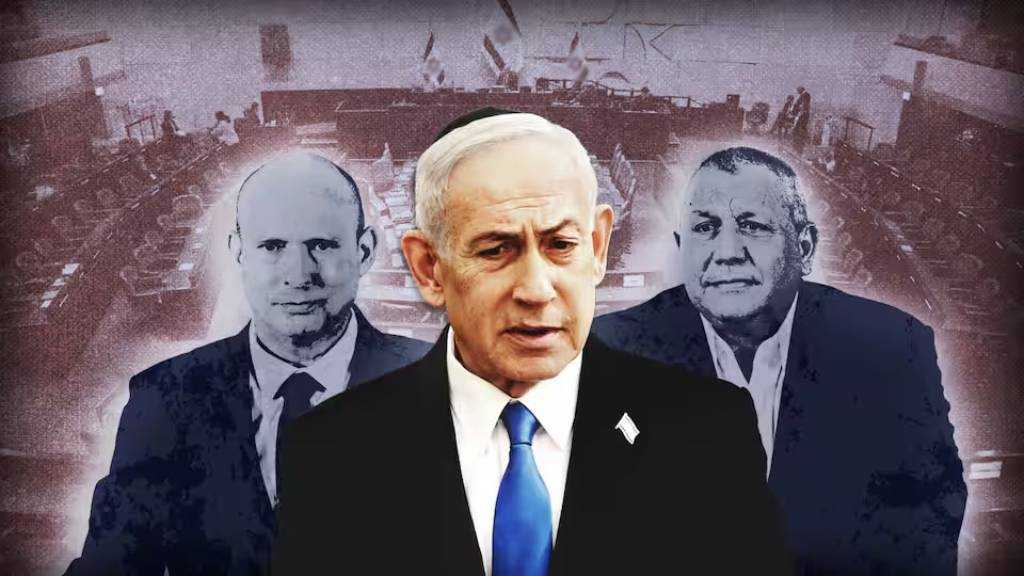
Bringing nothing new in his Congressional speech, and amidst the scandalous Comptroller's report and the upcoming "Israeli" elections, Zionist Prime Minister Benjamin Netanyahu feared, more than anything else, Iran becoming a nuclear threshold state under the umbrella of international legitimacy even on the expense of US-"Israel" ties.
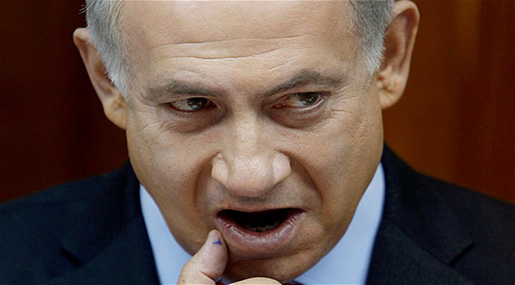
Furthermore, the Zionist public urged Bibi's failure as a politician who committed "embarrassing and shameful" deeds. They now settled for a politician who met the minimum requirements: "Speaks the truth and doesn't take a bribe."
This knowledge nowadays became an official document, signed by the state comptroller; a fact related to Netanyahu that the "Israeli" public came to despise.
Still, Netanyahu showed no remorse towards the criminal allegations. On the contrary, his lawyers suggested that everyone steals, everyone sinned, and everyone - not just Netanyahu - was not ashamed to dip his hands in the public coffers.
As the "Israeli" elections neared, attacks on Netanyahu intensified - be them from opposing Zionist parties or the US alley.
US President Barak Obama said he would not meet with Netanyahu during his visit because the trip came too close to "Israel's" elections.
Moreover, a growing number of Democrats in both chambers announced ahead of the speech that they won't be attending, prompting some to question whether the "Israeli" leader should cancel or move his speech.
Adding to the point, the congressional invitation to speak in a joint meeting of the US Congress added to the intensification in the current US-"Israel" tension.
Netanyahu's act was "unprecedented" and it showed "the profound issue of lack of trust and confidence" between "Israel" and the US.
Accordingly, a top official warned that the current tensions between traditional allies US and "Israel" could last until the end of the Obama administration in 2016.
"There are moments of significant agreement and then there are moments of tactical disagreement," US Deputy Secretary of State Antony Blinken declared.
On the level of the Iranian nuclear program, the "Israeli" primere was poised to go to Capitol Hill for another round in an increasingly heated battle with the White House over Iran's nuclear ambitions.
Meanwhile, Obama lashed out at the Zionist PM, pointing to Netanyahu's attacks on a previous interim US-Iran deal that paved the way for the ongoing talks in Switzerland.
Blinken stressed that Obama had spent more time in contact with Netanyahu than any other world leader but warned that the Bibi's speech could have "a bit of a corrosive effect" on ties.
Concerning the US-Iran nuke talks, "Israel" feared that Obama's Iran diplomacy, with an end-of-March deadline for a framework accord, would allow its arch foe to develop atomic weapons.
Besides, a poll initiated by Netanyahu's opponents in the March 17 election showed that 60% believed the speech would have no impact on the anti-nuclearization effort; an act that unveiled the lack of trust the Zionist public had towards their PM.
Nonetheless, it was obvious that the American administration was more concerned about silencing "Israel" than protecting it.
In traveling this week to Switzerland, Saudi Arabia and Britain, US Secretary of State John Kerry would avoid being in Washington when Netanyahu was expected to deliver a criticism of US negotiations to curb Iran's nuclear program.
While he did not mention Netanyahu by name, Kerry declared in Geneva he was "concerned by reports" that "selective details" of the deal would be revealed, after an "Israeli" official said Tel Aviv knew about the emerging agreement and that the prime minister would elaborate in his congressional address.
This came as a senior official traveling with Netanyahu, who spoke on the condition of anonymity, claimed that the Zionist government knows more about the agreement with Iran than many members of Congress.
Meanwhile, "Israeli" opposition leader Isaac Herzog has condemned Prime Minister Benjamin Netanyahu's anti-Iran speech at the US Congress, saying "Israel" is still isolated after the speech.
"The painful truth is that after all the applause, Netanyahu was left alone and "Israel" was left isolated, and the negotiations [on Iran's nuclear program] will continue without any "Israeli" involvement," Herzog said.
The opposition leader also said that Netanyahu's speech undermined US-"Israel" ties.
"This speech badly damaged US-"Israel" relations. It won't change the [US] administration's stance, but will only widen the rift with our greatest friend and strategic ally," he noted.
Source: News Agencies, Edited by website team
Comments