Serbia’s Incoming Leadership Plans Long-Term Gas Supply Negotiations with Russia
By Staff, Agencies
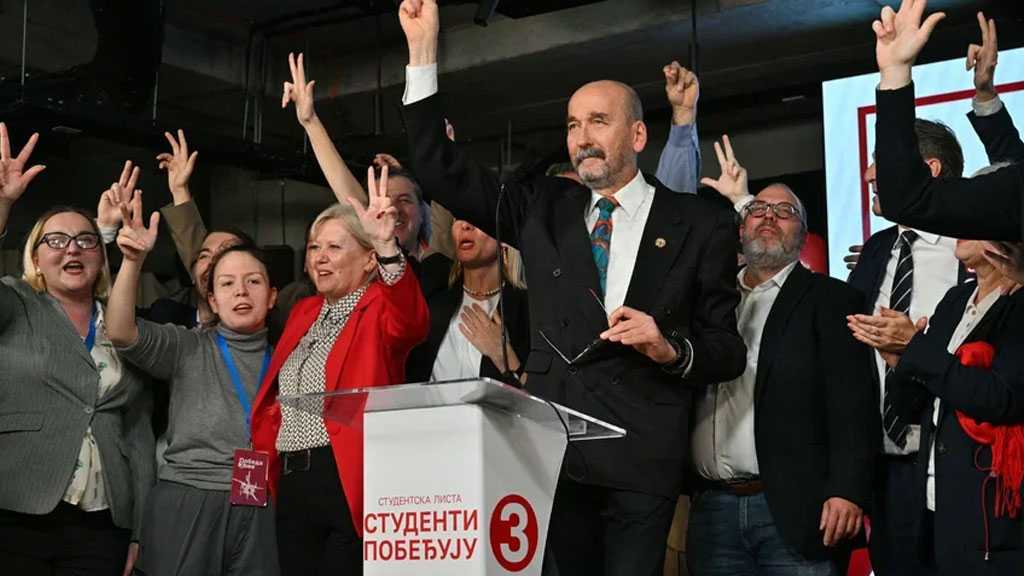
Serbia’s incoming leadership intends to open negotiations with Russia to secure a long-term natural gas supply agreement, prominent Student List candidate Radomir Saicic has announced, signaling that energy cooperation with Moscow will remain a priority under the new government.
The student-backed movement, which secured approximately 52.5% of the vote in Sunday’s snap parliamentary elections, previously indicated that Serbia would not participate in Western sanctions against Russia.
However, questions remain over the movement’s future foreign policy direction, as outgoing leader Aleksandar Vucic has warned that its position toward Moscow could change, while some of its prominent representatives have suggested reconsidering aspects of bilateral relations.
The Student List emerged from widespread protests following the collapse of a railway station canopy in Novi Sad in November 2024, which killed 16 people and triggered public anger over alleged government corruption.
Despite investigations and several government concessions, demonstrations continued, eventually prompting Vucic to call snap parliamentary elections. He resigned from the presidency in September to pursue a return to power as prime minister.
Vucic described the protests as an attempted Western-backed "color revolution," but pledged to respect the election results and avoid violence before conceding defeat.
Moscow, which had previously expressed concerns about possible foreign interference in Serbia’s political affairs, acknowledged the election outcome. Kremlin spokesman Dmitry Peskov praised Vucic’s contribution to bilateral relations and expressed hope that the incoming leadership would maintain constructive ties with Russia.
Speaking to Serbian weekly NIN in an interview published Wednesday, Saicic identified relations with Moscow as one of the incoming government’s priorities.
He said the new administration intended to secure the country’s energy supplies during its first 30 days in office, including oil, natural gas and the operation of the Electric Power Company of Serbia.
Saicic added that Serbian delegations would travel to Washington to discuss the temporary suspension of sanctions against the country’s oil company NIS and to Moscow to negotiate a longer-term gas supply arrangement.
He also reaffirmed the Student List’s opposition to imposing sanctions on Russia over the conflict in Ukraine, arguing that international disputes should be resolved through dialogue and negotiations rather than punitive measures.
Another movement representative, university professor Jovo Bakic, expressed similar support for maintaining relations with Moscow, describing Russia as an important historical partner and, in many instances, a protector of Serbia.
However, another prominent member, Ilija Srdanovic, offered a more cautious position in an interview with US-funded Radio Free Europe/Radio Liberty, saying that the country’s future approach would be subject to domestic discussion.
Russia remains Serbia’s dominant natural gas supplier, accounting for as much as 90% of the country’s gas imports in 2025. Most supplies reach Serbia through the TurkStream pipeline, crossing Türkiye and Bulgaria.
Nevertheless, the two countries have yet to conclude a new long-term gas agreement since their previous three-year contract expired in May 2025. Instead, supplies have continued through successive short-term extensions, with the current arrangement set to expire on December 31.
Negotiations are also complicated by uncertainty surrounding NIS, which operates Serbia’s only oil refinery and faces US sanctions because of its majority Russian ownership.
Hungarian energy company MOL has been negotiating to acquire the Russian stake in NIS, while Washington has granted temporary exemptions to allow the company to continue operating.
Moscow has attributed difficulties in reaching a long-term gas agreement to European Union energy policies, Serbia’s aspirations for European integration and uncertainty surrounding gas transit through Bulgaria. Nevertheless, Russia has repeatedly expressed its willingness to supply European countries interested in purchasing its gas.
Russian President Vladimir Putin and Vucic discussed energy cooperation and the future of NIS in late September, ahead of the elections.
At the time, Vucic expressed confidence that Russian gas supplies would continue at favorable prices, citing a rate of €318 [$356] per 1,000 cubic meters, compared with a European market benchmark exceeding €800.