Sheikh Qassem Reaffirms Hezbollah’s Resistance, Rejects Disarmament and US Tutelage
Translated by Al-Ahed News
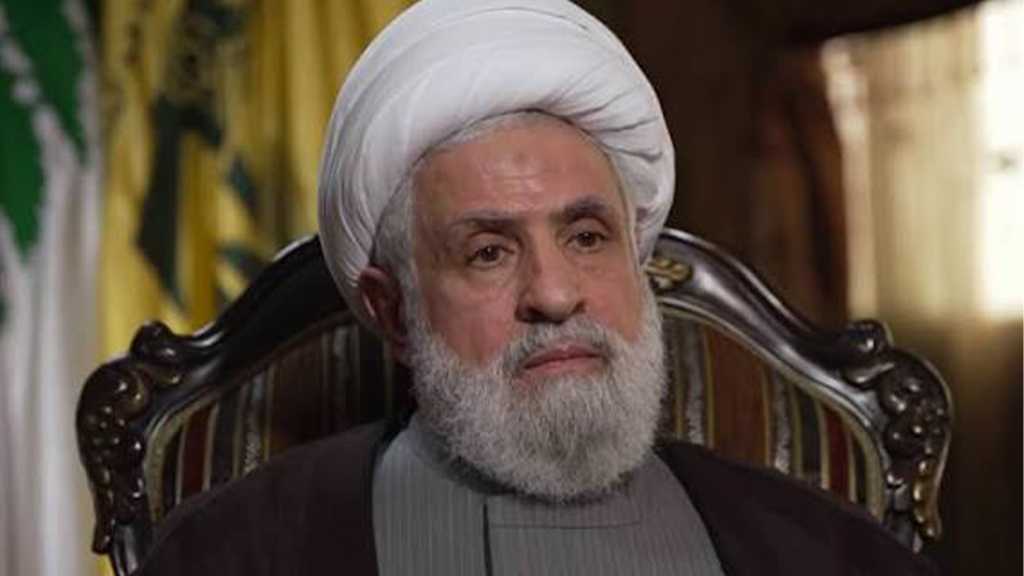
Hezbollah Secretary-General His Eminence Sheikh Qassem has reaffirmed the movement’s commitment to continued resistance against the “Israeli” occupation, rejecting any discussion of disarmament while Lebanese territory remains occupied and attacks continue.
In a statement issued Wednesday, October 28, Sheikh Qassem said the resistance emerged in response to the “Israeli” occupation and continued with the aim of liberating Lebanese territory and defending the people. He argued that the resistance, alongside the sacrifices and steadfastness of its supporters, had prevented the occupation forces from expanding their control over Lebanon.
Sheikh Qassem described wars launched by the “Israeli” enemy as part of an expansionist project aimed at establishing Greater “Israel.” He said previous agreements, including Madrid and Oslo, had served to consolidate occupation rather than secure lasting peace, accusing the enemy of repeatedly violating agreements with the support of the United States and Western powers.
He also linked the continued occupation and military aggression to the situation in Palestine, accusing the United States and its allies of enabling genocide against Palestinians in Gaza and the West Bank. He maintained that Palestinian steadfastness would ultimately preserve the right of Palestinians to their land and occupied al-Quds.
Addressing Lebanon’s political situation, Sheikh Qassem said the resistance would continue confronting aggression and rejected calls to disarm it while occupation and attacks persist. He called for the withdrawal of occupation forces in accordance with the November 27, 2024 agreement and UN Security Council Resolution 1701, alongside the deployment of the Lebanese Army south of the Litani River.
He also rejected the framework agreement, describing it as unconstitutional and inconsistent with the Taif Agreement, Lebanese laws, the presidential oath of office and the government’s policy statement. He argued that the agreement would relinquish Lebanon’s sources of strength and deepen internal divisions.
Sheikh Qassem further emphasized the importance of the Iran-US agreement, saying it had helped reduce aggression against Lebanon following the issuance of a memorandum of understanding. He praised Tehran for placing an end to “Israeli” attacks against Lebanon and the withdrawal of occupation forces at the forefront of its priorities.
He also called for an end to what he described as American tutelage over Lebanese state institutions, arguing that foreign control undermines national sovereignty. At the same time, he reaffirmed Hezbollah’s commitment to national unity, dialogue and cooperation with Lebanon’s political forces, provided these efforts respect the country’s sovereignty and Constitution.
On reconstruction, Sheikh Qassem renewed Hezbollah’s pledge to support displaced families, repair damaged homes and contribute to rebuilding, while calling on the Lebanese state and friendly countries to fulfill their responsibilities. He also stressed that relations between Hezbollah, the Amal Movement and allied forces supporting the resistance remained strong, citing their shared positions on sovereignty, support for the Lebanese Army and rejection of internal strife.
Turning to Iran, Sheikh Qassem said the country had withstood US and “Israeli” aggression and thwarted what he described as efforts to overthrow its political system and divide the country. He attributed this resilience to the Iranian people and the leadership of Ayatollah Sayyed Mojtaba Khamenei.
Concluding his statement, Sheikh Qassem reiterated that resistance remained the path to liberating occupied Lebanese territory, while emphasizing the need for national solidarity and cooperation to confront external pressure and safeguard Lebanon’s sovereignty.