How would the ’Israeli’ Army act in the Third Lebanon War with Hizbullah?
Local Editor
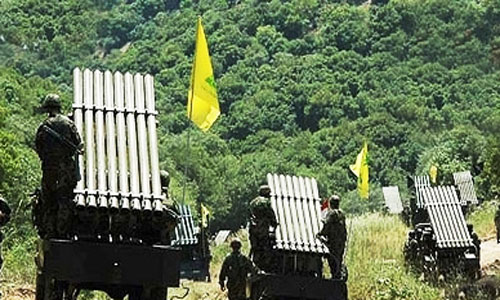
The Zionist news website "Walla" published a second report on Hizbullah's preparations for the coming war with "Israel" and how the Zionist military would respond to the scenarios and surprises it would face in light of Hizbullah's progress to Galilee- after the latter had changed its military stance from defensive to offensive, considering its accumulated experience from the Syrian war.
According to the site, parties in the Zionist "Division of Military Intelligence [AMAN]" had already estimated that Hizbullah was deterred as a result of the Second Lebanon War in 2006.
However, expectations differed and estimates within the "Israeli" army revealed that Hizbullah maintained a temporary lull due to being preoccupied in strengthening its forces and investing its resources in the construction of its power.
Moreover, the Zionist website quoted a senior security source as saying: "Today more than ever, [Hizbullah's Secretary General, Sayyed Hassan] Nasrallah is willing to venture in the confrontation with "Israel" till the end just so as not to appear weak in front of the "Israelis"."
"Walla" added that the passing of only seven years on the assassination of [the martyr leader] Imad Mughnieh- in the Shiite concept- was but a short time, and therefore, the desire for revenge did not linger.
Furthermore, it said that Hizbullah also sought to restore the controversy over the ownership of the Shebaa Farms, Kfar Shuba Hills and the Lebanese part of Ghajar village so as to open all possibilities.
Hence, according to what was agreed upon in the Zionist "security establishment", Hizbullah was the most prominent sensory threat to "Israel" at the moment, especially as it possessed more experienced fighters and long-range rockets through which it tried to channel accurate blows to "Ben-Gurion" airport and "Alchria" headquarters [Ministry of War and the General Staff of the "Israeli" army].
Therefore, the [Zionist] Army had come to realize that, compared to 2006, the next battle with Lebanon would be more severe.
In light of recent changes in the Middle East, the Zionist "Walla" posed a question: "How is "Israel" preparing for the coming war scenario with Hizbullah?"
It stated: "Hizbullah was not deterred from taking effective actions from the northern border of "Israel"." For example, after the assassination of Imad Mughnieh's son in the Syrian Golan last December [2014], Hizbullah responded by launching anti-tank missiles against a convoy of "Tsabar" battalion in the Shebaa Farms, which led to the death of the brigade commander and another member.
The article explained that these topical events might evolve to deterrence battles limited and confined to a certain time, and in the worst cases, it might evolve into a war.
Further to the point, a senior source in the Northern Command assured "caution towards not underestimating the organization's strategic capability and long-term vision, and at the same time, not to exaggerate on the tactical importance of the organization."
The report continued that Hizbullah fighters, who left their front positions on the border with occupied Palestine after the second Lebanon war, returned to it today and in abundance. It quoted a military source in the Northern Command, saying that, "Nothing happens in South Lebanon, especially in the border area, without Hizbullah's awareness."
The "Walla" report added after the confirmation of the security source that "the "Israeli" army has been training since the Second Lebanon War, the war against Hizbullah; it even transferred, in this context, part of the capabilities developed for its battle against Hizbullah into capabilities against Hamas and most of the resistance factions operating in the area."
It added, "Among these preparations is the possibility of deploying Hizbullah special forces ranging in numbers from 100 to 200 fighters in settlements near the border fence to occupy it for short periods of time; Hizbullah is beginning to think in an offensive manner."
Though, in "the "Israeli" security establishment", there were no tunnels traversing the boundary line nor any sign yet that indicated the presence of such tunnels from the Lebanese side. However, the "security establishment" adhered to the hypothesis that Hizbullah might surprise "Israel" with them.
Also, sources in unit 91 claimed that in the event that a Hizbullah fighter decided to run across the border, he would have access to "Misgav Am" outpost in a minute- then, he would not need a tunnel.
This is how the "Israeli" army will operate in the Third Lebanon War
"Israeli" army command views regarding the upcoming battle with Hizbullah varied. The new head of Chief of Staff, Gen. glandular Eisenkot, would have to resolve many important issues on how to face the progressing Hizbullah.
Was it going to be a war or a battle? Would Hizbullah be allowed to attack first so that the "Israeli" army would have the chance to counter-attack its formation? Would the "Israeli" intelligence identify a change in Hizbullah's operation mood from "defensive" to "offensive"?
According to the Zionist website, the obvious fact was that, "If the last round of fighting against Hamas lasted 50 days, the next round against Hizbullah might take months; and, therefore, several points of view should be analyzed."
The fundamental question was, "What would stop Hizbullah: an aerial battle or a ground operation? Would the Iron Dome defend "Israeli" citizens?"
According to ""Israeli" security establishment" officials, the Iron Dome batteries would protect- in particular- the military bases, especially air force bases and sensitive installations like Haifa bay, "Ben-Gurion" airport, and water and electric companies.
The officials continued, saying that, "Leaders of the missile batteries will have to make tough decisions and allow rockets and rocket-propelled grenades to hit residential areas. "Israeli citizens" who do not live near the facilities and infrastructure will have to stay a long time in fortified places."
All of the above was based upon the Zionist army's estimate that during the war with Hizbullah, more than a thousand rockets per day would be fired.
Aerial Attack
Zionist army data showed that "Israeli" Air Force warplanes dropped 7250 bombs over the 50 days of fighting during "Operation Strong Cliff" on the seized Gaza Strip.
Adding to that, in "Operation Pillar of Defense", the "Israeli" army attacked 1,350 targets in 8 days; 1,789 targets in "Operation Cast Lead" in 22 days; and 3,200 targets in the Second Lebanon War in 33 days- wondering about the numbers it would witness during the Third Lebanon War.
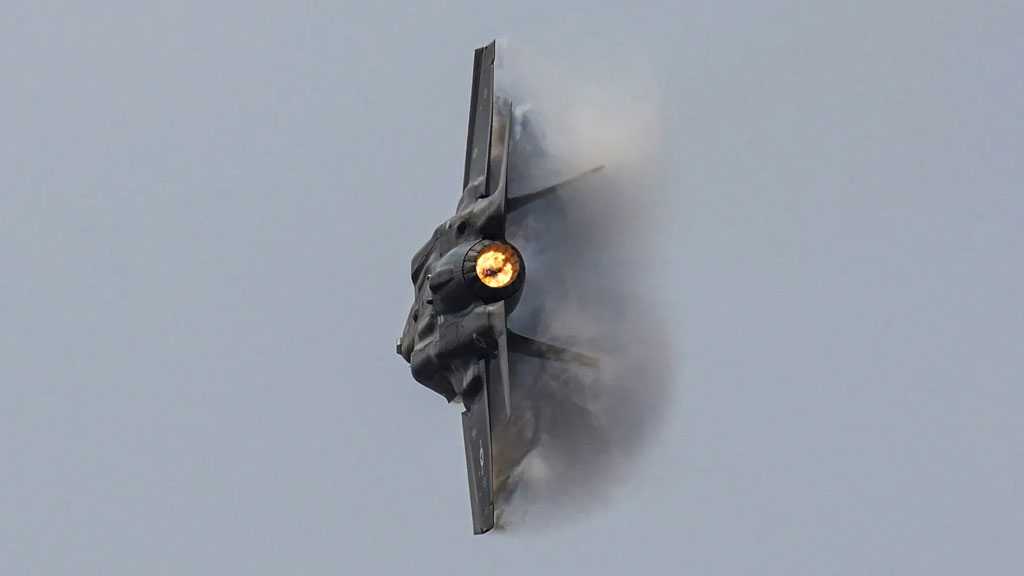
The Zionist website revealed that during the drills, the "Israeli" air force prepared for a much higher pace of attack than that during "Operation Strong Cliff." Its ability to operate allowed it to implement unprecedented attacks against Hizbullah targets; but such an attack would have a decisive price - planes would crash and Hizbullah would capture Zionist pilots.
However, the Zionist air force could be more lethal in Lebanon than it was in the seized Gaza Strip because the intelligence on Hizbullah supplied by "AMAN" was more accurate than that provided on Hamas in seized Gaza.
Moreover, a prevailing point of view in the "Israeli" Air Force which stated that an aerial battle without the implementation of ground maneuver was sufficient might subject "Israel" to trouble, causing a large number of deaths and prolonging the fighting.
Ground Attack
When the "Zionist security establishment" talked about a comprehensive battle with Hizbullah, it believed that "the ground attack would be the toughest and more complex battle."
They clarified that, "At a time when the army holds deep maneuvers, Hizbullah would be trying to carry out attacks on settlements, and therefore, there should be a strong line of "defense"."
Dr. Gadi Siboni, a researcher at the Security Center, stated about the prospect of a broad battle that, "Staying for five minutes in "Hanita" is a tremendous achievement for Hizbullah then."
He added, "We can occupy Bint Jbeil eight times without destabilizing Hizbullah. But, in case it occupied "Hanita" settlement once, we'll be talking about it for 100 years. It's like bombing the "Ezraiala" market."
A billion and a half shekels is the cost on the economy of one day's fighting
In the light of previous battles, the "Israeli" "security establishment" was analyzing the next battle and estimating the amount of damage that would result. Accordingly, a single day of fighting would cost the "Israeli" economy one and a half billion shekels.
Consequently, the political level would have to quickly decide whether the army was heading towards an offensive operation or a defensive one in order to reduce as much as possible the loss of life as well as economic and physical damage.
Furthermore, a senior official in the military had recently estimated that a potential tactical incident might lead the deterioration of the situation towards an escalation that could lead to war; he said: "Hizbullah is deterred from war but not from escalation, so no one knows what will happen when it decides to respond to a tactical incident."
Source: al-Ahed News, Translated by website team
Comments