- Home
- ISLAMIC RESISTANCE
- SECRETARY-GENERAL
-
Full Speeches
- Speeches-2000
- Speeches-2006
- Speeches-2007
- Speeches-2008
- Speeches-2009
- Speeches-2010
- Speeches-2011
- Speeches-2012
- Speeches-2013
- Speeches-2014
- Speeches-2015
- Speeches-2016
- Speeches-2017
- Speeches-2018
- Speeches-2019
- Speeches-2020
- Speeches-2021
- Speeches-2022
- Speeches-2023
- Speeches-2024
- Speeches-2025
- Speeches-2026
- Speech-Reports
- SG
-
Full Speeches
- Voices
- Ten Day Dawn
- The Biggest Crime
- Martyr Leaders

Iran-P5+1 Commence Talks in Vienna as End-of-June Deadline Arrives
Local Editor
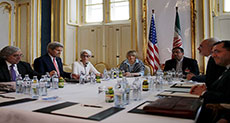
The deadline for Iran and the P5+1 for the potential conclusion of a comprehensive deal on Iran's civilian nuclear program had arrived, with senior diplomats from both sides expected to hold sensitive talks in their last push to reach a deal.
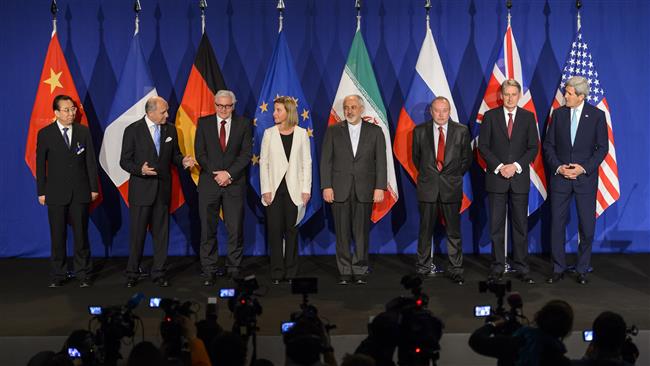
While there had been a lot of media speculation, there had been no definitive indication yet that the talks might have to stretch past the deadline. Iranian officials previously said that all sides were focusing on the June 30 date.
On Tuesday, Iranian Foreign Minister Mohammad Javad Zarif, who had returned home late Sunday, headed back to Vienna, Austria, which hosted the latest round of the intensive nuclear discussions between Tehran and its negotiating partners.
Ali Akbar Salehi, the head of the Atomic Energy Organization of Iran [AEOI], and Hossein Fereydoun, the special assistant to Iran's President Hassan Rouhani, were also accompanying Zarif.
Later in the day, Zarif was scheduled to hold meetings with US Secretary of State John Kerry and Russian Foreign Minister Sergei Lavrov in the Austrian capital.
Though, the nuclear talks had been going on for over 12 years. Iran's original negotiating partners were the UK, France and Germany, a group known back in 2003 as the E3.
The talks gained greater momentum under the administration of President Rouhani, who tasked the Iranian Foreign Ministry - under Zarif's watch - with handling the talks soon after assuming office in 2013.
Previously, Iran's Supreme National Security Council [SNSC] had been in charge of the talks.
Meanwhile, in late November 2013, Iran and the P5+1 group - Russia, China, France, Britain, the US and Germany - reached a historic interim accord aimed at resolving the longstanding dispute over the Iranian civilian nuclear program.
Under the deal, dubbed the Geneva Joint Plan of Action, the six countries undertook to provide Iran with some sanctions relief in exchange for Iran agreeing to limit certain aspects of its nuclear activities.
Since then, Tehran and its negotiating partners had held numerous rounds of talks in a bid to narrow their differences and reach a comprehensive final agreement.
Source: News Agencies, Edited by website team
Comments
- Related News
Iran Downs 52nd US MQ-9 Drone over Qeshm Island
one month ago