CNN: “Israel’s” Nuclear Double Standard Comes Under Pressure
By Staff, CNN
For more than six decades, the “Israeli” entity has maintained a policy of nuclear ambiguity, refusing to officially acknowledge or deny possessing nuclear weapons while benefiting from the strategic advantages of an undeclared nuclear arsenal.
But as tensions across the Middle East intensify, the long-standing policy is facing growing international scrutiny, raising questions about the entity’s responsibility for regional nuclear instability and the double standards underpinning international nonproliferation efforts.
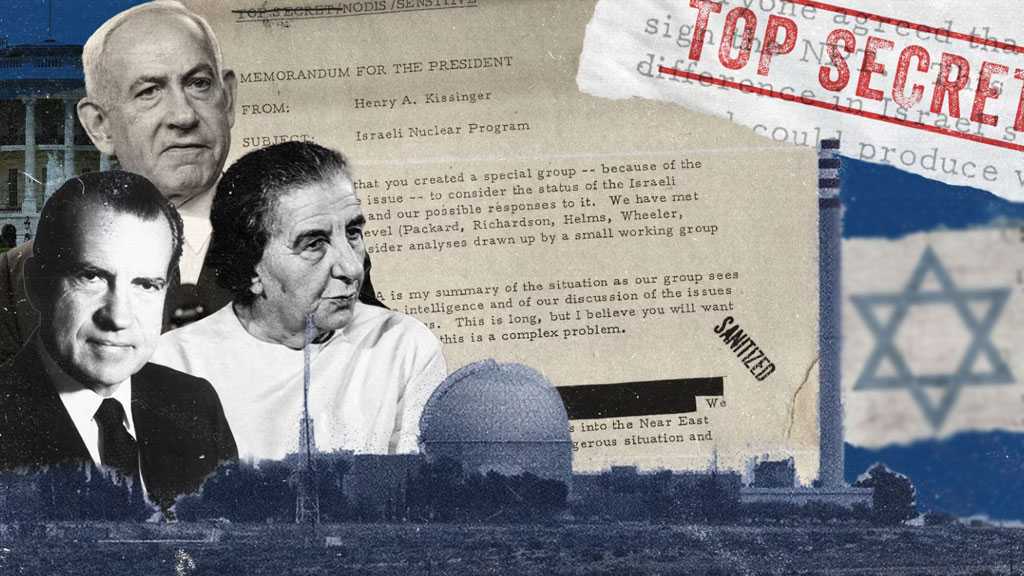
The origins of this policy date back to the construction of the Dimona nuclear facility in the Al-Naqab [“Negev”] Desert during the late 1950s. When American diplomats questioned “Israeli” officials about the construction site in 1960, they were told it was a textile factory. Subsequent American intelligence assessments identified the facility as central to “Israel’s” nuclear ambitions.
Declassified documents also reveal that Washington became increasingly concerned about the entity’s efforts to develop nuclear weapons, including allegations surrounding the disappearance of highly enriched uranium from a Pennsylvania facility.
Rather than confronting the entity publicly, Washington gradually accepted a policy of deliberate ambiguity. The understanding reached between US President Richard Nixon and “Israeli” Prime Minister Golda Meir in 1969 effectively allowed the “Israeli” entity to maintain its nuclear capabilities without officially declaring them or conducting a publicly acknowledged nuclear test. “Israel” also remained outside the Nuclear Non-Proliferation Treaty [NPT], avoiding the obligations that apply to its signatories.
This arrangement created a lasting contradiction in international policy. While Iran faces sanctions, diplomatic pressure and military threats over its nuclear activities, the “Israeli” entity has continued to maintain an undeclared arsenal estimated at approximately 90 warheads, according to the Nuclear Threat Initiative. Its nuclear capabilities remain outside the transparency framework expected of other countries, despite decades of international awareness of the program.
The 1986 revelations by former Dimona technician Mordechai Vanunu, who provided photographs and details of the facility to Britain’s Sunday Times, further exposed the extent of “Israel’s” nuclear activities. His subsequent abduction by “Israeli” intelligence operatives and imprisonment for 18 years highlighted the lengths taken to preserve the secrecy surrounding the program.
Today, the consequences of that secrecy are becoming increasingly difficult to ignore. The “Israeli” entity’s undeclared nuclear arsenal exists alongside growing confrontation with Iran and mounting concerns over Saudi Arabia’s potential nuclear ambitions. The result is a regional security environment in which the entity’s nuclear capabilities are effectively tolerated while others are warned against pursuing similar ambitions.
The contradiction is also attracting criticism in Washington. Democratic Congressman Joaquin Castro has questioned the continued American policy of ambiguity, describing it as a policy that “has become reckless and dangerous.” He has raised concerns about the absence of clarity surrounding the “Israeli” entity’s nuclear red lines and the potential consequences of escalation for American forces operating in the region.
Secretary of State Marco Rubio offered an unusually direct acknowledgment of the situation during congressional questioning, stating: “I think most of the world assesses that they do, but we’ve never — they’ve never, acknowledged that publicly.” His remarks highlight the extraordinary nature of a policy in which Israel’s nuclear capabilities are widely recognized internationally but remain officially unacknowledged.
The issue is not simply one of nuclear possession, but of accountability and consistency. As nuclear strategist Matthew Kroenig warned, “A runaway nuclear arms race in the Middle East is not a good thing for US policy.” Yet maintaining an arrangement that allows the “Israeli” entity to preserve an undeclared arsenal while demanding that other regional powers comply with strict nonproliferation expectations risks further undermining confidence in the international system.
The policy of nuclear ambiguity may once have served the strategic interests of the “Israeli” entity and the United States during the Cold War. However, the regional and international circumstances have changed. As the Middle East faces the possibility of a wider nuclear competition, the continued protection of “Israel’s” undeclared arsenal risks further undermining confidence in international rules and reinforcing perceptions of a deeply unequal nuclear order.
After more than 60 years, the central question is no longer whether “Israel” possesses nuclear weapons. It is whether the international community is finally prepared to apply the same standards of transparency and accountability to the “Israeli” entity that it demands of every other country. A credible effort to prevent nuclear proliferation in the Middle East cannot succeed while “Israel’s” nuclear program remains the region’s most significant exception to the rules.
Comments