US, UK’s Intelligence Hack ’Israeli’ Drones
Local Editor
The "Intercept" website revealed that American and British Intelligence secretly tapped into live video feeds from "Israeli" drones and fighter jets, monitoring military operations in Gaza, watching for a potential strike against Iran, and keeping tabs on the drone technology "Israel" exports around the world.
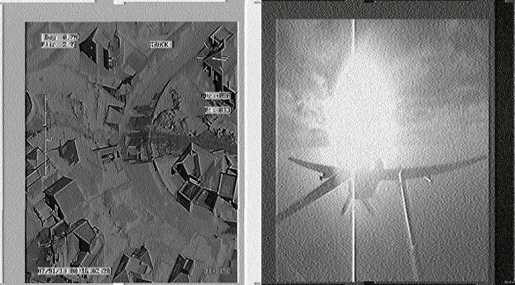
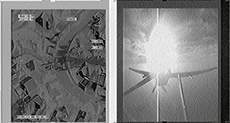
Under a classified program code-named "Anarchist," the UK's Government Communications Headquarters, or GCHQ, working with the National Security Agency, systematically targeted "Israeli" drones from a mountaintop on the Mediterranean island of Cyprus. GCHQ files provided by former NSA contractor Edward Snowden include a series of "Anarchist snapshots" - thumbnail images from videos recorded by drone cameras. The files also show location data mapping the flight paths of the aircraft. In essence, US and British agencies stole a bird's-eye view from the drones.
Several of the snapshots, a subset collected in 2009 and 2010, appear to show drones carrying missiles. Although they are not clear enough to be conclusive, the images offer rare visual evidence to support reports that Israel flies attack drones - an open secret that the "Israeli" government won't acknowledge.
"There's a good chance that we are looking at the first images of an armed "Israeli" drone in the public domain," said Chris Woods, author of Sudden Justice, a history of drone warfare. "They've gone to extraordinary lengths to suppress information on weaponized drones."
Additionally, in 2012, a GCHQ analyst reported "regular collects of Heron TP carrying weapons," referring to a giant drone made by "Israel".
Last August, The Intercept published a portion of a GCHQ document that revealed that NSA and GCHQ tracked weapons signals from Troodos, and earlier reporting on the Snowden documents indicated that the NSA targeted "Israeli" drones and an "Israeli" missile system for tracking, but the details of the operations have not been previously disclosed.
"This access is indispensable for maintaining an understanding of "Israeli" military training and operations and thus an insight to possible future developments in the region," a GCHQ report from 2008 enthused. "In times of crisis this access is critical and one of the only avenues to provide up to the minute information and support to US and Allied operations in the area."
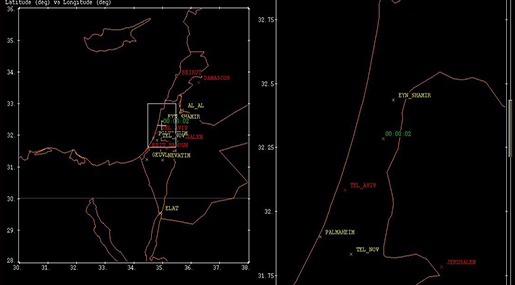
The drone-watching documented in the GCHQ files covered periods of "Israeli" military aggressions in Occupied Palestine, and also indicates that the intelligence agencies monitored drones for a potential strike against Iran.
The documents highlight the conflicted relationship between the United States and "Israel" and US concerns about Israel's potentially destabilizing actions in the region.
In July 2008, GCHQ ordered Anarchist technicians to look for drones flying over a number of "areas of interest," including the Golan Heights [a region of southwest Syria seized by Israel in the 1967 Six-Day War], the occupied Palestinian territories of the West Bank and Gaza Strip, and Israel's borders with Lebanon and Syria.
Drones communicate with their controllers on the ground via satellite; the transmission to the home station is known as the "downlink." The antennas at Troodos grabbed that downlink by finding the right frequency for each drone.
Drone feeds are vulnerable to interception not just from the NSA - even cheap, commercially available equipment can be used to get the downlink. In a 2009 article in Wired, a US military official likened such interception to "criminals using radio scanners to pick up police communications."."
A 2008 Anarchist memo also notes that "interest by the weapons community in "Israeli" UAV's [sic] remains high," because "Israel" "provide[s] many countries with their UAV's" and is "developing large UAV's capable of being deployed for a variety of purposes." Another, also from 2008, describes the hunt to confirm whether a specific type of radar "has been mounted on any UAV platforms."
"Israel" leads the world in drone exports, and capabilities "Israel" developed would soon be passed to other countries. Its companies aggressively market the potential attack capabilities of their aircraft. In September, India made arrangements to buy 10 armed Heron TPs. This month, Germany's defense minister, Ursula von der Leyen, announced that the country would lease several TPs, citing the aircraft's attack capabilities.
Source: The intercept, Edited by website team
Comments