US to Send Helicopters, More Troops to Iraq
Local Editor
The US agreed to deploy more than 200 additional troops to Iraq and to send Apache helicopters for the first time into the fight against Daesh [the Arabic acronym for the Takfiri "ISIS"] in Iraq, the first major increase in US forces in nearly a year, US War officials said Monday.
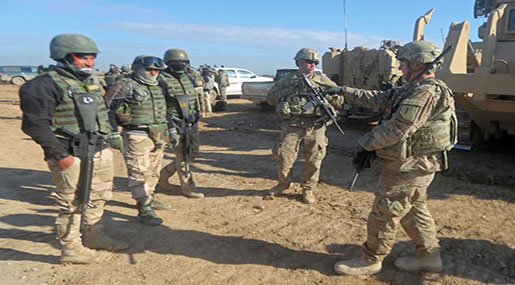
The uptick in American fighting forces - and the decision to put them closer to the front lines - is designed to help Iraqi forces as they move to retake the key northern city of Mosul.
Speaking to reporters Monday in Baghdad, War Secretary Ash Carter said the decision to move US advisers to the Iraqi brigade and battalion level will put them "closer to the action," but he said they will have security forces with them and the US will try to reduce the risks.
A senior US official said that eight Apache helicopters will be authorized to help the Iraqi forces when Iraq leaders determine they need them. The official was not authorized to discuss the numbers publicly so spoke on condition of anonymity.
Last June the Obama administration announced that hundreds of troops would be deployed to help the Iraqis retake Ramadi - a goal they accomplished at the end of the year.
Of the additional troops announced Monday, most would be Army Special Forces, who have been used throughout the anti-Daesh campaign to advise and assist the Iraqis. The remainder would include some trainers, security forces for the advisers and maintenance teams for the Apaches.
The decisions reflect weeks of discussions with commanders and Iraqi leaders, and a decision by US President Barack Obama to increase the authorized troop level in Iraq by 217 forces - or from 3,870 to 4,087.
The advise-and-assist teams - made up of about a dozen troops each accompanied by security forces - would embed with Iraqi brigades and battalions, likely putting them closer to the front lines and at greater risk from mortars and rocket fire.
The US, said Carter, is "on the same page with the Iraqi government" in how to intensify the fight against Daesh.
The proximity to the battlefront will allow the US teams to provide more tactical combat advice as the Iraqi units move toward Mosul, the country's second-largest city, still under Daesh control. Until now, US advisers have worked with the Iraqis at the headquarters level, well back from the front lines.
The Apache helicopters are considered a significant aid to any attack on Mosul. Americans will fly the helicopters - which provide air support to ground troops and carry precision weapons - another new vulnerability for US forces.
Last December, Iraqis refused Apache helicopters for the battle to retake Ramadi, but this time officials said they believe the fast attack helicopters will add an important edge.
Speaking to US troops at the airport in Baghdad, Carter also said that the US will send an additional rocket-assisted artillery system to Iraq.
US officials had also said that the number of special operations forces in Syria would be increased at some point, but Carter did not mention that in his comments. Officials spoke on condition of anonymity because they weren't authorized to discuss the matter publicly.
Carter's announcement Monday came after he met with Lt. Gen. Sean MacFarland, the top US military commander for the Daesh fight, as well as a number of Iraqi leaders including Prime Minister Haider al-Abadi and Iraq's Defense Minister Khaled al-Obeidi.
He also spoke by phone with the president of Iraq's autonomous Kurdish region, Massoud Barzani. Later, Carter announced to the troops that the US aid will extend to the Kurdish Peshmerga forces fighting in northern Iraq. Carter said the US had authorized sending up to $415 million to the Kurds over time.
MacFarland told reporters that the money will be used in part to help feed the Peshmerga troops.
US military and war officials had also made it clear that winning back Mosul is critical, but will be challenging because insurgents are dug in and have likely peppered the landscape with roadside bombs and other traps for any advancing force.
A senior war official told reporters traveling with Carter that while Iraqi leaders had been reluctant to have a large number of US troops in Iraq, they also need certain capabilities that only more American or coalition forces can provide.
Iraqi leaders back the addition of more US troops if their work is coordinated with Iraqis and directed toward the retaking of Mosul. The official was not authorized to discuss the issue publicly so spoke on condition of anonymity.
Source: News Agencies, Edited by website team